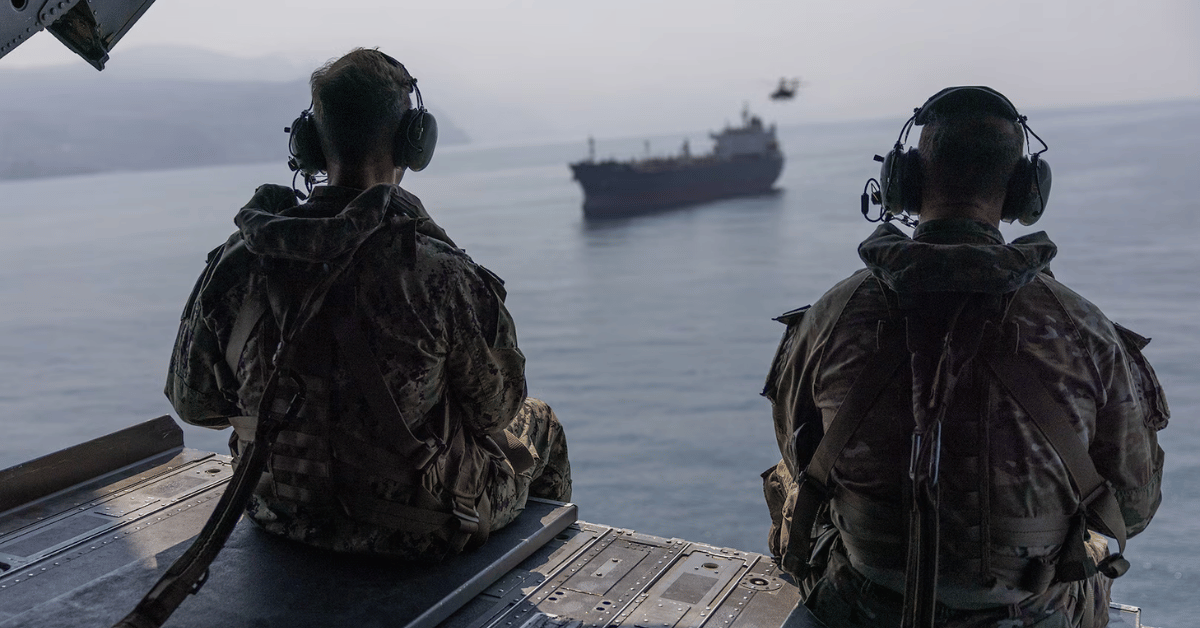
The movement of 1.5 billion barrels of crude oil through the Strait of Hormuz is not a statistic; it is an empirical measure of global energy stability, and it demands a correspondingly clear-eyed assessment of the risks that make that stability possible. The CENTCOM commander's visit and the milestone it marks are a reminder that the ocean's most critical chokepoints are not governed by nature alone, but by a calibrated mix of military presence, diplomatic will, and commercial cooperation. For our readers, researchers, policymakers, and maritime professionals, this event provides a rare, measurable data point in a region where transparency is often in short supply.
The practical meaning is direct: over 3,000 commercial vessels transited the strait in six months with CENTCOM support, and 95% of all ships have passed safely despite the IRGC's documented aggression. Yet the very act of counting barrels and transits forces us to confront what those numbers do not capture. As our reporting has shown, the human cost is already being tallied in separate theaters. In the Black Sea, at least 40 seafarers have been killed in ship attacks, and 24 deaths have been confirmed in the strait's vicinity, as detailed in our piece Measured in Lives: Black Sea and Hormuz Log 40 Seafarer Casualties. The safe passage of 1.5 billion barrels does not erase the fact that the seafarers moving that cargo operate in an environment where accountability is fragile, a point reinforced by our investigation into Fake ship registries expose seafarers to risk and erode maritime accountability. When vessels are struck, as seven oil tankers were in the strait during a prior incident covered in Seven Oil Tankers Struck in Strait of Hormuz as Regional Stability Shifts, the fragility of the system becomes visible.
Adm. Cooper's statement that "we continue to stand shoulder to shoulder with our Gulf partners" is purpose-driven language that acknowledges a shared responsibility. But the operational reality is that the strait's primary transit routes remain free only because of a dedicated mine-clearance mission by U.S. forces. This is not a passive condition; it is a sustained, integrated effort that requires continuous validation. For the shipping industry and the global energy markets that depend on this flow, the takeaway is specific: the free movement of oil through Hormuz is a function of active, calibrated military and interagency coordination. It is not a given.
The open question that emerges is one of longitudinal stability. If the IRGC's "unwarranted aggression" can be temporarily neutralized, what happens when the operational focus shifts? The 1.5 billion barrel milestone is a measurable achievement, but it also serves as a climate indicator of sorts, a reminder that our reliance on a single, contested waterway for a significant fraction of global energy supply is itself a vulnerability. The specific detail to watch is not the volume of oil moved, but the frequency and nature of the next IRGC action in the strait. That will be the real empirical test of whether the current control is sustainable.