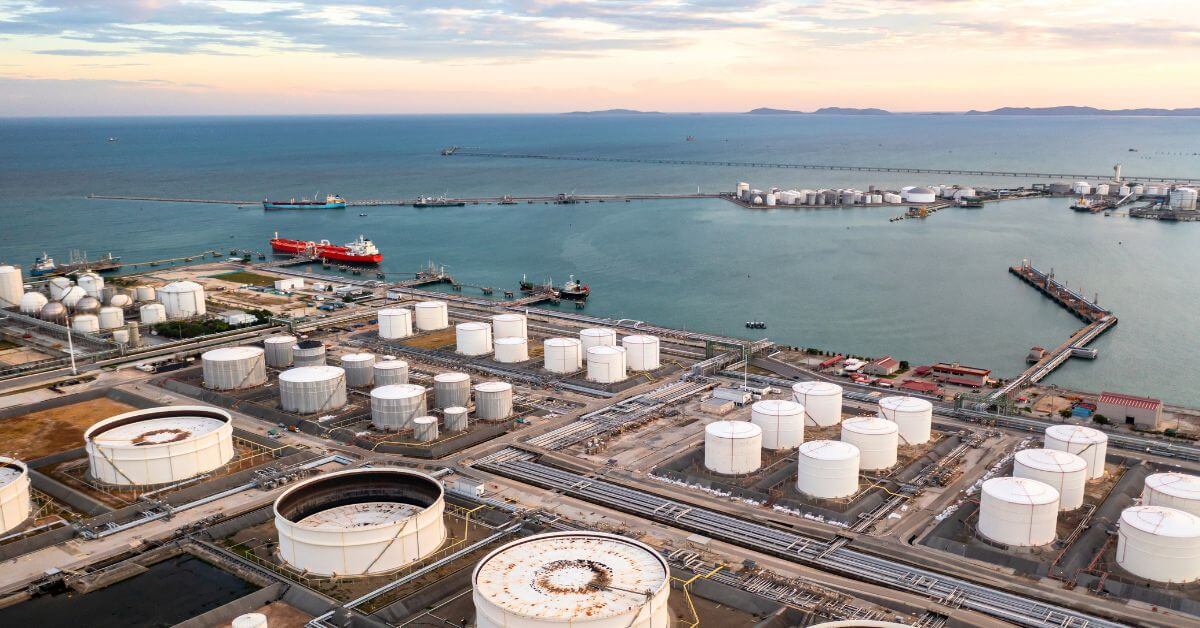
The strike on a tanker at Yanbu port is a stark reminder that the world's energy lifelines are increasingly vulnerable, and that the ocean, far from being a neutral highway, has become a theater of geopolitical risk. Our view is clear: disruptions to maritime chokepoints are not isolated incidents but measurable indicators of a global system under strain. When an unidentified projectile halts loading operations at a terminal that handles roughly 2 million barrels per day, as recent estimates confirm, the consequences ripple through supply chains, insurance markets, and national energy security. This is not speculation; it is an empirical signal that demands calibrated, real-time analysis.
The Yanbu incident does not exist in a vacuum. It follows closely on a pattern of Projectiles strike crude and LNG tankers in the Strait of Hormuz, where three vessels, including a crude oil tanker and an LNG carrier, were targeted. The Strait of Hormuz remains the world's most critical maritime energy artery, and each projectile fired there is a direct challenge to the integrated data ecosystem that underpins global trade. At the same time, we see Red Sea crude flows rise as Strait of Hormuz disruptions reshape global routes, with Yanbu itself emerging as a key alternative outlet. That a port functioning as a safety valve is now itself struck underscores a dangerous feedback loop: as routes shift to avoid one threat, they become targets for another. Meanwhile, refiners in India are Chartering tankers through Hormuz to secure India's oil supply chains, a tactical hedge that reveals how quickly private actors must adapt when state security guarantees erode.
What this means for our readers, researchers, policymakers, and maritime operators, is that traditional risk assessments based on historical incident rates are no longer sufficient. The ocean intelligence we rely on must integrate real-time vessel tracking, satellite imagery, and validated threat reports into a single, interoperable picture. A fire at Yanbu is not just a local emergency; it is a longitudinal data point in a pattern that stretches from the Red Sea to the Persian Gulf. The question is whether the global community can build a shared, peer-reviewed framework for monitoring these threats before the next projectile creates a disruption too large to manage.
The specific detail to watch is the impact on tanker insurance premiums and the willingness of flag states to route vessels through the Red Sea and Gulf of Aden. If underwriters begin to treat Yanbu as a high-risk zone comparable to the Strait of Hormuz, the cost of shipping oil will rise measurably, and that cost will be passed directly to consumers. The ocean does not lie; the data is already accumulating. The only open question is how long we will interpret it as a series of separate events rather than a single, integrated crisis.