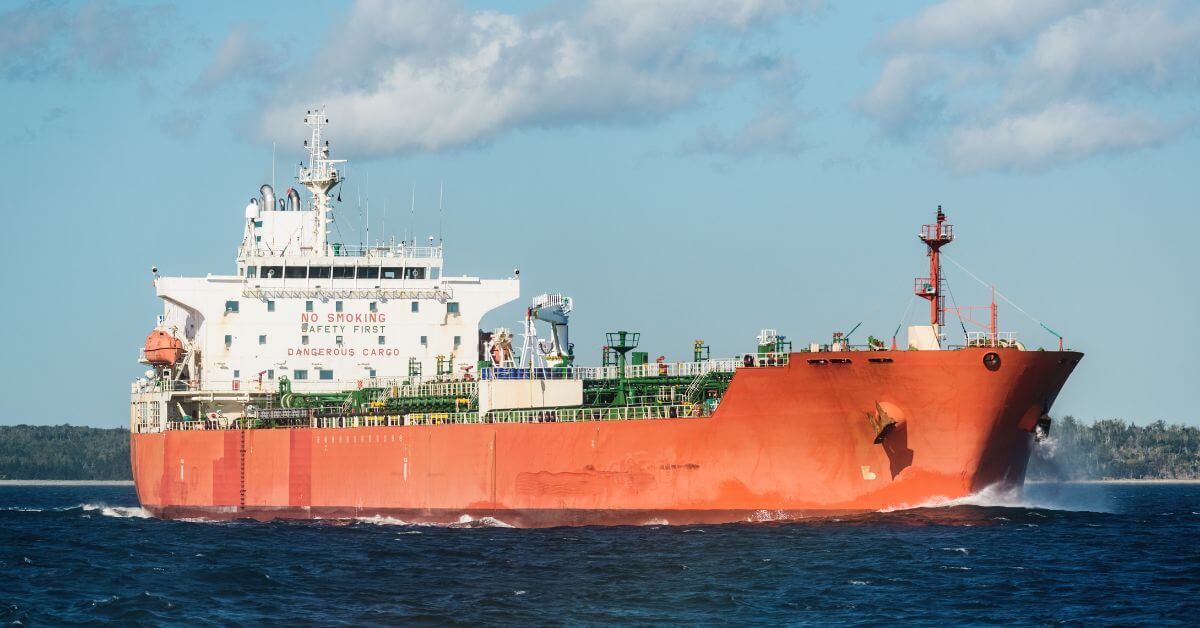
The Strait of Hormuz is no longer just a strategic chokepoint; it is a war zone with a price tag. When shipowners must offer a tanker captain $100,000 a month plus a $50,000 bonus per crossing, six to seven times normal pay, the market is sending a clear, empirical signal that the cost of moving global energy has fundamentally changed. This is not hyperbole; it is a validated, measurable shift in risk that will ripple far beyond the Gulf.
As our reporting on Weekly tanker strikes near Strait of Hormuz reach highest count in years confirms, at least 12 attacks involving tankers were recorded in the region recently. The data is consistent: four vessels were hit in the span of a single weekend. Meanwhile, our verified analysis of Verified data confirms 20 million barrels transit Hormuz despite Iranian claims shows that oil flows have partially recovered, but at an extraordinary cost. The real-time picture is clear: around 135 vessels used to cross daily; now, fewer than two dozen are willing. Those that do cross at night with their GPS switched off, relying on US Navy defensive cover. The human toll is equally stark, 24 seafarers killed since the conflict began, according to IMO data cited by the Financial Times. As one industry source put it, some crew are "almost being viewed as mercenaries."
The practical consequence for global markets is not abstract. War-risk insurance for a single supertanker voyage into the Gulf can now cost up to $20 million, that is 6 to 10 percent of the ship's hull value. Add in fuel oil prices at $686 per tonne, 67 percent higher than last year, and freight rates that have jumped from $50,000 a day to $1.3 million. These are not transitory spikes; they are integrated into the cost base of every barrel that leaves the region. Producers are willing to pay because the alternative, losing access to a fifth of the world's oil and LNG supply, is worse. But that cost gets embedded into global supply chains, and it will surface in energy prices and inflation metrics for months to come.
We need to watch one specific metric: the number of ships willing to transit. If the trend of vessels crossing at night with transponders off continues, and if the attack rate of roughly 2 percent holds, the market will recalibrate permanently. Pipelines and alternative routes can absorb some volume, but not the 17 million barrels per day that normally flow through Hormuz. The question is whether the risk premium becomes a structural cost of doing business, or whether the data will eventually show a return to safer passage. For now, the numbers tell us one thing: the ocean intelligence we rely on to measure global trade is being written in insurance premiums and crew hazard pay. That is a climate indicator we cannot afford to ignore.