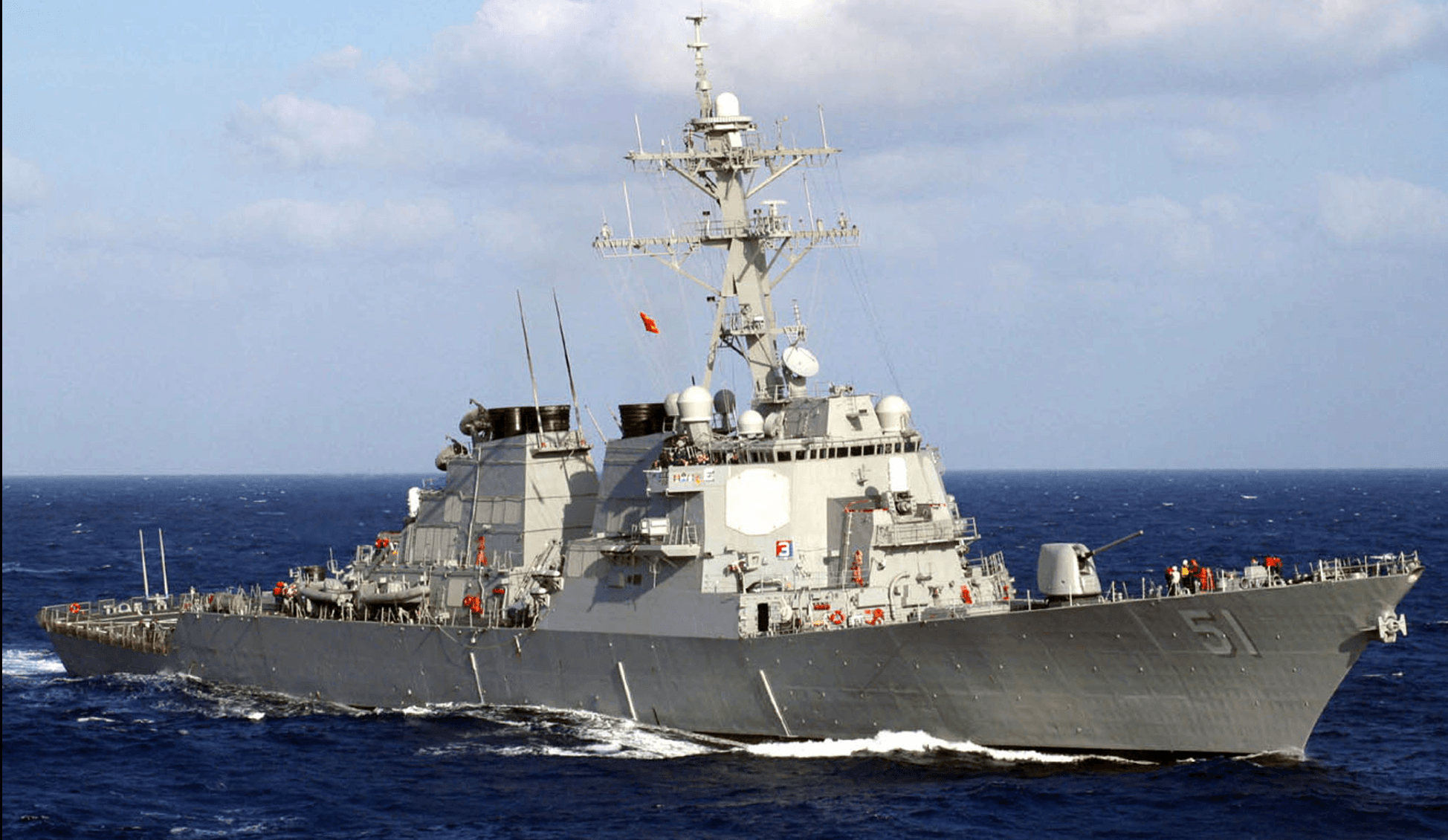
The decision to dry-dock the USS Arleigh Burke in Cadiz is a practical acknowledgment that forward-deployment means little without forward maintenance. This is not merely a repair stop; it is an operational statement that the US Navy intends to sustain a credible presence in European waters without the costly and time-consuming transit back to American shipyards. The move integrates Spain's Navantia into the Navy's logistics chain, a relationship formalized by a contract running through 2028. This is the kind of quiet, structural change that matters more than any single mission, because it makes the fleet's presence a durable fact rather than a temporary projection.
The Navy's framing is precise: improved material readiness and expanded maintenance capability. That language is deliberately calibrated, and it should be read carefully. The service has not cited combat damage or linked the overhaul to any specific operational pressure, despite the ongoing US-Iran conflict. The absence of that attribution is itself informative. It suggests the Navy wants this to be understood as routine, a normal evolution of its logistics posture in Europe, not a reaction to a crisis. We should take that at face value, while also noting that the timing creates a useful buffer. If a forward-deployed destroyer can be overhauled in Spain, the fleet absorbs shocks more gracefully, whether those shocks are combat-related or simply the accumulated wear of sustained operations. This is resilience built into the system, not announced in a press release.
The broader lesson connects to how we track institutional and environmental change. Just as Divergent population trajectories reshape global climate indicators show that long-term trends are often more telling than single-year spikes, this dry-docking is a slow-moving indicator of alliance depth. The US Navy is not just visiting Spain; it is embedding its maintenance cycle into Spanish industry. That creates a mutual dependency that is far harder to reverse than a port call. It also mirrors the kind of measurable, longitudinal shifts we see in social attitudes, such as the Measurable shift in homophobic attitudes across Western Europe and US, where incremental change compounds into a new baseline. The Cadiz dry dock is a similar compounding event: each overhaul performed there makes the next one more likely, more efficient, and more politically entrenched.
What we should watch is not the repair list or the cost, which remain undisclosed, but the pattern of follow-on work. The contract with Navantia has been in place since 2021, yet this is the first dry docking. The question is whether this becomes a recurring rhythm or remains a one-off. If the Navy schedules another destroyer for Cadiz within the next two years, we will know the framework is real. If not, this is a symbolic milestone without operational weight. The specific detail to track is the Navy's own language: it called this a "framework for future dry-dock maintenance." Frameworks are only as good as their execution. The next ship to enter that dry dock will be the evidence we need.