Ancient Arctic carbon is pouring into the sea, but the seabed captures most of it
Our take
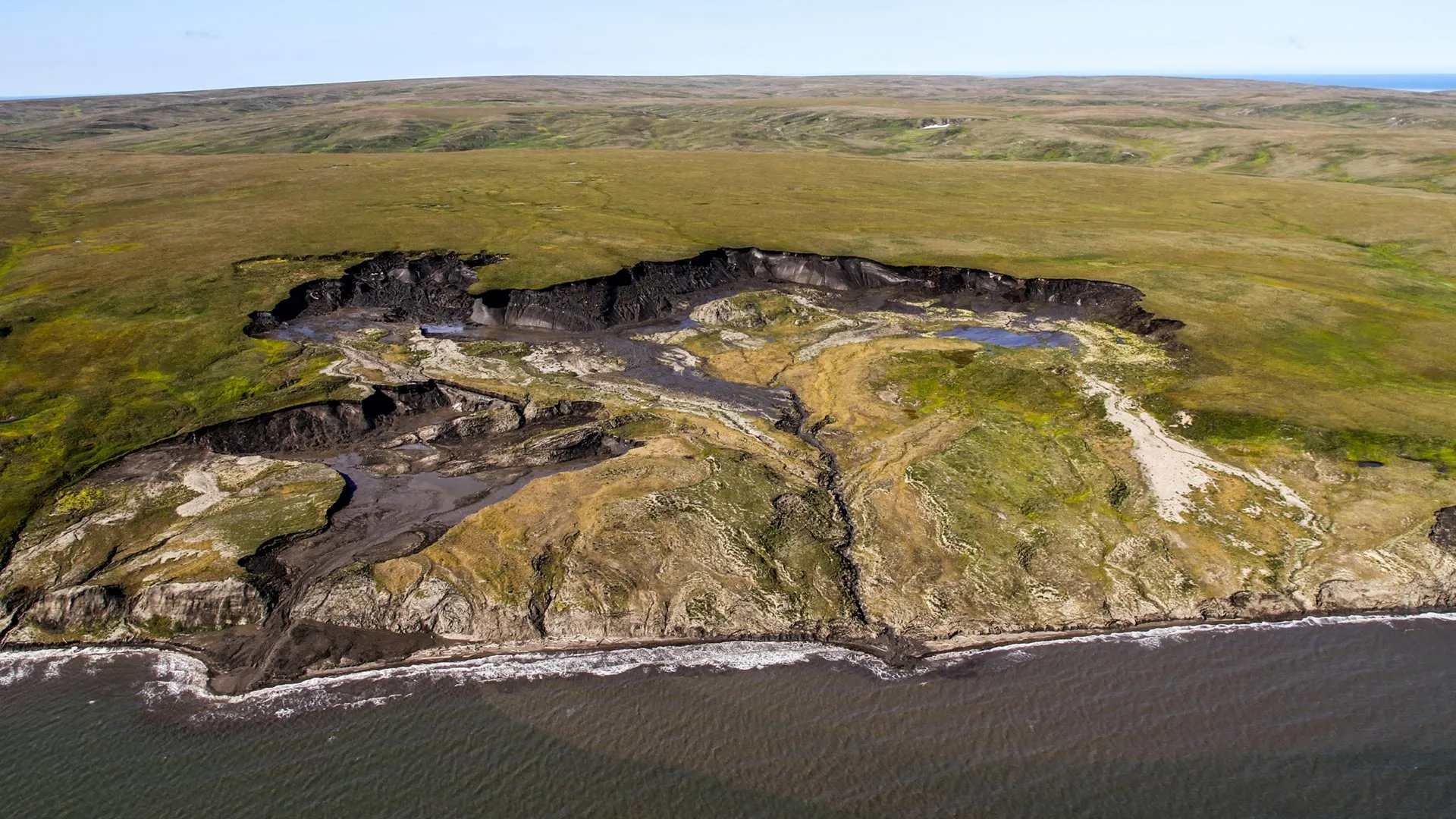
The release of ancient carbon from thawing Arctic permafrost has long been a source of concern, prompting anxieties about a feedback loop accelerating climate change. The potential for microbes to metabolize this carbon into potent greenhouse gases like methane and carbon dioxide has understandably fueled those fears. However, recent findings from sediment cores collected near Canada’s Herschel Island offer a nuanced, and arguably more reassuring, perspective. The study indicates that a significant portion—approximately 90%—of this land-derived carbon is effectively sequestered within the seafloor, rather than being converted into atmospheric gases. This discovery underscores the complexity of Arctic carbon cycling and highlights the importance of integrated data ecosystems in understanding these processes. It also resonates with our ongoing commitment to exploring the ocean depths, as exemplified by the upcoming Camera 1: 2026 Cook Islands ROV Exploration (EX2605), which will contribute to a more detailed understanding of seafloor sediment dynamics. Furthermore, the challenges of operating in remote and harsh environments, as demonstrated by the World’s Only Floating Nuclear Power Plant Passes Strictest 2-Week Safety Review In Russia, parallel the logistical complexities of deep-sea research and data acquisition.
The mechanism behind this carbon burial is likely multifaceted, involving a combination of factors including rapid sedimentation rates, the formation of stable organic compounds, and the presence of specific microbial communities that favor burial over decomposition. While the 10% conversion rate to greenhouse gases is not negligible, it significantly lowers the initial projections of Arctic permafrost carbon release impact. Crucially, this finding emphasizes the role of the ocean as a significant carbon sink, a factor often overlooked in simplified climate models. It also reinforces the need for longitudinal data collection and empirical validation to refine our understanding of these complex biogeochemical cycles. The study’s reliance on sediment core analysis, a technique requiring meticulous calibration and validation, aligns perfectly with World Data Ocean’s commitment to scientific integrity and peer-reviewed research. The ability to reconstruct past environmental conditions through these cores provides invaluable insights into how the Arctic Ocean has responded to past climate changes, informing our predictions for the future.
However, it's vital to avoid complacency. While the immediate threat may be less severe than initially feared, the sheer volume of carbon locked within Arctic permafrost remains substantial. Continued warming will inevitably lead to increased permafrost thaw, and the long-term fate of this released carbon remains uncertain. Furthermore, the study’s findings are localized to a specific region; further research is needed to determine if these burial rates are representative of the entire Arctic Ocean. The influence of ocean currents, water column chemistry, and regional variations in microbial activity could all impact carbon fate. The ongoing development of large-scale offshore infrastructure, like the China Installs World’s Largest Offshore Wind Converter Station In South China Sea, highlights the increasing human impact on the ocean, and it’s crucial to understand how these activities might interact with natural carbon cycling processes.
Ultimately, this research provides a valuable piece of the puzzle in understanding the Arctic's role in the global carbon cycle. It underscores the importance of continued, rigorous scientific investigation, leveraging technological innovation to gather real-time ocean intelligence and build integrated data ecosystems. Moving forward, a key question will be whether the ocean's capacity to sequester this ancient carbon can be sustained under accelerating climate change scenarios, and what factors might limit or even reverse this crucial process. The stability of the seafloor carbon sink deserves focused, long-term monitoring.
Read on the original site
Open the publisher's page for the full experience