carbon sequestration
9 stories filed under carbon sequestration on World Data Ocean. The newest of them: “Salt Marsh Vegetation Boosts Organic Carbon Storage in Yellow Sea Wetlands”, “Quantifying the hidden value of oyster reefs for coastal resilience”, and “Empirical ocean data powers the measurable path to energy transition”. Salt marsh vegetation measurably amplifies organic carbon processing in the Yellow Sea wetlands. Oyster reefs are being systematically undervalued. A Global Hub for Ocean Intelligence 4 World Data Ocean is a centralized digital platform where researchers, scientists, and ocean enthusiasts converge to… The list below is every carbon sequestration story on World Data Ocean, newest first.

Salt Marsh Vegetation Boosts Organic Carbon Storage in Yellow Sea Wetlands
Salt marsh vegetation measurably amplifies organic carbon processing in the Yellow Sea wetlands. Our investigation of adjacent mud flat and *Suaeda japonica*-vegetated marsh sites confirmed that microbial turnover and carbon mineralization were consistently higher where vegetation thrived, with a pronounced summer surface hotspot coinciding with peak root biomass. Yet carbon burial efficiency remained modest, between 8.8 and 23.8 percent, demonstrating that stock inventories alone cannot capture a wetland's full carbon balance.
Quantifying the hidden value of oyster reefs for coastal resilience
Oyster reefs are being systematically undervalued. Our new global analysis introduces Gross Ecosystem Product (GEP) as a measurable, integrated index of their worth, combining habitat suitability with monetary scenarios for shell carbon, filtration, and nutrient removal. The results are striking: seabed light and phytoplankton biomass drive reef health, and approximately 23% of high-potential habitat overlaps with existing protected areas. We identify ten hotspot countries for restoration, including the USA and Australia. This framework transforms uncertainty into decision-ready priorities.
Empirical ocean data powers the measurable path to energy transition
The ocean's role in the energy transition is not theoretical, it is empirical. Measurable ocean data powers the path forward, validating climate indicators and calibrating our decisions. The World Economic Forum makes this clear: data is the foundation. For those tracking the science beneath the surface, our coverage of the Ocean Carbon and Acidification Data System offers a peer-reviewed look at how validated, integrated data ecosystems turn ocean intelligence into actionable climate insight. Understanding drives protection.
Radiocarbon data reveal how organic carbon moves from land to ocean
Radiocarbon data now reveal the precise pathways of organic carbon as it travels from land to ocean, offering the clearest empirical picture yet of carbon transfer and accumulation across the land, ocean continuum. This is measurable, peer-reviewed insight into a critical climate indicator. Understanding these global patterns drives better protection of coastal carbon sinks. For deeper context on how we track ocean chemistry, explore our calibrated global standard for dissolved organic phosphorus.
Southern Ocean’s Carbon Absorption Capacity Faces Uncertainty Under Climate Scenarios
The Southern Ocean has long acted as Earth's quiet carbon sink, but new research in *Science Advances* suggests its capacity to absorb emissions is not guaranteed under shifting climate scenarios. This uncertainty carries measurable weight for global climate modeling. We cannot assume stability where the system itself is changing. Understanding these dynamics is essential, not optional. For broader context on how ocean systems respond to pressure, our related coverage of Atlantic Circulation Weakens: Global Climate Reshaping Predicted offers a useful parallel.
Microalgae-Larvae Carbon Transfer: A Pathway to Sustainable Aquaculture.
A 33% carbon transfer efficiency from microalgae to shrimp larvae is a measurable, validated starting point. This study on *Litopenaeus vannamei* quantifies a biological pathway that has remained poorly understood. By calculating that global hatchery seed production retains approximately 9.2 tons of carbon annually, the research gives aquaculture a calibrated, empirical tool for carbon footprint assessments. Understanding drives protection. For deeper genomic context on algal symbiosis, see our related coverage of Symbiodiniaceae Minicircles.
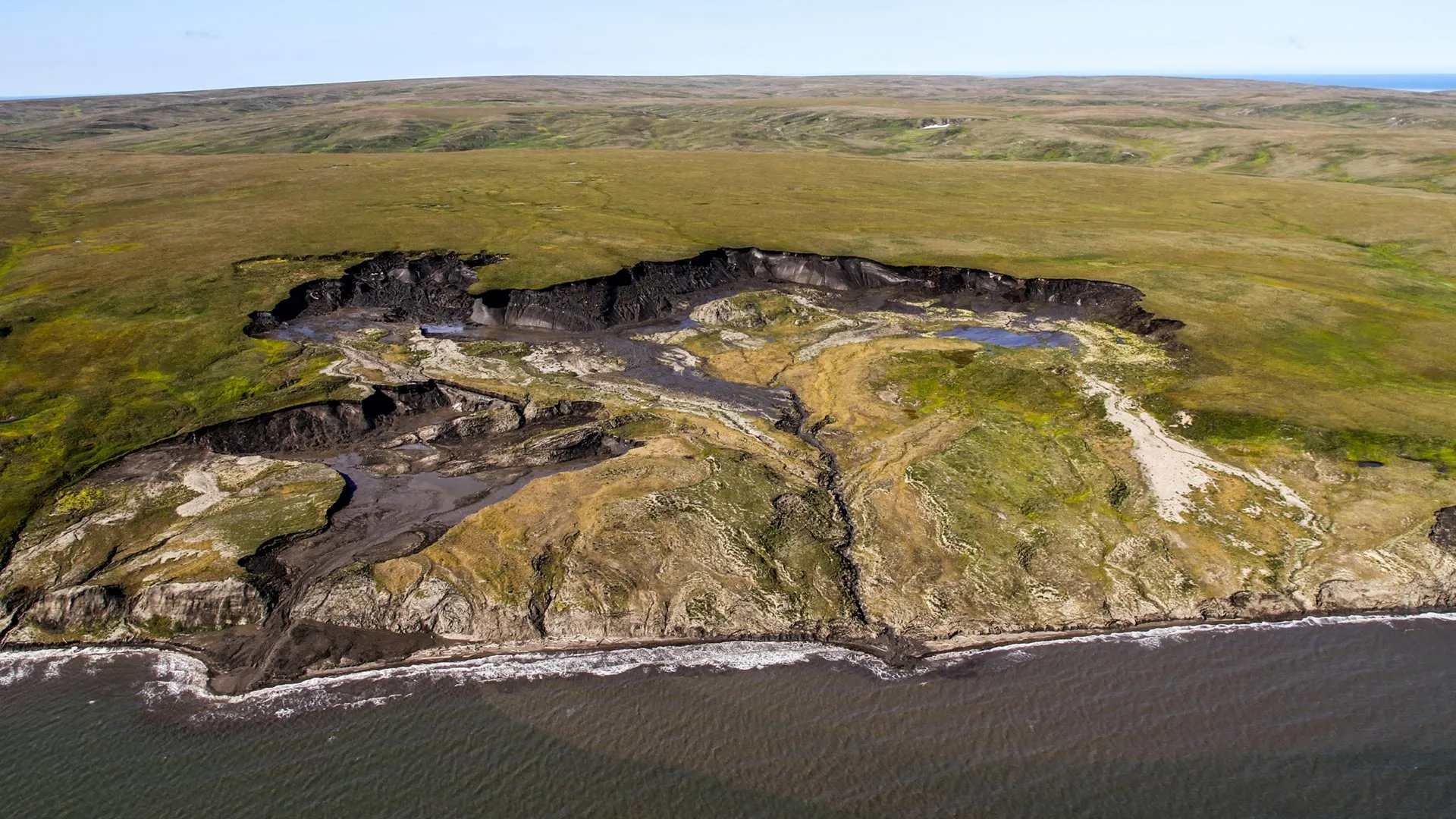
Arctic Carbon Release: Seafloor Sediment Limits Greenhouse Gas Impact
Sediment cores pulled from the seabed near Canada's Herschel Island deliver a measured counterpoint to alarm. Thawing permafrost is releasing ancient carbon into the ocean, yet the data show most of it gets buried in the seafloor, with only about 10 percent converted into greenhouse gases. That distinction matters for climate projections. We read this as a validation of integrated observation, not complacency.
Cold Seeps: Unlocking Climate Insights and Assessing Human Impact.
Cold seeps quietly move methane from deep geologic stores into the ocean, yet their role in climate regulation remains underappreciated. This new perspective reframes them through a blue carbon lens, detailing how chemosynthetic communities recycle carbon, store it as biomass, and even block vent emissions. The stakes are clear: bottom trawling and warming waters could turn these reservoirs into methane sources. Understanding drives protection. For broader context on climate-driven ocean change, our coverage of Atlantic Circulation Weakens: Global Climate Reshaping Predicted complements this work.
Microbial Carbon Pump: Enhancing Coastal Ecosystems for Carbon Sequestration
Microbial carbon pumps are quietly doing heavy lifting beneath the waves. New research shows these processes convert labile dissolved organic carbon into recalcitrant forms, locking carbon away for centuries. Coastal ecosystems alone contribute 40-60% of global RDOC production, yet conversion efficiency remains under 5%. The bottleneck is real: nutrients, temperature, and pollutants all suppress microbial activity. Integrated approaches, pairing artificial upwelling with macroalgae cultivation, show promise, boosting sediment carbon storage by 15-25% in pilots. Still, ecological risks like harmful algal blooms demand caution.