carrier strike group
World Data Ocean keeps carrier strike group in one place: 5 stories so far. The section currently leads with “US Naval Deployments Continue as Middle East Operations Extend to Eighth Month”, “Extended Deployment: Abraham Lincoln Carrier Highlights Naval Endurance at Sea”, and “Naval Shift: George Washington Arrives as Lincoln Deployment Concludes”. The USS Theodore Roosevelt carrier strike group departed San Diego on Sunday, with the USS Makin Island amphibious readiness group following a day later, extending US naval deployments in the Middle East into an eighth… A Global Hub for Ocean Intelligence 4 World Data Ocean is a centralized digital platform where researchers, scientists, and ocean enthusiasts converge to… The list below is every carrier strike group story on World Data Ocean, newest first.
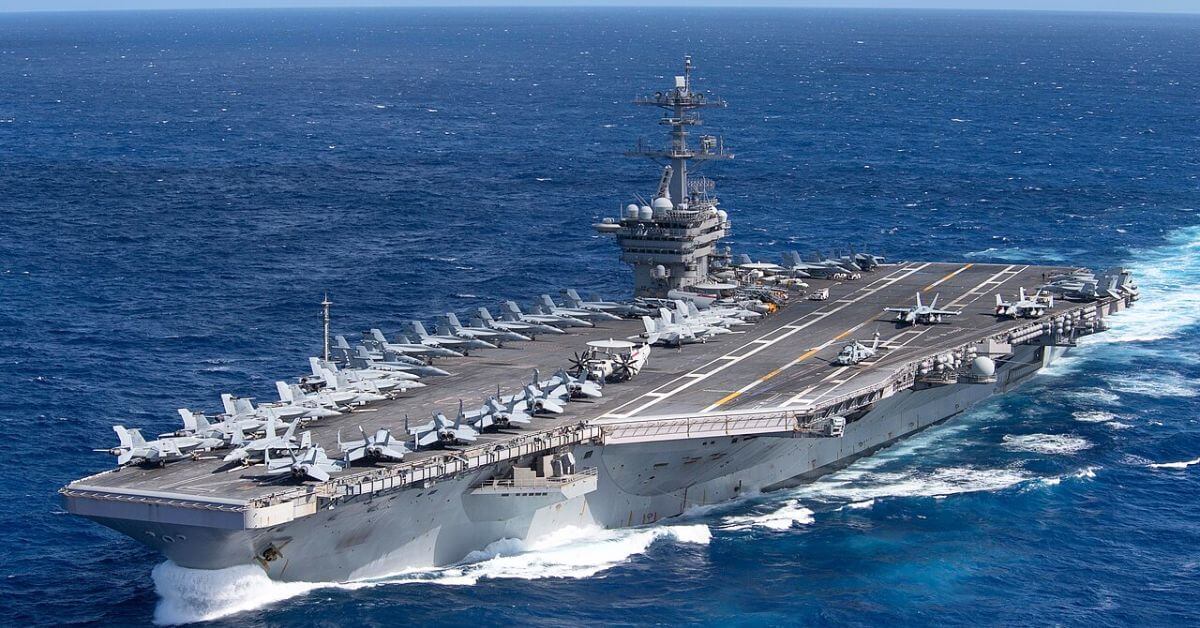
US Naval Deployments Continue as Middle East Operations Extend to Eighth Month
The USS Theodore Roosevelt carrier strike group departed San Diego on Sunday, with the USS Makin Island amphibious readiness group following a day later, extending US naval deployments in the Middle East into an eighth month. Sustained presence reflects measured, strategic commitment, not escalation theater. For context on regional risk, our coverage of projectiles striking tankers near the Strait of Hormuz underscores why such deployments remain calibrated responses to measurable threats. Operational endurance matters, but the data driving these decisions matters more.

Extended Deployment: Abraham Lincoln Carrier Highlights Naval Endurance at Sea
The Abraham Lincoln's extended deployment underscores the US Navy's capacity for endurance when strategic demands require it. While six to nine months is the standard, conflict-driven extensions are a calculated reality, not a failure of planning. This is maritime persistence measured in readiness, not rhetoric. For broader context on regional pressure points, our related piece on Gulf of Oman STS transfers outlines how operational tempo shifts elsewhere. The carrier's longevity at sea remains a practical demonstration of sustained naval power.

Naval Shift: George Washington Arrives as Lincoln Deployment Concludes
The turnover of crews is a constant in naval operations, but the conclusion of the *Lincoln*'s deployment carries a weight that extends beyond routine rotation. It lands as families raise valid questions about life aboard, and those concerns merit more than standard assurances. The arrival of the *George Washington* provides operational continuity, yet it also signals a moment to listen. For deeper context on how the Navy is modernizing its approach, our piece on autonomous systems integration offers a relevant perspective.

Kennedy Carrier Trials Begin Amid Shift in Navy Propulsion Strategy
The USS John F. Kennedy has begun acceptance sea trials, yet the Navy's propulsion strategy is already pivoting. President Trump's order to strip EMALS from the future USS Doris Miller in favor of steam catapults signals a deliberate retreat to proven technology. It is a pragmatic, if conservative, choice. While innovation drives us forward, reliability remains the anchor of operational readiness. For deeper context on how global shipbuilders are adapting their own capabilities, see our coverage of Cochin Shipyard's recent design expansion.

Honoring Valor: New Destroyer USS William Charette Joins the Fleet
The USS William Charette, a new destroyer named for a Medal of Honor recipient, now joins the fleet, carrying a legacy of extraordinary courage into modern maritime operations. This is a vessel built not just for power, but for purpose. We see this as a fitting tribute to valor, and a clear signal of strength. For more on how the Navy is evolving its capabilities, our coverage of the Navy Accelerates Autonomous Systems Integration for Enhanced Maritime Operations offers deeper insight.