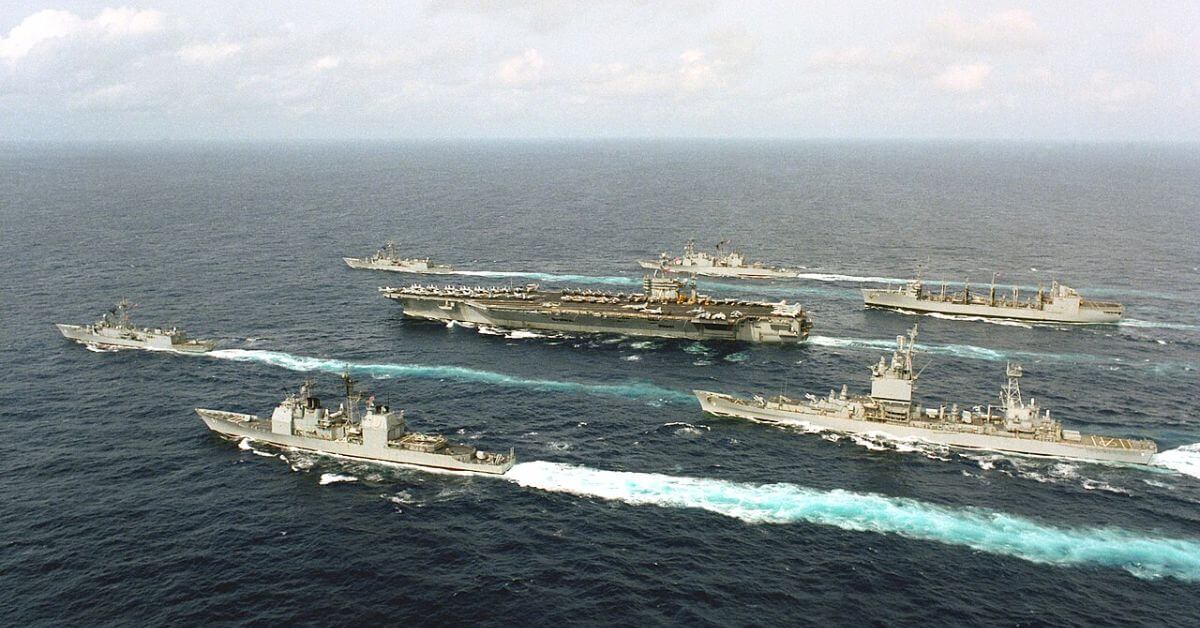
The Presidential Unit Citation awarded to the USS Abraham Lincoln carrier strike group is a measured acknowledgment of sustained, high-intensity combat performance, not a political ornament. The numbers are stark: 3,693 combat flights, 1.37 million pounds of ordnance, 450 Tomahawk missiles, 77 drones shot down, 64 Iranian warships sunk. This is the kind of empirical, validated data that should frame any discussion of naval readiness. The citation for Operation Epic Fury, announced by Defence Secretary Pete Hegseth, reflects a deployment that tested the limits of what a carrier strike group can absorb. For our readers, the takeaway is practical: this award resets the baseline for what extended naval operations demand, and it forces a harder look at the human cost embedded in those metrics.
The Abraham Lincoln's 265 consecutive days at sea without a port call is a longitudinal record that deserves scrutiny beyond the commendation. We previously examined the Longitudinal deployment of USS Abraham Lincoln concludes, validating extended naval readiness and the 265 days at sea: validated data from a record naval deployment. Those pieces tracked the operational output, but the citation's announcement arrives alongside troubling reports: eight sailors aboard the strike group attempted suicide during the deployment, and two attempted to jump overboard. Acting Navy Secretary Hung Cao confirmed the attempts, and supply shortages were acknowledged after initial pushback. Hegseth rejected the notion that these welfare reports should define the deployment, saying the crew dealt with the difficulties and completed the mission. That is a defensible command perspective, but it cannot be the final word. The Presidential Unit Citation measures valour in action; it does not measure the sustainability of the force that produced it.
What makes this award significant is the precedent it sets. The USS Gerald R. Ford strike group received the same citation in May after a deployment reported at 326 to 327 days, described as the longest for a US carrier in the post-Vietnam era. Two consecutive carrier strike groups earning the military's highest unit-level award for a single conflict suggests a new operational reality: extended combat deployments are no longer exceptions but expectations. The Navy is already positioning the USS George Washington, the USS George H.W. Bush, and potentially the USS Theodore Roosevelt in the region. The question for planners is whether the service can replicate this level of combat output without repeating the welfare failures. The Lincoln's return to San Diego after 321 days away closes one chapter, but the citation's citation of 40 days of combat and a maritime blockade against Iran invites a specific comparison: the Ford's deployment was longer, but the Lincoln's combat load was heavier. Which metric should future readiness be calibrated against?
The concrete point to watch is the Navy's response to the suicide attempts and supply delays in the coming months. The citation is a reward for combat effectiveness, but it does not erase the operational data points that emerged in mid-August and September. If the Navy treats this award as a validation of the deployment model without recalibrating its logistics and mental health support, the next strike group may not return with the same statistics. The Lincoln's crew completed its mission under extraordinary strain. The next crew deserves a system that measures their endurance before they are asked to exceed it.