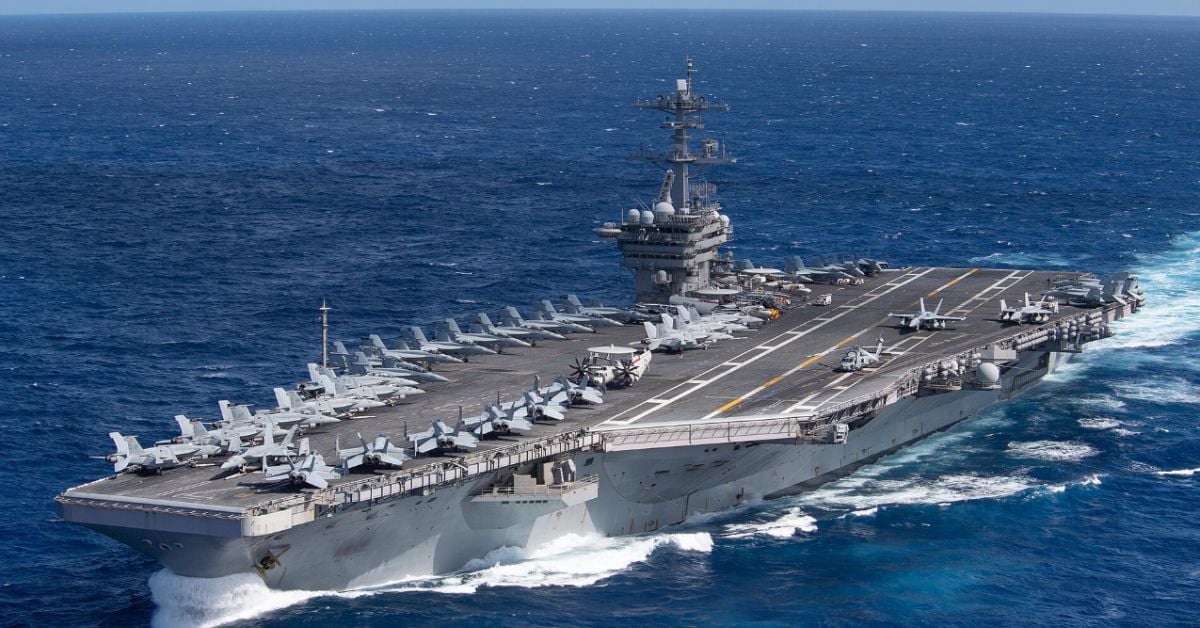
The arrival of the USS Theodore Roosevelt at Yokosuka is a welcome demonstration of military readiness, but the real story is the quiet debut of unmanned systems in a bilateral exercise that has historically been about manned platforms and hard power. Keen Sword 27 is the first time a non-forward-deployed carrier has docked at the base since 2022, and the first time the U.S. has brought a massive unmanned surface vessel into a Japanese port for a joint drill. That shift from crewed to uncrewed, from reactive to autonomous surveillance, deserves more attention than the diplomatic friction that dominates the headlines.
The timing is undeniably awkward. An Okinawa-based Marine was arrested for the robbery and murder of a Japanese woman, and the mayor of Yokosuka has explicitly asked the Ministry of Defense to brief the American crew on expected conduct. Commanders have responded by instructing sailors to uphold dignity and discipline. These are necessary measures, but they are reactive. What is more strategically interesting is that the Cleveland submarine repair hub advances fleet readiness through integrated infrastructure is precisely the kind of long-term, systemic investment that makes forward-deployed maintenance and resupply less vulnerable to political strain. A repair hub that improves component availability and fleet readiness is not a headline-grabber, but it is the kind of infrastructure that keeps a carrier group operational when port calls become politically charged.
The military activities themselves point toward a future that is less about mass and more about machine intelligence. Between October 19 and 23, 2026, the U.S. warships will conduct operations off White Beach, Okinawa, with the drone boat demonstrating autonomous at-sea surveillance capabilities. The Japan Maritime Self-Defense Force will act as observers during that demonstration, which will be represented by the 12th Marine Littoral Regiment and the Unmanned Surface Vessel Squadron 7. This is not a sideshow; it is the main event. While 45,000 Japanese personnel, 40 ships, and 250 aircraft participate in the exercise, the most consequential data may come from a single uncrewed vessel watching the Philippine Sea. This mirrors the kind of validation we saw in the Baltic Allies Validate Uncrewed Target Engagement in Gulf of Bothnia Exercise, where a U.S. destroyer participated in drills with Sweden and Finland to test autonomous targeting. The Pacific is now the laboratory for the same transition.
What we are watching is not simply a carrier visit with diplomatic baggage. It is the integration of uncrewed systems into the most traditional of naval exercises, and the quiet normalization of autonomous surveillance as a core capability. The specific detail to watch is whether the JMSDF moves from observer to participant in the next iteration of Keen Sword, and whether the data collected by that drone boat changes how both navies think about patrolling the vast, data-poor waters of the Philippine Sea. That is the measurable outcome that will matter long after the Roosevelt departs.