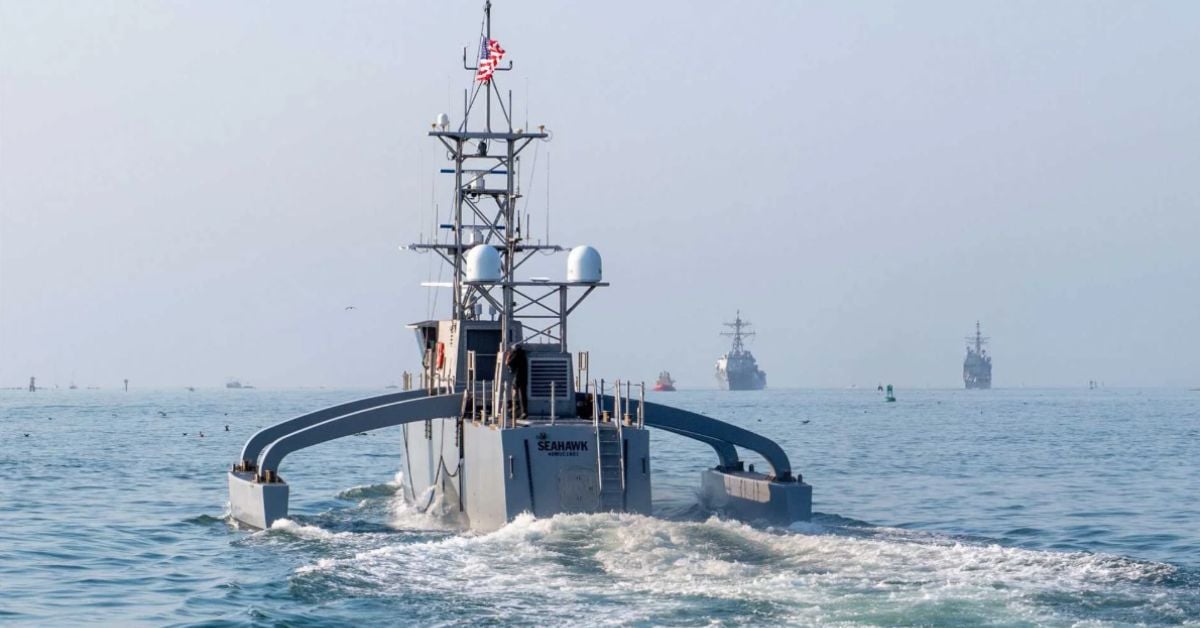
The integration of an unmanned surface vessel into a U.S. Navy carrier strike group is not a distant concept; it is now operational data. The deployment of the Seahawk alongside the USS Theodore Roosevelt represents a calibrated step toward validating autonomous systems in the most demanding maritime environment. For our readers, whether they are defense analysts, policymakers, or engineers, this is a live experiment in how we measure and trust machine decision-making under operational pressure. This development parallels the strategic industrial commitments seen in the $6.6 Billion Maryland Shipyard Marks Largest U.S. Maritime Investment Since WWII, where infrastructure is being built to support a new generation of naval assets. It also echoes the operational endurance questions raised by the Longest carrier deployment in decades signals shifting maritime demands, as unmanned systems may redefine what sustained presence at sea actually requires.
What matters here is the shift from controlled trials to empirical, real-world integration. The Seahawk, operating on the Leidos Autonomous Vessel Architecture, is not simply a remote-controlled boat. It interprets and predicts changing operational requirements without a crew onboard, coordinating with escorts, replenishment ships, and destroyers over a sustained deployment. The Navy's objective is to gather longitudinal data on autonomous decision-making, maintenance needs, endurance, and command-and-control interoperability. This is not about replacing crewed vessels; it is about complementing them. The Seahawk widens the carrier group's sensing, monitoring, and surveillance capabilities, carrying additional payloads and sensor systems without duplicating crewed roles. The practical takeaway is that the data from this deployment will inform whether unmanned surface vessels can be reliably integrated into combat formations without increasing personnel requirements. That is a measurable, validated outcome, not a marketing claim.
The open question is one of trust. Can an autonomous vessel interpret the tactical intent of a carrier strike group without human intuition? The Navy is testing exactly that: how Seahawk interacts with the cruiser USS Chosin, the destroyers, and the air wing during dynamic operations. This is where the distinction between controlled trials and sustained deployment becomes critical. Trials cannot replicate the friction of a 320-day deployment or the unpredictability of multi-ship coordination. The Seahawk's performance will generate empirical evidence on where autonomous systems add value and where they introduce risk. For defense planners, this is the dataset that will shape procurement for the next decade.
Watch for the maintenance data. An unmanned vessel operating across the Pacific without a crew to perform routine repairs will reveal the true operational cost of autonomy. That metric, reliability versus maintenance demand, will determine whether the Navy accelerates or pauses its unmanned surface vessel programs. The Seahawk is not a proof of concept; it is a calibrated instrument for measuring what we can safely delegate to machines. The results will be peer-reviewed by operational reality.