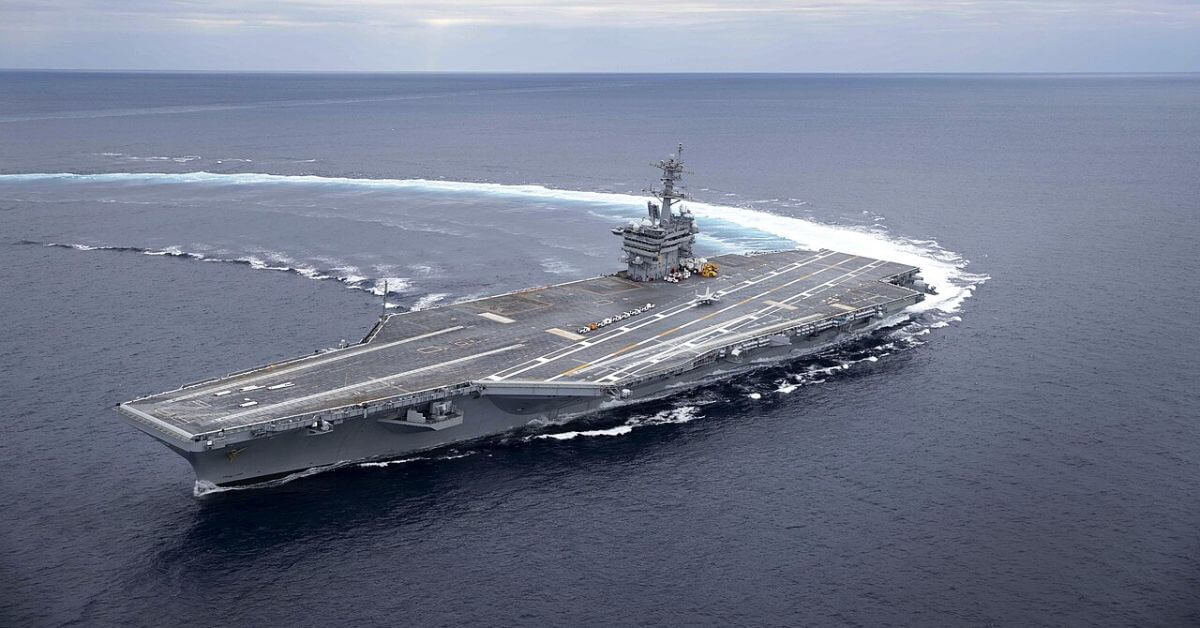
Understanding drives protection, and the return of the USS Abraham Lincoln's crew after 321 days demands a response grounded in measurable, empirical care rather than symbolic gestures. The deployment, the second-longest by a US aircraft carrier since Vietnam, placed more than 5,000 sailors and Marines under conditions that are now being validated as a stressor on cognitive health: 286 consecutive days at sea without a port call. This is not merely a logistical milestone. It is a longitudinal dataset on human endurance under isolation, and California's decision to connect returning personnel to mental health services through the Steven A. Cohen Military Family Clinics is a calibrated intervention. The state's initiative, part of the California Veterans Health Initiative funded with up to $38 million, provides individual, couples, and family counselling alongside case management. For our readers, researchers, policymakers, and advocates tracking the long-term effects of extended deployments, this is a case study in integrated support infrastructure that deserves close observation.
The contrast with recent naval returns is instructive. The USS Robert Smalls recently concluded a seven-month deployment focused on gathering ocean intelligence, a mission of data collection that parallels the data now being generated about crew well-being. Meanwhile, the USS Abraham Lincoln's own previous deployment was documented in our coverage of 265 days at sea, where validated operational metrics were the focus. Now the variable is human, not tactical. The state's outreach acknowledges that the same isolation that enables sustained combat readiness can degrade cognitive resilience. Dylan Holden, a Navy veteran and mental health advocate, noted that isolation at sea compounds the difficulty of seeking help. This is not an alarmist claim; it is an empirical observation that aligns with peer-reviewed research on extended confinement. The clinics' approach, meeting personnel where they are, as therapist Shanae Ball stated, is a practical application of that evidence.
The open question is whether this support will be sustained at scale. The deployment of the USS Gerald R. Ford, which holds the record at 326 days, ended earlier this year, meaning two of the longest carrier deployments in modern history have concluded within months of each other. The cumulative cognitive load on the fleet is not yet quantified, but the data points are accumulating. California's initiative is a response to federal cuts to veterans' mental health care, but its funding is competitive grant-based, not guaranteed. For those tracking climate indicators and human performance under stress, the parallel is clear: just as ocean intelligence requires integrated data ecosystems, so too does military mental health require calibrated, real-time support networks. The specific detail to watch is how many of the 5,000 returning sailors and Marines actually access the clinics, and whether the state's outreach converts into measurable improvements in cognitive health outcomes over the next 12 months.