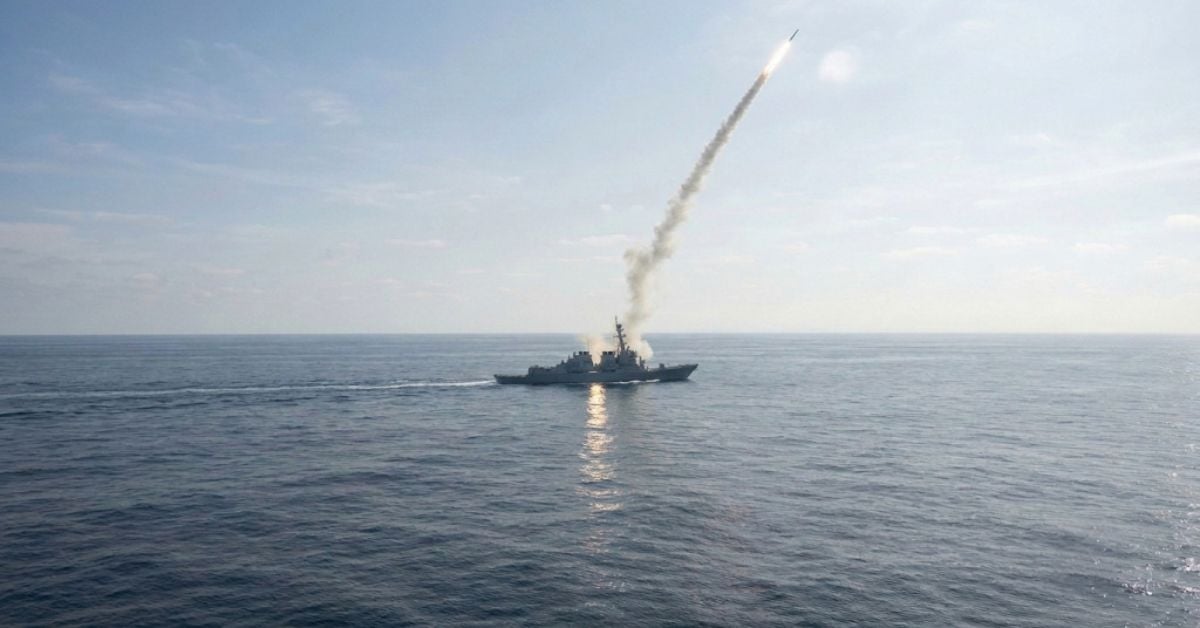
The decision to integrate the U.S. Army's PAC-3 MSE interceptor onto Navy warships by 2029 is a practical, measurable step toward a more unified naval defense posture. This is not about duplicating capability; it is about leveraging an already validated, peer-reviewed system to close a critical gap in shipborne missile defense. For our readers, whether in research, policy, or operations, the takeaway is clear: the boundary between land-based and maritime air defense is dissolving, and the pace of that integration is accelerating.
The Navy's choice to field the PAC-3 MSE, a missile that destroys targets through direct contact and currently handles ballistic missiles, cruise missiles, and aircraft, through the Mk 41 Vertical Launching System signals a deliberate shift. Lockheed Martin's $120 million investment in maritime preparation and the $58 billion Army contract to triple production capacity are empirical indicators of demand. This effort follows an early milestone in 2024, when the interceptor launched vertically from an Mk 70 launcher. The challenge now is reconfiguring the canister and fire-control software for the Mk 41's constraints, a problem the company is already testing. Compare this to the persistence required for France Extends Black Sea Patrols as Maritime Drones Challenge Detection Capabilities, where detection gaps in drone-dense environments force continuous adaptation. Both stories underscore that validated hardware must be re-calibrated for new domains, whether the Black Sea or a ship's launch tube.
The integration timeline is aggressive but grounded. Land-based flight tests are scheduled for 2025, shipboard trials for 2028, and full fielding by 2029. This is not speculative; the contract is awarded, and the production line in Camden, Arkansas, is already running for both Army and naval variants. The development of new S and X band communications software suggests the system is being built for future upgrades, not just the immediate threat. That forward-thinking approach mirrors the validated milestone seen in A Validated Milestone in Allied Naval Defense: 1,000th ESSM Block 2 Delivered, where consistent production and allied cooperation produced a tangible capability benchmark. The PAC-3 MSE program now aims for a similar scale, but with the added complexity of a dual-domain launcher.
What this means in practical terms: a single interceptor production line now serves two services and multiple international clients, reducing cost per unit and accelerating fielding. But the open question is whether the Mk 41 canister redesign will hold up under the thermal and mechanical stress of vertical launch at sea. The company's recent trial, checking whether the missile passes through the Mk 41 canister without damage, is the hinge point. If that test holds, the Navy gains a hypersonic-capable interceptor without building a new missile from scratch. If it fails, the 2029 timeline slips. Watch the land-based flight test results next year for the first empirical signal.