U.S Navy’s Carrier Abraham Lincoln To Dock At Thai Port Before Heading Home After 250-Day Middle East Deployment
Our take
The impending docking of the USS Abraham Lincoln in Thailand following its 250-day deployment to the Middle East represents more than a routine port call; it highlights a shifting strategic landscape and underscores the U.S. Navy's evolving operational posture in the Indo-Pacific region. The deployment itself, occurring amidst heightened tensions with Iran, served as a visible demonstration of American commitment to regional stability. Considering recent reports detailing [Iran’s IRGC Unit 4000 Plans Attacks On Ships, Waterways And Ports In East Asia, Sources Say], the Lincoln’s presence – and subsequent transit – carries significant weight, signaling both deterrence and a potential response capability. This move also follows on the heels of advancements in naval technology, such as [Rolls-Royce Wins U.S. Navy Certification For mtu Engines In Autonomous Naval Vessel Operations], demonstrating a continued investment in maintaining a robust and technologically advanced fleet. The decision to conclude the deployment in Thailand, rather than returning directly to a U.S. port, suggests a deliberate effort to maintain a forward presence and strengthen alliances in Southeast Asia.
The choice of Thailand as a port of call is particularly noteworthy. It underscores the deepening security cooperation between the U.S. and Thailand, a longstanding ally in the region. This partnership is becoming increasingly vital as China's naval power expands and its influence in the South China Sea grows. The Lincoln’s visit allows for logistical replenishment, crew rest, and potentially, joint exercises or training opportunities with Thai naval forces. Furthermore, the U.S. Navy’s ongoing development of [U.S Navy To Build Small Drone-Fired Anti-Submarine Weapons For Aircraft Carriers] emphasizes a proactive approach to addressing emerging threats in the maritime domain, particularly in areas with complex underwater terrain and potential asymmetric warfare capabilities. The deployment and subsequent port call therefore reflect a nuanced strategy aimed at projecting power, reassuring allies, and adapting to evolving security challenges.
The broader implications of this event extend beyond immediate geopolitical considerations. It reinforces the interconnectedness of global maritime security and the increasing importance of Southeast Asia as a strategic hub. The Middle East remains a critical area of focus for the U.S. Navy, but the Indo-Pacific is undeniably gaining prominence. This shift is driven by economic realities, demographic trends, and the rise of competing powers. The Abraham Lincoln’s deployment and its subsequent itinerary demonstrate a commitment to maintaining freedom of navigation and upholding international law in the face of increasing regional tensions. The integration of advanced technologies, like those showcased in the Rolls-Royce certification, will be essential for sustaining this presence and ensuring operational effectiveness in the years to come. The strategic calculus is complex, demanding a flexible and adaptive approach to naval operations and international partnerships.
Looking ahead, the continued evolution of naval warfare capabilities, coupled with the shifting geopolitical landscape, warrants close observation. How will nations adapt their naval strategies in response to the proliferation of drone technology and autonomous systems? Will the U.S. Navy maintain its commitment to forward presence in the Indo-Pacific, or will resource constraints necessitate a recalibration of priorities? The Abraham Lincoln’s journey, from the Middle East to Thailand, provides a valuable snapshot of the current state of maritime affairs, but the questions it raises about the future of naval power and regional security remain crucial to monitor.
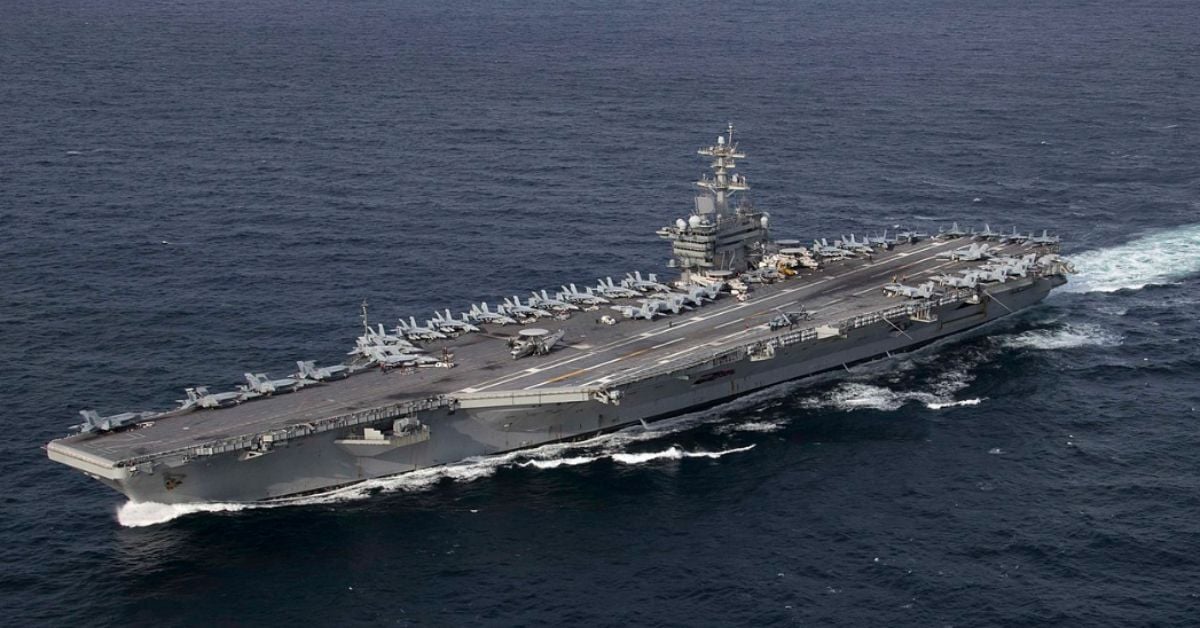
The U.S. Navy’s 5th Nimitz-class aircraft carrier and one of the biggest warships in the world, the USS Abraham Lincoln, is set to dock in Thailand following its lengthy deployment in the Middle East. After this port call, the carrier will set sail for the United States.
During the visit, around 5000 sailors would disembark in more than 250 days and explore the eastern part of Thailand. The carrier is going to dock at a port near Pattaya, known for its vibrant nightlife, cultural attractions and culinary experiences.
The Mayor of Pattaya, Poramet Ngampichet, said that the port call will boost the economy, adding that another U.S naval ship, USS Frank E. Petersen Jr., will arrive at another port.
He added that Thailand wants to boost tourism, especially in Pattaya, which is a popular vacation spot, though visits have declined due to an increase in oil and gas prices, which has led to inflation globally after the U.S-Iran war.
He also said that Pattaya would always be open to welcome troops, be it for a naval drill, an exercise or simply a vacation after a long deployment.
The mayor met U.S. Navy officials and said that the personnel would be prohibited from some activities like parasailing and consuming marijuana for security reasons and to ensure their safety before they return home to their families.
Thai Police and Government officials have also instructed business owners in the city not to overcharge the U.S troops during their visit and to display the best hospitality.
One cafe in Pattaya already put up a poster to welcome the carrier and thank the sailors for their service, in hopes of boosting sales.
According to sources, Police and special security teams would be deployed in popular places close to Pattaya Beach and Walking Street.
Other Law Enforcement Firms are also working with the officials to prevent undesirable situations, according to Police Chief Anek Srathongyoo, who added that if any personnel break the law, they would be punished.
Lincoln was relieved as the navy received several complaints from the family and friends of the sailors who spent over 250 days at sea.
This had led to worsening mental health, suicidal tendencies among some crew members, unhygienic conditions, shortage of food and water, clogged toilets, delays in receiving and sending mail, etc, most of which have been denied by the U.S Naval Secretary and top naval officials.
U.S President Donald Trump even brushed off the complaints and concerns and said that the deployment was not that long.
Read on the original site
Open the publisher's page for the full experience