U.S. Navy Aircraft Carrier Abraham Lincoln Leaves Thailand After 5-Day Port Visit
Our take
The recent departure of the U.S. Navy’s aircraft carrier Abraham Lincoln from Thailand following a five-day port visit offers a brief window into the operational demands placed on modern naval forces and the complex geopolitical landscape they navigate. While seemingly a routine logistical stop, this visit occurs against a backdrop of heightened tensions in the Middle East and ongoing efforts to modernize naval capabilities. The crew’s respite comes after an extended deployment that included operations in the region, underscoring the persistent need for forward presence and rapid response capabilities. It’s worth noting the recent claims of an incident involving an unmanned U.S. vessel in the Strait of Hormuz, swiftly dismissed by the U.S. as “total lie,” Iran Claims Strike On Unmanned U.S. Vessel In Strait Of Hormuz, U.S. Rejects Claim As ‘Total Lie’, highlighting the volatile nature of the area and the importance of maintaining a strong naval presence. The strategic value of Thailand as a port for the U.S. Navy is also evident, providing a crucial logistical hub in the Indo-Pacific region.
The deployment and subsequent port visit also resonate within a broader context of technological advancement within the U.S. Navy. America’s biggest military shipbuilder is actively targeting a 15% increase in shipyard output through the integration of robotics and artificial intelligence, America’s Biggest Military Shipbuilder Targets 15% Higher Shipyard Output With Robotics And AI, a move designed to improve efficiency and responsiveness. This push for automation aligns with ongoing efforts to extend the operational range of naval assets, as demonstrated by the recent successful sea refueling of drone boats by a robotic system – a development achieved in a remarkably short timeframe of just seven months U.S Navy’s Robotic System Refuels Drone Boats At Sea To Support Longer Missions. These technological integrations are increasingly vital for sustaining prolonged deployments and mitigating the logistical challenges associated with operating in distant theaters. The Abraham Lincoln’s visit, therefore, becomes a tangible example of the interplay between traditional naval operations and the evolving technological landscape.
The significance of these developments extends beyond immediate tactical considerations. The sustained presence of a carrier strike group like the Abraham Lincoln's in regions like the Middle East serves as a signal of U.S. commitment to its allies and a deterrent to potential adversaries. However, the operational tempo required to maintain such a presence places considerable strain on naval personnel and resources. The emphasis on automation and robotic systems, while aimed at alleviating this strain, also raises questions about the future role of human sailors and the necessary skills required to operate and maintain these increasingly complex systems. The integrated data ecosystem required to support these operations, processing real-time information from multiple sources, underscores the growing dependence on data analytics and sophisticated communication networks. The ability to accurately interpret and act upon ocean intelligence, derived from both traditional and novel sensors, becomes paramount for effective decision-making.
Looking ahead, the continued evolution of naval technology and operational strategies will be crucial for maintaining a credible and sustainable maritime presence. The challenge lies in balancing the need for forward deployment with the imperative of ensuring the well-being and readiness of naval forces. As the geopolitical landscape continues to shift, particularly in the Indo-Pacific region, the ability to rapidly deploy and sustain assets like the Abraham Lincoln, enhanced by technological innovation and calibrated to address emerging threats, will remain a critical indicator of global power and influence. A key question worth watching is how effectively the Navy can integrate these new robotic and AI capabilities into existing operational doctrines while retaining the human element essential for adaptability and nuanced decision-making in complex environments.
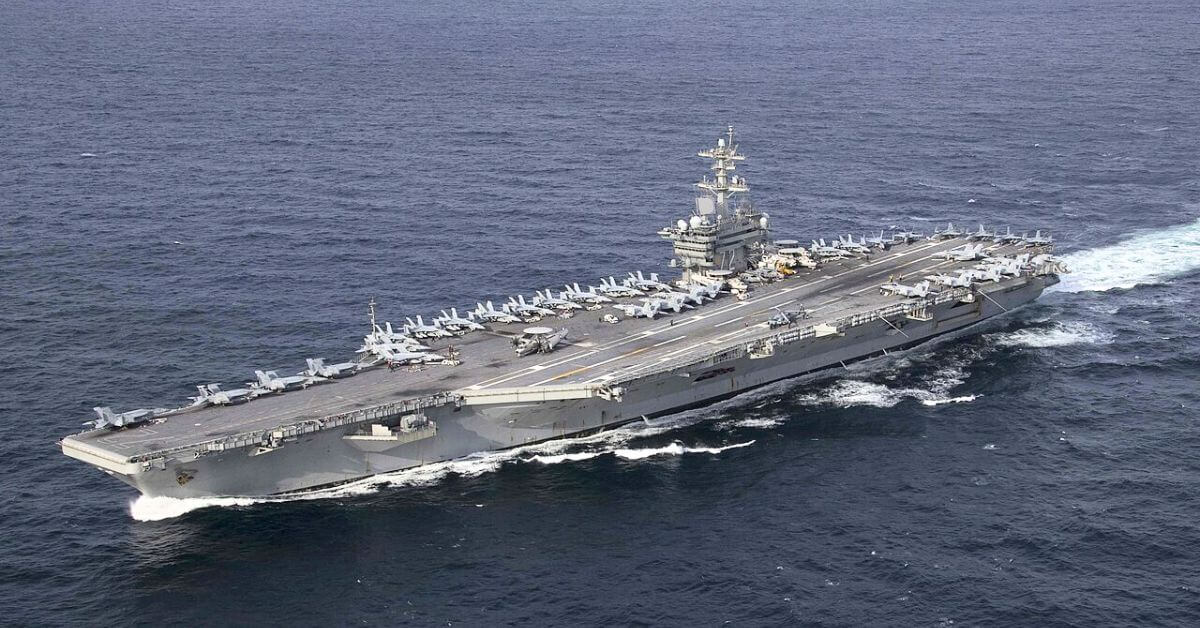
The U.S. aircraft carrier Abraham Lincoln left Thailand on Sunday after a five-day port visit, the U.S. Navy said.
The visit gave its crew a short break after an extended deployment including operations in the Middle East.
The nuclear-powered carrier has about 5,000 personnel on board. It arrived in Thailand early Wednesday with other U.S. Navy ships.
The Lincoln had taken part in the U.S. naval blockade and combat operations during the war with Iran.
Democratic lawmakers said the carrier’s deployment had set a modern-day record for consecutive days at sea.
“We would like to thank the people of Thailand for their incredible hospitality,” U.S. Navy Captain Dan Keeler, the carrier’s commanding officer, said in a statement.
Sailors visit Pattaya
Soon after the ships docked, buses carrying sailors and Marines in civilian clothes arrived at a hotel in Pattaya.
Pattaya is a resort city about 150 km southeast of Bangkok. Many sailors smiled and waved as they arrived.
The port visit was planned for five days. Thai officials had said the carrier would arrive on Wednesday and leave on Sunday.
Thailand is the United States’ only treaty partner in mainland Southeast Asia.
Lincoln had been at sea for an extended period
U.S. Navy deployments usually last six to nine months, but they can be longer during a conflict.
The Abraham Lincoln had been on an extended deployment including operations in the Middle East. During the war with Iran, it took part in the U.S. naval blockade and combat operations.
Lawmakers said the carrier had spent a modern-day record number of consecutive days at sea.
The five-day visit to Thailand gave the crew a break from that deployment before the carrier left the country on Sunday.
The Abraham Lincoln and the other U.S. naval vessels that arrived with it have now left Thailand and continued their deployment.
The U.S. Navy did not provide further operational details in the information available.
References: Reuters, Independent
Read on the original site
Open the publisher's page for the full experience