Iran Claims Strike On Unmanned U.S. Vessel In Strait Of Hormuz, U.S. Rejects Claim As ‘Total Lie’
Our take
The recent exchange between Iran and the United States regarding an unmanned vessel in the Strait of Hormuz underscores the escalating tensions in a strategically vital waterway. Iran's claim of striking a U.S. unmanned vessel, swiftly and vehemently denied by Washington as a "total lie," highlights the inherent risks of operating autonomous systems in contested maritime environments. This incident arrives amidst broader geopolitical shifts and a growing reliance on unmanned platforms by naval forces worldwide. The increasing integration of robotics and AI in maritime operations, as exemplified by [America’s Biggest Military Shipbuilder Targets 15% Higher Shipyard Output With Robotics And AI], is fundamentally reshaping naval capabilities, but also introduces new avenues for miscalculation and conflict. The potential for misinterpretation of sensor data, coupled with the lack of human oversight in certain autonomous systems, necessitates careful consideration of operational protocols and risk mitigation strategies.
The Strait of Hormuz, a critical chokepoint for global oil transit, has long been a flashpoint for regional instability. The deployment of unmanned systems—drone boats in particular—amplifies the complexity of the situation. These vessels, increasingly capable of persistent surveillance and even offensive actions, offer a lower-risk profile for operators but lack the nuanced judgment of human sailors. The U.S. Navy's own efforts to extend the operational range of these platforms through robotic refueling at sea, as detailed in [U.S Navy’s Robotic System Refuels Drone Boats At Sea To Support Longer Missions], demonstrate the growing importance of unmanned systems in maritime power projection. However, such deployments inevitably invite scrutiny and potential interference from adversarial actors, particularly in areas with contested sovereignty. The Indian Navy’s efforts to improve connectivity among its warships with indigenous SATCOM terminals, [Indian Navy Seeks Indigenous SATCOM Terminals To Improve Connectivity Between Warships], further illustrates the broader trend of nations investing in advanced maritime communication and surveillance capabilities, increasing the potential for layered and complex interactions at sea.
The core issue isn't simply the veracity of Iran’s claim, but the implications of escalating reliance on unmanned systems in a region characterized by mistrust and geopolitical competition. The absence of clear rules of engagement for unmanned vessels operating in international waters creates a dangerous ambiguity, ripe for misinterpretation and escalation. The speed at which these systems can operate and the potential for automated responses—even if unintended—increases the risk of accidental conflict. Validation of sensor data, particularly in complex and congested environments like the Strait of Hormuz, is paramount, and the potential for electronic warfare and cyber interference further complicates the picture. The inherent limitations of autonomous systems in distinguishing between legitimate threats and benign activity demand a cautious and deliberate approach to their deployment.
Looking ahead, the incident serves as a stark reminder of the need for internationally agreed-upon protocols governing the operation of unmanned vessels in shared maritime spaces. The proliferation of these systems, coupled with the increasing sophistication of their capabilities, necessitates a renewed focus on de-escalation strategies and confidence-building measures. The question remains: can a framework be established that balances the operational advantages of unmanned systems with the imperative to prevent unintended conflict in strategically sensitive areas, or will the continued expansion of these platforms further exacerbate tensions and increase the risk of miscalculation at sea?
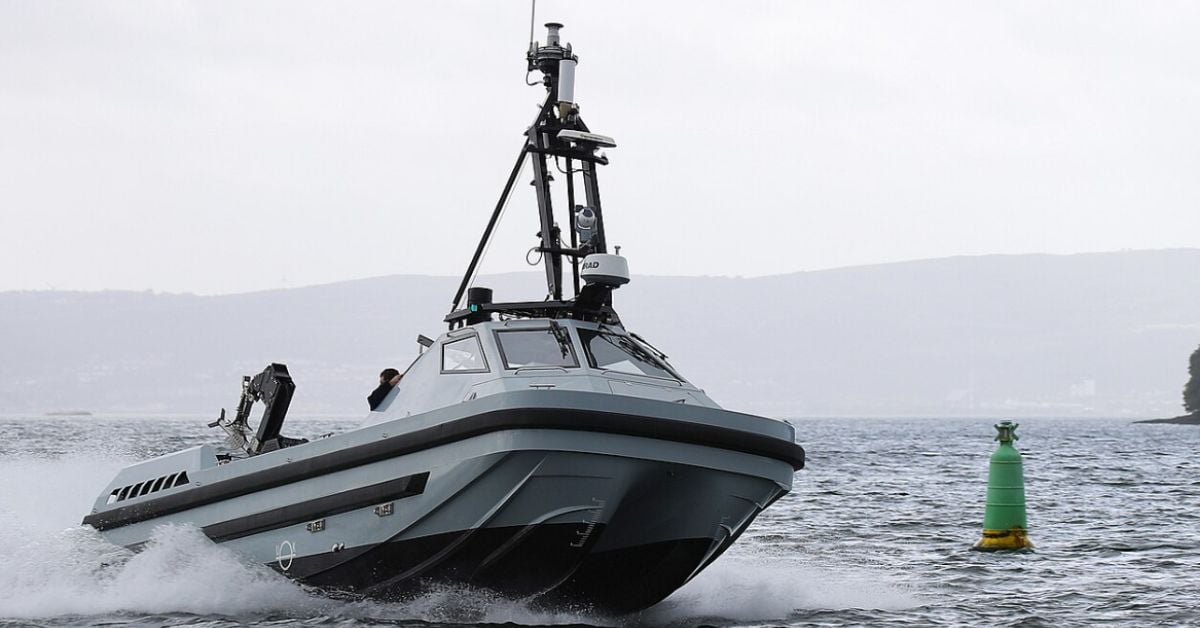
Iran said on Sunday it had attacked an unmanned U.S. vessel trying to enter an area that Iran says is restricted in the Strait of Hormuz.
Capt. Tim Hawkins, a spokesperson for U.S. Central Command, rejected the claim. Hawkins said the U.S. military had not been attacked as claimed by Iran, calling the report a “total lie.”
The claim followed the U.S. military’s announcement that it had struck three Iranian oil tankers after Iran launched ballistic missiles at U.S. Navy warships.
Iranian parliament speaker and chief negotiator Mohammad Bagher Qalibaf said the era of “proportionate responses” was over.
He said Iran’s response would be “faster, heavier and more painful.”
Iran Plans Exclusion Zone Near Strait
Iran has also said it plans to create an “exclusion zone” outside the Strait of Hormuz.
Mohsen Rezaei, the new head of Iran’s Supreme National Security Council, made the comments to Iran’s state broadcaster.
He said the zone would target vessels that Iran believes are trying to pass through the waterway.
Rezaei gave few details about the plan. He said it would start from the line of the U.S. naval blockade, move toward the Strait of Hormuz and continue into the Persian Gulf.
He said Iran would announce the zone in the coming days and weeks.
US and Iran Resume Attacks
The fighting restarted after about a month of relative calm. The Strait of Hormuz and areas along Iran’s southern coast have again been targeted.
At least five people were killed earlier in the week during a U.S. bombardment of southern Iran. The war began with U.S. and Israeli attacks on Iran on Feb. 28.
A fragile ceasefire was announced in June. Fighting has continued on and off since then, while negotiations have collapsed.
Both sides have been trying to put military and economic pressure on the other.
Iran’s Nuclear Program Remains Unresolved
Iran’s nuclear program was one of the issues that led to the outbreak of the war.
The issue was supposed to be discussed in negotiations between the United States and Iran. Those talks fell apart soon after the two countries signed a memorandum of understanding in mid-June.
Diplomats say the United States, Britain, France and Germany want to refer Iran to the U.N. Security Council for failing to meet its nuclear nonproliferation obligations.
References: AP News, WPXI
Read on the original site
Open the publisher's page for the full experience