U.S Navy’s Robotic System Refuels Drone Boats At Sea To Support Longer Missions
Our take
The recent demonstration of a robotic system successfully refueling a drone boat at sea by the U.S. Navy represents a significant leap forward in maritime autonomy and operational endurance. This accomplishment, achieved in a remarkably short timeframe of just seven months, underscores the accelerating pace of innovation within naval technology. The ability to extend the operational range of unmanned surface vessels (USVs) without reliance on port access dramatically alters mission profiles, particularly in contested or remote environments. This development arrives at a crucial moment, given escalating geopolitical tensions in regions like the Strait of Hormuz, where [Iran Threatens To Set Up ‘Exclusion Zone’ Near War-Torn Strait Of Hormuz Following Tanker Attacks] highlights the complexities and potential risks to maritime commerce. The implications extend beyond immediate security concerns, impacting everything from oceanographic research to environmental monitoring.
The rapid development cycle itself is noteworthy. Traditional naval systems often require years of research, development, and testing; the seven-month timeframe suggests a shift towards more agile and adaptive engineering practices, likely leveraging modular designs and advanced simulation techniques. This contrasts with the lengthy development timeline for systems like the [New Ship-Mounted Weapon System Passes 48 Tests To Protect Naval Vessels From Drone Attacks], demonstrating that different types of naval technologies can follow different development trajectories. Moreover, the increased reliance on USVs, facilitated by advancements in refueling technology, can reduce the risks and costs associated with deploying manned vessels, particularly in hazardous areas. The current situation in the Strait of Hormuz, where [40 Oil Tankers Loaded With 18 Million Barrels Of Oil For Asia Cross Hormuz Under U.S Naval Escort], further underscores the strategic value of persistent, unmanned surveillance and response capabilities.
The broader significance of this technology lies in its potential to reshape naval operations and maritime domain awareness. Extended operational range translates to enhanced data collection capabilities, allowing for more comprehensive and longitudinal monitoring of ocean conditions, marine ecosystems, and potential threats. Integrated data ecosystems, fueled by real-time data streams from these USVs, will become increasingly vital for informed decision-making. Furthermore, the ability to deploy and sustain USVs without constant logistical support simplifies deployment and reduces the overall footprint of naval operations. This shift towards a more distributed and autonomous fleet architecture will necessitate advancements in artificial intelligence and machine learning to manage and interpret the vast influx of data generated by these systems, requiring calibrated and validated algorithms for optimal performance.
Looking ahead, the integration of this refueling capability with other advancements in USV technology, such as improved sensor suites and autonomous navigation systems, will unlock even greater potential. A key question to watch is the development of standardized refueling protocols and the integration of these systems into existing naval logistics chains. Ensuring interoperability between different USV platforms and robotic refueling systems will be crucial for maximizing operational effectiveness and fostering global collaboration. The ability to create a truly integrated data ecosystem, providing ocean intelligence in real-time, hinges on continued innovation in both hardware and software, validating the potential for a new era of maritime operations.
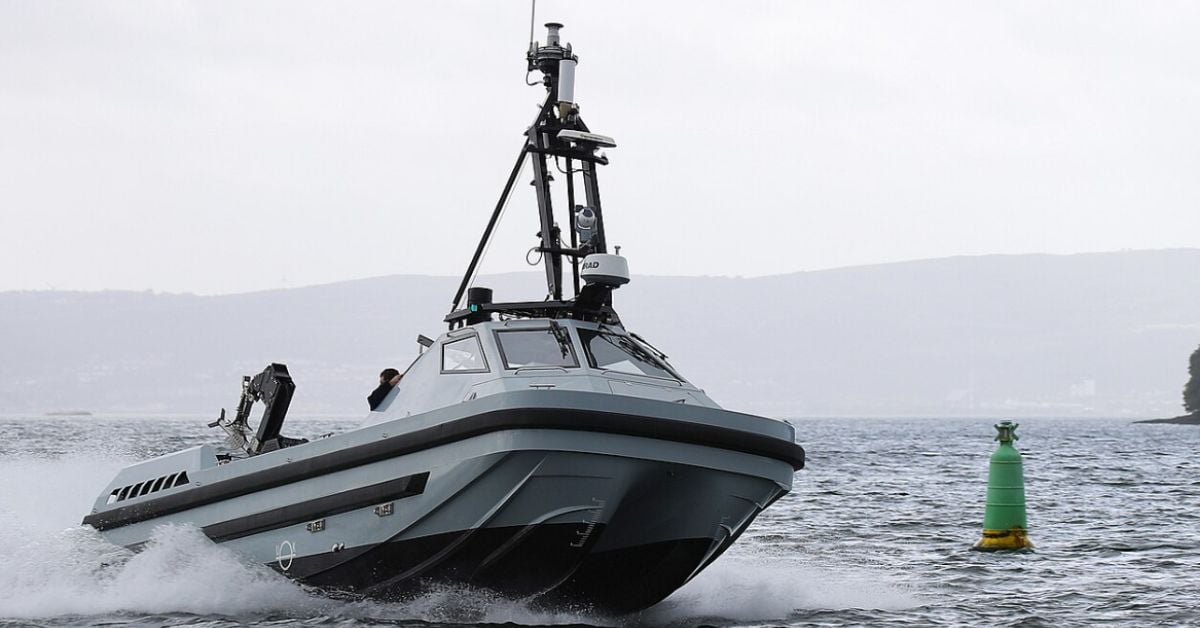
A robotic system which was developed in just 7 months successfully refuelled a drone boat at sea, without requiring it to return to port.
The demonstration took place in August by the Naval Air Warfare Centre Weapons Division near the Joint Expeditionary Base Little Creek-Fort Story in Virginia.
A training support ship, the USNS Vindicator, towed the robotic system, which then captured the drone boat or unmanned surface vehicle, T38, refuelled it and then gradually released it back within minutes.
This is a significant milestone for the U.S Navy, which would reduce the need for drone boats to return to port and conduct risky missions without worrying about refuelling.
It would bolster the naval warfare capabilities of the Navy and its efficiency in maintaining greater coverage while decreasing its reliance on manned support ships.
Atleast a hundred trials of this kind were performed over the span of weeks, transferring atleast 400 gallons of fuel to the T38 drone boat. Similar demonstrations were also conducted at the pier to test the versatility of the system.
The refuelling system could also be used for the Navy’s Blue Water Instrumentation programme, though it currently aims to conduct trials for hypersonic weapon systems, long-range missiles, etc.
According to the director of the programme, Spencer Holloway, a new robotic system could support this endeavour given how important it can prove for the naval forces, since the ability to refuel drone vessels at sea means they can be conveniently deployed in places where sending manned ships could be risky for the personnel.
It would also enable the Navy to depend on unmanned ships for an array of missions, including high-profile ones in case of a conflict, stated Ronald Raymer of the U.S. Fleet Forces Command. He added that this would also reduce the need to invest in costly manned ships.
The next step would be to try to combine the entire process into an autonomous one, with minimal human intervention, testing the system’s decision-making ability in real time, its ability to decide the volume of fuel, the way to capture the drone boat, and how to safely disconnect and return the unmanned drone boat to the waters during a mission.
Read on the original site
Open the publisher's page for the full experience