America’s Biggest Military Shipbuilder Targets 15% Higher Shipyard Output With Robotics And AI
Our take

The ongoing modernization of naval shipbuilding, exemplified by Huntington Ingalls Industries’ (HII) ambitious plan to increase shipyard output by 15% through robotics and AI, represents a significant shift in how maritime capabilities are developed and sustained. This isn't merely about efficiency gains; it signals a broader strategic realignment in response to evolving geopolitical dynamics and technological advancements. The integration of robotics and physical AI into shipbuilding processes directly addresses the challenges of workforce shortages and escalating costs, both of which are increasingly impacting the readiness of naval forces globally. The recent demonstration of a robotic system successfully refueling drone boats at sea [U.S Navy’s Robotic System Refuels Drone Boats At Sea To Support Longer Missions] highlights the accelerating pace of automation within the maritime domain, and HII’s initiative aligns with this trajectory. Furthermore, considering the escalating tensions in regions like the Strait of Hormuz, where Iran has recently threatened to establish an “exclusion zone” [Iran Threatens To Set Up ‘Exclusion Zone’ Near War-Torn Strait Of Hormuz Following Tanker Attacks], bolstering shipbuilding capacity and efficiency becomes a matter of national security.
The decision to combine technological upgrades with an expansion of the skilled workforce is particularly noteworthy. It acknowledges that automation is not a replacement for human expertise, but rather a force multiplier. Effective integration of robotics and AI requires trained personnel to design, maintain, and oversee these systems, creating a demand for a new generation of maritime specialists. This echoes observations from recent incidents involving attacks on oil tankers, where the need for robust defensive capabilities and rapid response times is paramount [Video: U.S. Strikes 3 Iranian Oil Tankers After IRGC Targets 2 Navy Warships With Ballistic Missiles]. The increased output from modernized shipyards allows for a greater responsiveness to emerging threats and the ability to sustain a larger and more capable fleet. HII's calibrated approach—prioritizing both technological innovation and human capital—suggests a realistic understanding of the complexities involved in transforming a traditionally labor-intensive industry. It moves beyond simplistic narratives of automation replacing workers and instead focuses on creating a symbiotic relationship between humans and machines.
The implications of this development extend beyond the immediate benefits to the U.S. Navy. The validated methodologies and empirical data generated through HII’s implementation of robotics and AI can serve as a model for other shipbuilding nations, contributing to a broader global trend toward increased maritime efficiency and resilience. An integrated data ecosystem, as HII is likely building to support these advancements, can also facilitate collaboration and knowledge sharing across the international maritime community, fostering a more robust and interconnected network for addressing shared challenges such as piracy, illegal fishing, and climate change impacts on ocean ecosystems. The longitudinal data collected from these modernized processes will offer valuable insights into the long-term performance and cost-effectiveness of robotic and AI-driven shipbuilding, providing a benchmark for future investments.
Looking ahead, the success of HII’s initiative hinges on its ability to navigate the challenges of integrating complex technologies into established workflows while simultaneously addressing the evolving skill sets required of its workforce. The question remains: how effectively can these advancements be scaled and adapted across different types of naval vessels and shipbuilding processes? Furthermore, the ethical considerations surrounding the increased use of AI in military applications—particularly regarding autonomous decision-making and potential biases—will demand careful scrutiny and robust oversight as these technologies become more prevalent. The coming years will provide critical data points in assessing the true potential of robotics and AI to reshape the landscape of naval shipbuilding and its contribution to global maritime security.
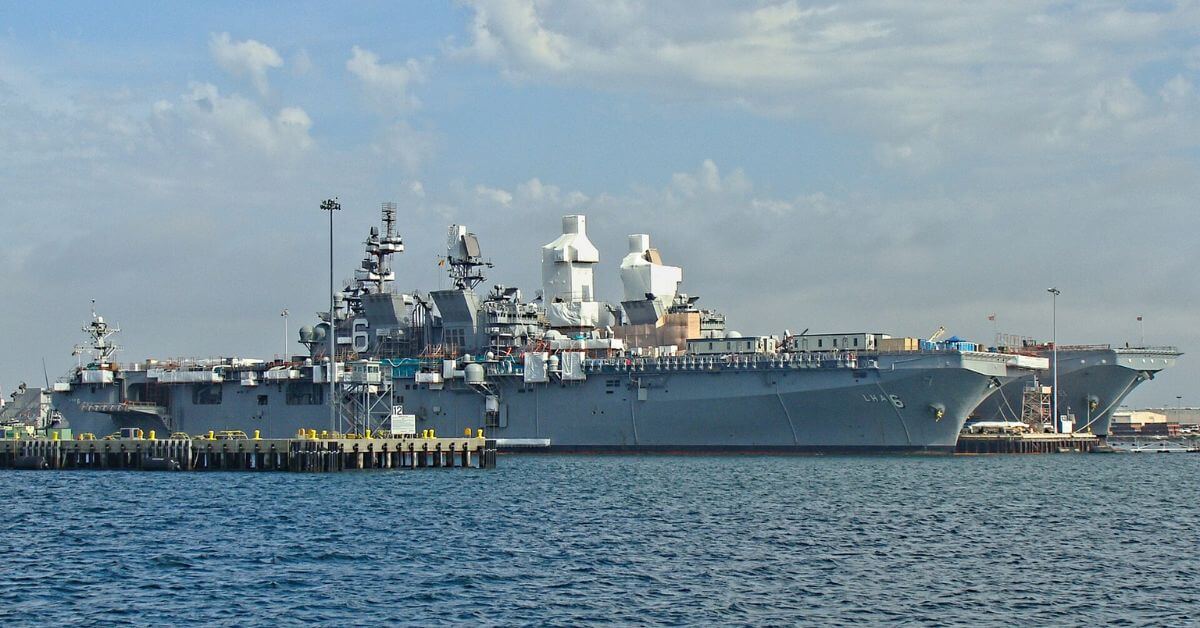
HII, the largest military shipbuilder in the United States, wants to increase its shipyard throughput by 15% this year as it works to deliver ships to the U.S. Navy faster.
The company plans to hire more skilled workers, upgrade its shipyards and use more technology, including robotics and physical AI. HII said its shipyards increased throughput by 14% in 2025.
Around 40 ships are now being built or modernised at HII’s Ingalls and Newport News facilities. The company says it needs more skilled workers, better production facilities and more suppliers to handle higher volumes.
HII plans more robotics in shipbuilding
HII is planning to use more physical AI as it looks for ways to speed up shipbuilding.
Physical AI refers to systems that can work in the physical world rather than simply process information. At HII’s shipyards, this could include robotics, automated production, inspection and other manufacturing work.
The company is also spending money to modernise its shipyards. HII says the upgrades will help it increase production without having to depend only on more workers and more production hours.
Its plan has three main parts: hiring and retaining skilled workers, upgrading shipyard infrastructure and expanding the industrial base that supplies the Navy’s shipbuilding programs.
More workers still needed
HII is not replacing its workforce with robotics. Skilled workers remain an important part of its plans.
The company said new collective bargaining agreements have allowed it to offer competitive wage increases. The aim is to keep experienced shipbuilders and attract more people to skilled trades.
HII is combining those efforts with investment in its shipyards as it tries to raise production.
More than 2 million hours of work to be outsourced
HII also plans to send more work to suppliers and other companies across the United States.
The company expects to outsource more than 2 million hours of work in 2026. That is 178% more than in 2024.
HII says spreading the work among more companies can increase shipbuilding capacity. It also expects the move to give small and medium-sized manufacturers more reason to hire workers and expand their production.
This distributed shipbuilding approach would allow more companies to take part in naval construction while reducing the amount of work that has to be done directly at HII’s own facilities.
References: interestingengineering, robottoday
Read on the original site
Open the publisher's page for the full experience