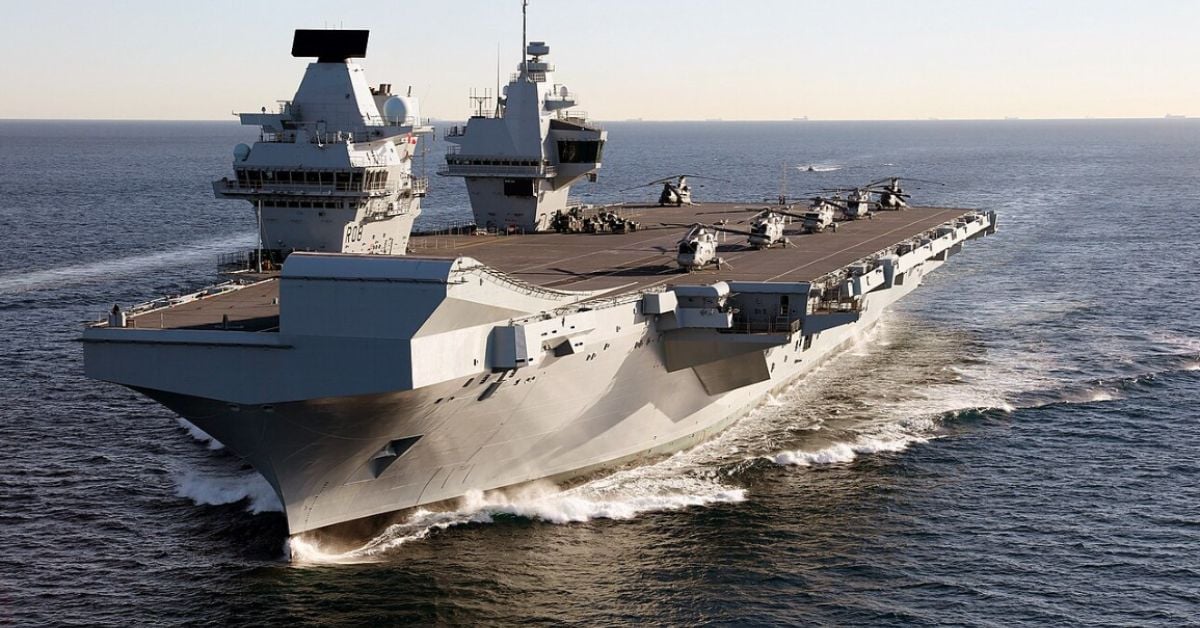
The Royal Navy's successful test of the Nyan strike drone from HMS Queen Elizabeth is a calibrated step toward a future where unmanned systems are not an experiment but an integrated fact of naval power. This is not a distant concept; it is a practical, measurable advance in how carrier strike groups will operate, and it carries direct implications for the balance of maritime capability. The four-for-four strike accuracy in the North Atlantic during Exercise Neptune Reach B proves the concept is viable, and that is what matters most to our readers who track the real-time evolution of ocean intelligence and military readiness.
The integration of the Nyan One-Way Effector, developed by Callen-Lenz, into the Royal Navy's aviation operations required solving a complex puzzle: marrying a compact, 2.9-meter wingspan drone with the launch and recovery rhythms of a warship. This trial builds directly on earlier work with the XV Patrick Blackett and aligns with the broader push under Project Vantage to coordinate unmanned systems across all three British armed services. For context, this follows a similar trajectory we have seen in other navies. The Type 076 drone carrier launches and recovers stealth unmanned aircraft at sea demonstrated that launch-and-recovery of stealth unmanned aircraft from a dedicated carrier is already being tested in the Pacific. Meanwhile, the Unmanned aircraft launch from amphibious assault ship expands ocean intelligence showed that strike and reconnaissance drones are being launched from amphibious platforms. The Royal Navy's test is distinct because it integrates a one-way strike drone directly into the core strike group, not a separate support vessel. This is a purposeful shift toward increasing strike assets while reducing dependence on crewed ships, a strategic choice that demands close observation.
What this means for our readers is a tangible signal that the maritime domain is being recalibrated. Lieutenant Commander David Burton's comment that Neptune Reach B offers vital information for future carrier strike group operations is not a throwaway line; it indicates that the Royal Navy is treating these data as empirical, validated inputs for doctrine. The Nyan drone's affordability and combat mass, as noted by Callen-Lenz CEO Matt Foster, suggest that the calculus of naval engagement is changing. One-way effectors are not about returning to base; they are about delivering precision and then accepting the loss of the platform as a cost of mission success. This stands in contrast to the recoverable stealth drones tested on the Type 076, which imply a different operational philosophy. The specific detail to watch is how the Royal Navy's further evaluations will answer the open question of how many of these drones a carrier like HMS Queen Elizabeth can launch in a single engagement window, and how that mass of strikes reshapes the risk calculus for adversaries. The answer will determine whether this test is a footnote or the first page of a new chapter in naval aviation.