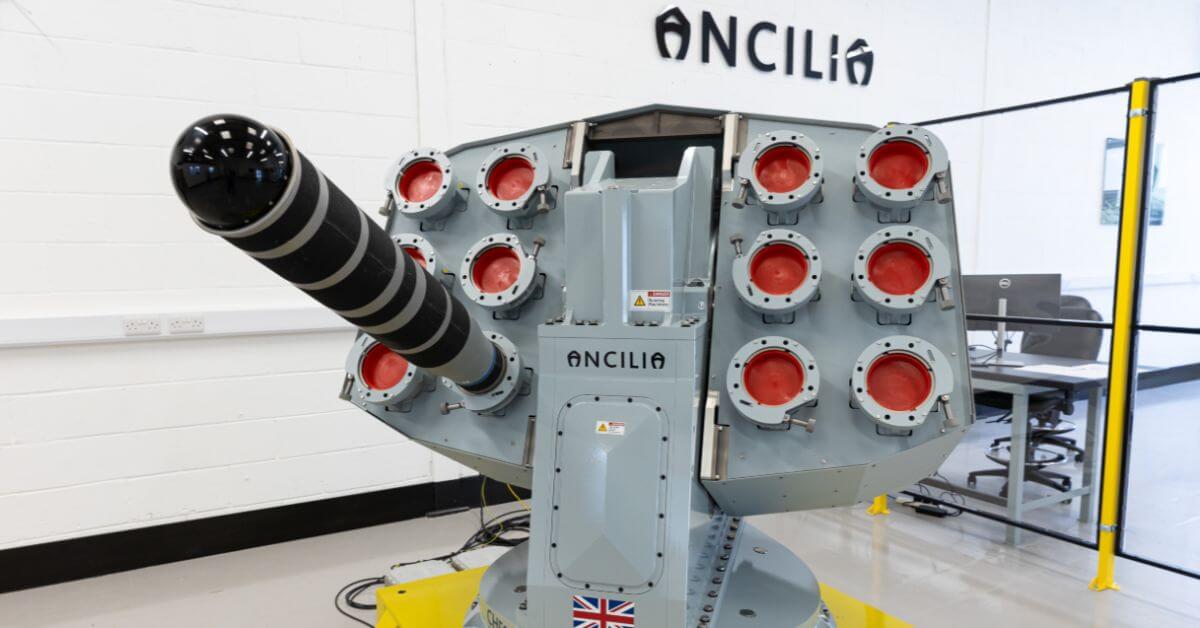
Rotating decoy launchers are not a headline-grabber, but they represent a calibrated, measurable upgrade to naval survivability that deserves attention. The Royal Navy's Ancilia system, tested by electromagnetic warfare specialists in Devon, replaces fixed Sea Gnat launchers with a rotating mount that can track incoming threats without the ship turning. This is a practical evolution of defensive thinking, and it aligns with the kind of integrated, validated capability we have seen in other recent defence investments, such as the Validated Defence Upgrade Strengthens Naval Readiness with Integrated Missile Systems deal between India and Israel Aerospace Industries. Both programmes share a focus on upgrading existing platforms with empirically tested systems rather than betting on unproven concepts.
The practical meaning for fleet operations is straightforward: decoys are only useful if they arrive in the right place at the right time. Fixed tubes force the warship to present a specific bearing to the missile, which can be predictable and slow. Ancilia's ability to rotate quickly and change elevation means the ship's master can place chaff, flares, or radio frequency reflectors with greater precision while maintaining a more flexible course. The operators who tested the controls under day and night conditions, wearing CBRN gloves and respirators, rated the interface intuitive and responsive. That feedback loop, operators testing hardware before fleet-wide installation, mirrors the iterative approach the Royal Navy is taking with its Royal Navy Deploys First Autonomous Squadron to Advance Uncrewed Maritime Operations, where human-machine integration is being refined in real operational settings rather than in isolation.
What matters most is the open architecture. The 130mm decoy rounds are standard now, but the system is designed to fire new types of countermeasures as threats evolve. That forward-thinking design, combined with a £135 million contract for 38 launchers across 19 warships, signals a long-term commitment to electromagnetic defence that is both measurable and upgradeable. It is not a flashy capability, but it is the kind of validated, integrated system that keeps a fleet relevant across decades.
One detail to watch: the same Type 26 and Type 31 frigates receiving Ancilia are also candidates for uncrewed anti-submarine systems like the Arctic Hunter uncrewed vessel proposed for Royal Navy anti-submarine operations. If the Royal Navy can integrate rotating decoy launchers, autonomous surface vessels, and upgraded missile systems into a single electronic warfare architecture, it will have built something more than a collection of hardware, it will have created an integrated data ecosystem for survival at sea. The question is whether the command-and-control backbone can keep pace with the hardware.