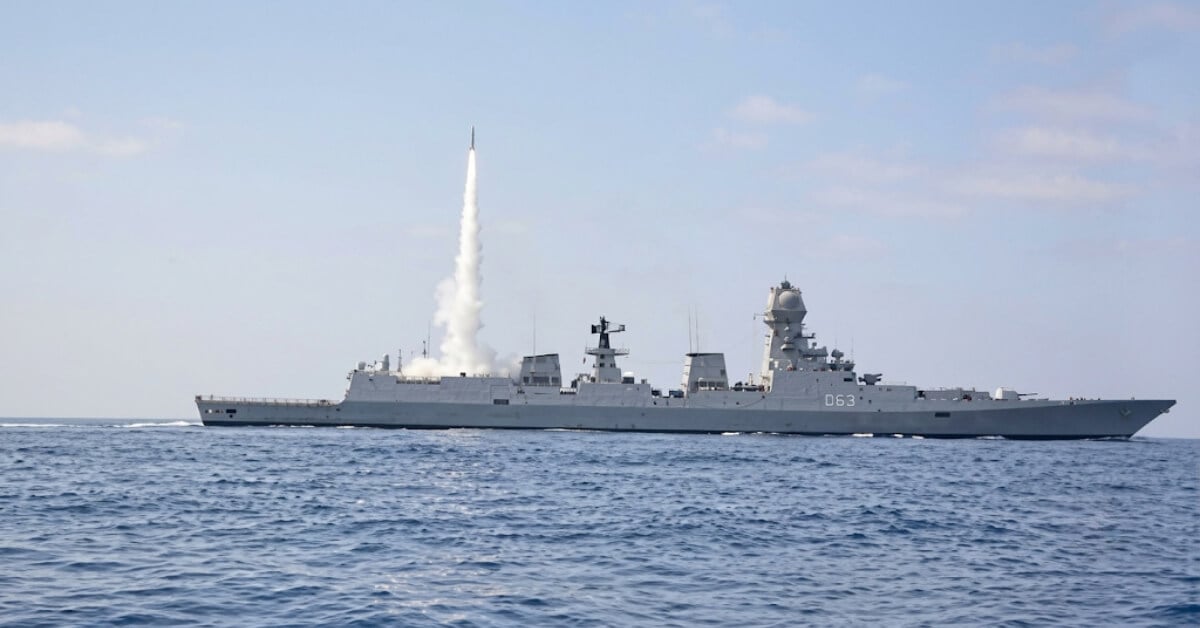
The upgrade of the Barak point defence missile system on Indian Navy warships, formalised through a Rs 1,976.40 crore deal with Israel Aerospace Industries, is a calibrated investment in maritime deterrence that deserves closer scrutiny. This is not merely a hardware refresh; it is a strategic acknowledgment that naval readiness depends on validated, integrated systems capable of countering evolving threats in real time. For our readers, whether they track fleet modernisation, monitor 217-Day Subsurface Patrol Logs New Benchmark in Naval Endurance, or follow Strait of Hormuz stability critical as India seeks safe passage for seafarers, this deal signals a practical shift in how India manages obsolescence across its frontline platforms.
The contract, signed on November 18, 2026, covers a comprehensive overhaul of both hardware and software for the Barak-1 system, which has been fitted on the aircraft carrier INS Vikramaditya, Delhi-class destroyers, and Shivalik- and Brahmaputra-class frigates since its initial procurement in 2000. What matters operationally is the extension of anti-air defence range and the inclusion of obsolescence management, a term that sounds bureaucratic but translates directly to sustained combat capability without repeated, costly replacement cycles. The Defence Acquisition Council cleared this upgrade in August 2025 as part of proposals worth roughly Rs 67,000 crore, placing it within a broader modernisation framework that also includes longer-range systems like the Barak-8, developed jointly with India's Defence Research and Development Organisation.
This deal also underscores the importance of integrated data ecosystems in naval warfare. A point defence missile system is only as effective as the sensor fusion and command architecture that feeds it targeting data. The upgrade addresses that by refreshing the software layer, which likely improves the system's ability to process empirical, real-time threat information, whether from shipboard radars or external sources. In an environment where Diplomatic Channels Mobilized for Merchant Navy Officer in UK Custody shows how geopolitical friction can affect seafarers directly, the ability to protect naval assets becomes a non-negotiable component of safeguarding maritime trade routes.
The specific consequence to watch is how this upgrade affects the Indian Navy's operational tempo in the Indian Ocean Region. With the Barak-1's enhanced range and reliability, warships can maintain layered defence against sea-skimmers and drones without needing to close with the threat. That changes tactical calculations, and, by extension, the strategic posture India projects through its fleet. The question is not whether the system works; it has been peer-reviewed in combat conditions. The open question is how quickly the integrated overhaul can be delivered across the fleet, and whether the obsolescence management clause will prevent the kind of capability gaps that emerge when hardware outpaces logistics.