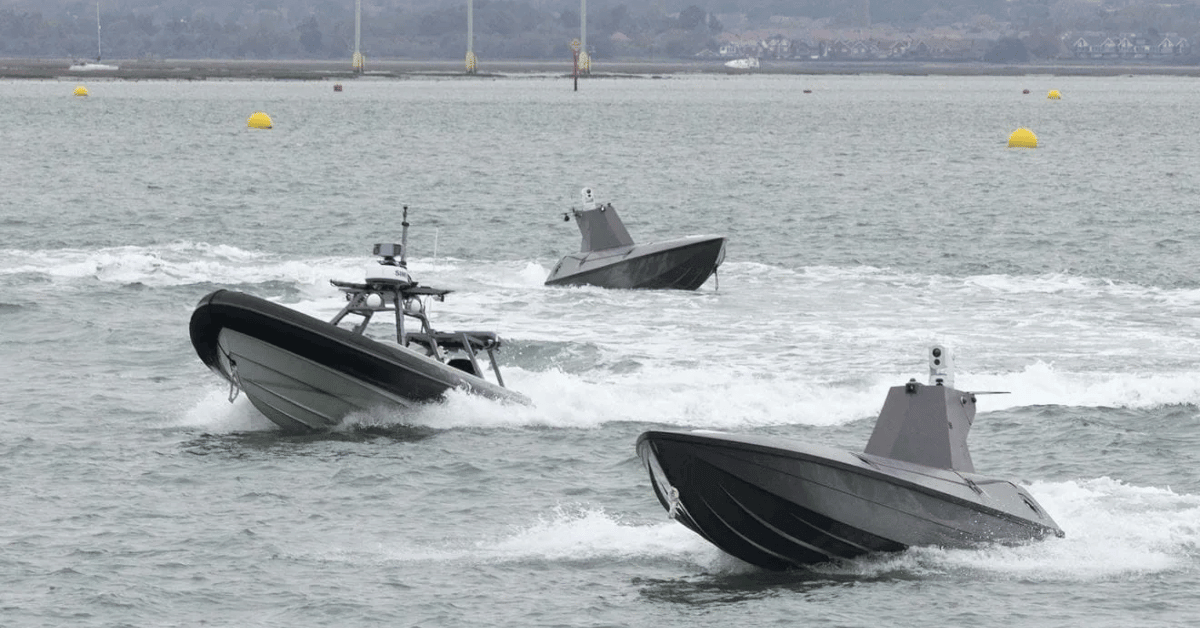
The Royal Navy's commissioning of its first autonomous squadron at Portsmouth is not merely a technological milestone; it is a practical acknowledgment that naval power must evolve to match the speed of the data-driven world. This move, backed by £1.5 billion over four years and a sustained rise in defence spending, signals that uncrewed vessels like Kraken and Rattler are moving from experimental projects to front-line operations. For our readers, researchers, policymakers, and defence analysts, the takeaway is clear: the era of the hybrid navy has arrived, and it will reshape how maritime nations collect, share, and act upon ocean intelligence.
The squadron's structure is telling. With 180 personnel operating in two watches for continuous operations, the Royal Navy is replicating the crew size of a Type 23 frigate but deploying it across uncrewed platforms. This is not about replacing people; as the Fleet Commander stated, people remain at the heart of the service. Rather, it is about extending reach and resilience. Commander Helen Coxon's focus on developing skills, tactics, and confidence for front-line uncrewed operations mirrors the practical challenges we have seen in related developments. The recent Arctic Hunter uncrewed vessel proposed for Royal Navy anti-submarine operations shows that uncrewed systems are being purpose-built for specific threats, while the integration of uncrewed strike capability from the carrier in the North Atlantic demonstrates that these vessels are already operating alongside traditional platforms. The new squadron consolidates that empirical experience into an operational unit.
What makes this announcement particularly significant is the pace of adoption. Project Beehive, the navy's initial programme to buy crewless boats and test hybrid technologies, has now given way to a permanent squadron. The Defence Secretary explicitly linked the funding to the largest sustained rise in defence spending since the Cold War, with the goal of delivering the latest autonomous technology to sailors. The new Portsmouth hub for the Capability Accelerator, a team partially funded by UK Defence Innovation, is designed to adapt off-the-shelf technology for military use more quickly. Kraken and Rattler are cited as proof of that accelerated process. For an audience that values validated, measurable outcomes, this is a calibrated step forward, not hype, but a repeatable model for integrating uncrewed systems into a fleet that must be harder to knock out and quicker to adapt.
The launch coincides with the Atlantic Future Forum and the International Sea Power Conference in Oslo, where collective security in Northern Europe is the focus. That timing is not accidental. The practical question now is how quickly these uncrewed vessels will be deployed operationally, either independently or within allied task groups. The Royal Navy has committed to adding new uncrewed systems at the fastest pace that is responsible. The specific detail to watch is whether the squadron's two-watch system can sustain continuous front-line operations in contested environments, and how the data from these vessels will feed into a broader integrated data ecosystem. That is the concrete measure of whether this historic commissioning becomes a lasting strategic asset or a well-funded experiment.