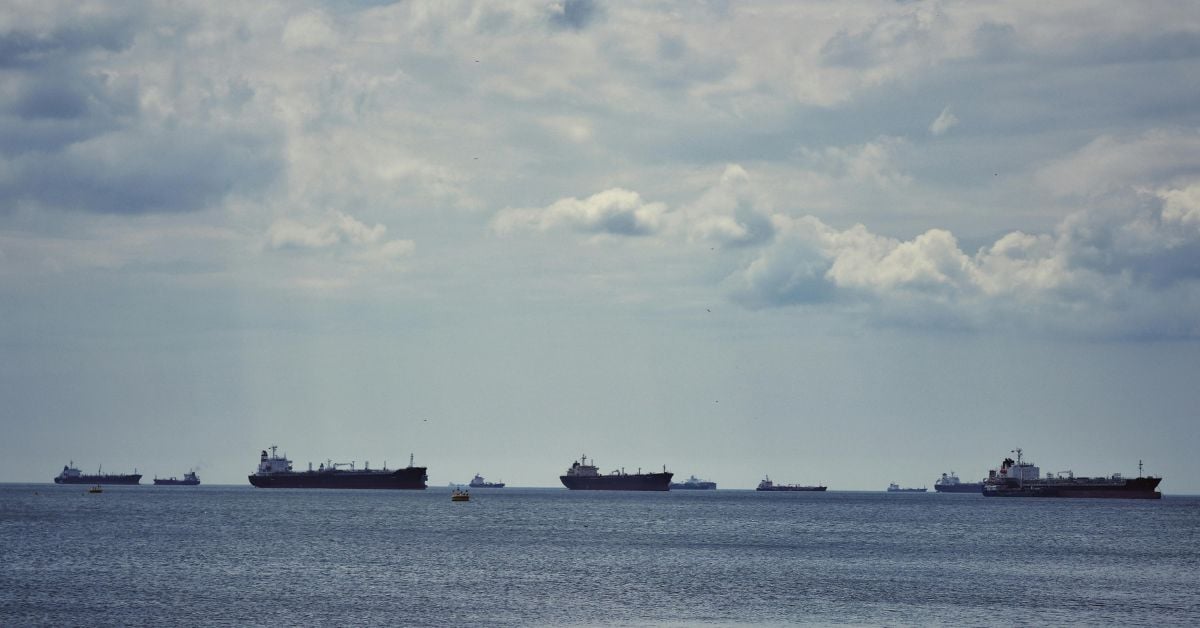
India's refiners are chartering tankers rather than deploying their own to move crude through the Strait of Hormuz, a tactical hedge that reveals how quickly the calculus of energy security is shifting. This is not merely a logistical pivot; it is a signal that the risk premium on passage through the world's most critical oil chokepoint has become a permanent line item. For a nation that imports roughly 85 percent of its crude, and where a significant share transits Hormuz, the decision to externalise vessel risk tells us that conventional supply-chain assumptions no longer hold.
The move unfolds against a backdrop of broader re-routing. As Red Sea crude flows rise as Strait of Hormuz disruptions reshape global routes, loadings at Yanbu have climbed to around 2 million barrels per day, a concrete indicator that alternative corridors are absorbing pressure. India's chartering strategy is the operational counterpart to that macro trend: when the primary artery becomes unreliable, the cost of flexibility is paid in charter rates, not in owned hulls. Meanwhile, the real-world stakes of maritime operations in contested waters are underscored by the recent tragedy of five seafarers killed as pirates open fire on hijacked tanker during rescue. That incident is a grim reminder that the risks refiners are pricing into charter contracts are not abstract, they are measured in lives.
Our view is that this development is less about short-term disruption and more about a structural re-evaluation of ocean intelligence. The decision to charter rather than commit owned tonnage implies that refiners are treating Hormuz as a zone of persistent volatility, not a temporary flare-up. That has practical consequences for how the industry models insurance, inventory buffers, and fleet allocation. It also creates a demand for validated, real-time data on vessel movements, port congestion, and regional security conditions, the kind of integrated data ecosystem that allows operators to calibrate risk with precision rather than guesswork. Without empirical baselines, every charter becomes a gamble.
The specific takeaway is this: watch the charter rate differential for Aframax and Suezmax vessels loading out of the Persian Gulf versus the Red Sea. If that spread widens and holds, it will confirm that the Hormuz risk premium is not a cyclical blip but a new baseline for Indian energy procurement. The question for policymakers and port operators is whether the infrastructure at alternatives like Yanbu can absorb sustained demand without creating new bottlenecks. India's refiners have made their bet. The data will tell us if it was the right one.