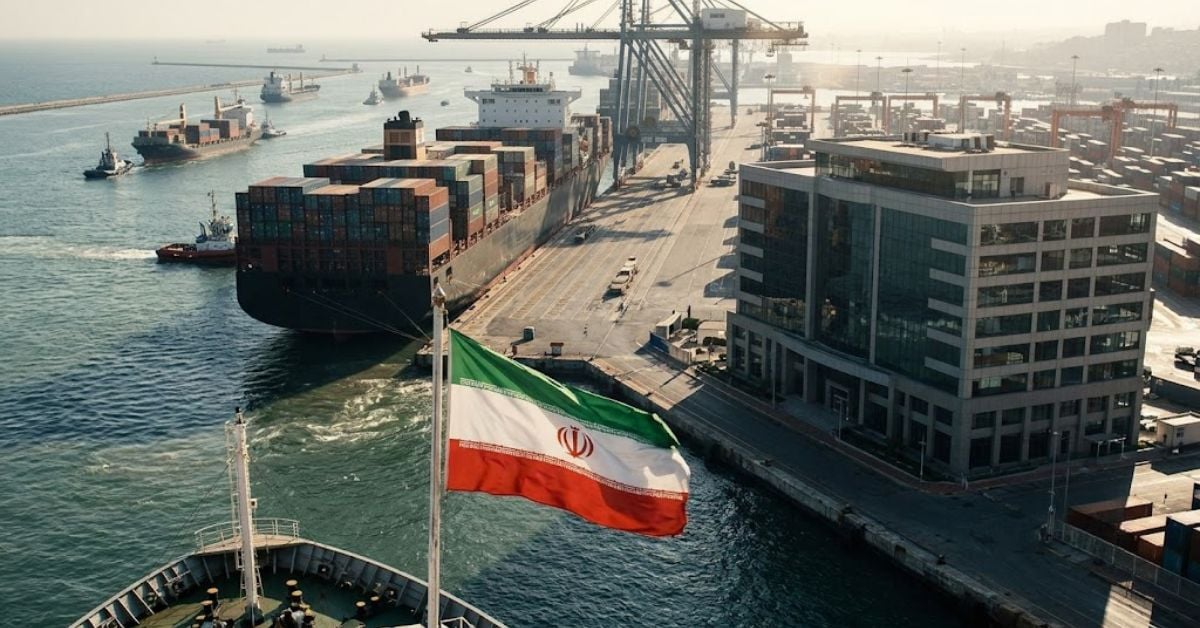
Sanctions are a tool of precision, and the latest action under Operation Economic Outcast makes that clear: the U.S. Treasury is now targeting the legal architecture that enables Iran's shadow fleet, not just the vessels themselves. This marks a calibrated escalation in enforcement, one that should command the attention of every maritime professional, compliance officer, and policymaker monitoring global trade flows. For our readers, the practical implication is immediate: any entity, law firm, bank, or shipping agent, that provides administrative or legal cover for sanctioned cargo now faces direct exclusion from the U.S. financial system, and the evidence trail being built is both empirical and longitudinal.
The sanctions zero in on a Greece- and Panama-based law firm accused of registering and managing shell companies that operated vessels carrying Iranian crude oil, petroleum products, steel, and petrochemicals. Five individuals were identified for concealing beneficial ownership. The Treasury also designated seven cargo ships as blocked property after evidence showed three of them transported Iranian cargo last year. This is not a broadside against a single operator; it is an integrated data ecosystem of enforcement, tying legal services, corporate registrations, and vessel movements into a single, sanctionable chain. The action also extended to shipping agents in Singapore and the UAE, demonstrating a global collaborative reach. This crackdown complements real-world developments in maritime logistics, such as the Singapore ethanol bunkering test delivers measurable milestone for cleaner maritime fuel, which highlights how legitimate fuel supply chains are being validated and measured, a stark contrast to the opaque, unregulated networks sustaining Iran's oil trade.
Secretary of the Treasury Scott Bessent stated plainly that any professional aiding sanctions evasion, whether through direct maritime transfers or legal office support, risks exclusion from the U.S. financial system. FinCEN has already issued an administrative subpoena to a Greek commercial bank and sent formal information requests to other international financial institutions regarding their ties to sanctioned Iranian entities. This is not a warning; it is an active investigation. The message is that the legal profession and the financial sector are now in the crosshairs alongside the shipping industry. For firms operating in Greece, Panama, Singapore, or the UAE, the takeaway is clear: the due diligence required today is not merely administrative, it is a matter of remaining connected to the global financial grid. Compare this to the measured progress seen in cleaner fuel adoption, like the 5 000 metric tonnes of certified bioethanol fuel a Maersk vessel in Singapore, which represents a transparent, peer-reviewed supply chain. The shadow fleet operates on the opposite principle: deliberate opacity.
What this means for our readers is that the enforcement net is tightening around secondary support networks, not just primary shippers. The Treasury's action goes beyond the law firm to target the corporate agents, managers, and financial intermediaries that make the shadow fleet possible. One specific detail to watch is how the Greek commercial bank responds to the FinCEN subpoena and whether other international banks will voluntarily disclose their own connections to avoid similar scrutiny. The open question is whether the legal and financial sectors will adapt their compliance frameworks quickly enough to avoid becoming the next target. The answer will determine not only the effectiveness of this sanctions regime but also the integrity of the global maritime commerce system that our readers depend on.