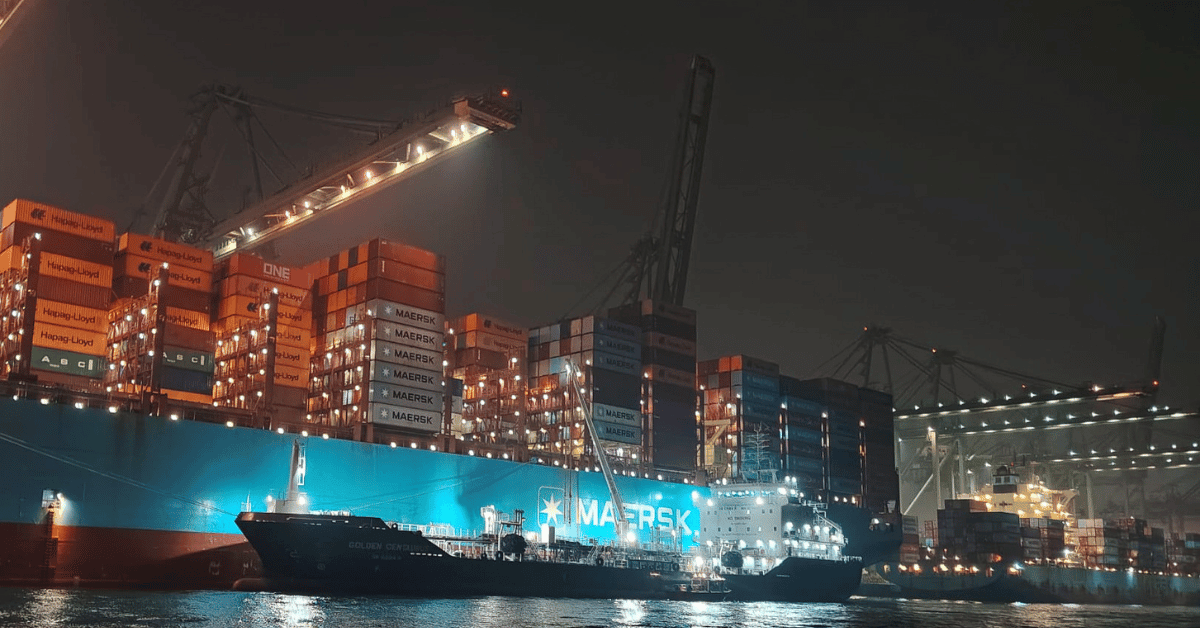
Singapore's first ethanol bunkering operation is a calibrated, real-world stress test, not a press release headline. By successfully delivering roughly 5,000 metric tonnes of ISCC-certified bioethanol to the Maersk Halifax while cargo operations ran simultaneously at Pasir Panjang Terminal, Maersk, Golden Island, and PSA have generated empirical data that matters more than the volume record itself. For an industry that often debates fuel pathways in the abstract, this is a measurable, validated step forward. The operation's integration of a mass flow meter and its reliance on the Hazard Identification and Operability Study framework borrowed from methanol bunkering show how existing infrastructure can be adapted rather than replaced. This matters because the maritime sector cannot afford to wait for a single perfect fuel; it needs to calibrate multiple options now. As we noted in our analysis of Calibrating the energy transition with validated ocean intelligence, real-world data from operations like this one is what turns climate indicators into actionable decisions.
The practical significance here is twofold. First, the Maritime and Port Authority of Singapore is now positioned to adapt its existing methanol bunkering technical reference, TR 129, for ethanol, based on the handling characteristics and safety protocols tested in this operation. That is a direct, near-term regulatory outcome. Second, the success of SIMOPS, bunkering while loading and unloading containers, demonstrates that ethanol can integrate into the high-throughput terminal environment that defines global shipping hubs. This is a concrete data point for terminal operators and liner companies who have been waiting for evidence that lower-carbon fuels do not disrupt port productivity. The findings from this operation will inform whether existing MFM systems can be used for future ethanol bunkering, a technical question that has significant cost implications for fleet operators. This is precisely the kind of longitudinal, peer-reviewed evidence that the industry needs to move beyond pilot projects.
Still, this milestone sits within a larger funding and infrastructure picture that remains unresolved. While this operation proves ethanol bunkering is technically feasible at scale, the broader question of production capacity and supply chain economics persists. The European Community Shipowners' Association's recent call to triple the Sustainable Maritime Alternative Fuels Programme funding, which we covered in Calibrating EU maritime funding: €30 billion gap in sustainable fuel support identified, highlights the gap between operational readiness and the financial mechanisms needed to make these fuels competitive. A single successful bunkering operation does not close that gap, but it does provide the ocean intelligence needed to justify the investment. Emma Mazhari of Maersk was precise in stating that no single fuel pathway can decarbonise global shipping alone, and this operation validates that multi-fuel strategy in practice rather than in PowerPoint.
The detail to watch is how the MPA translates the hazard study data and MFM readings from this operation into revised technical standards. If the regulatory framework adapts quickly, Singapore could become a template for other ports facing the same multi-fuel challenge. If the standards take years to update, the operational advantage demonstrated here will fade. The question is not whether ethanol can be bunkered safely, it now has been, at the largest single volume globally, but how fast the regulatory and commercial ecosystem can move to make it routine.