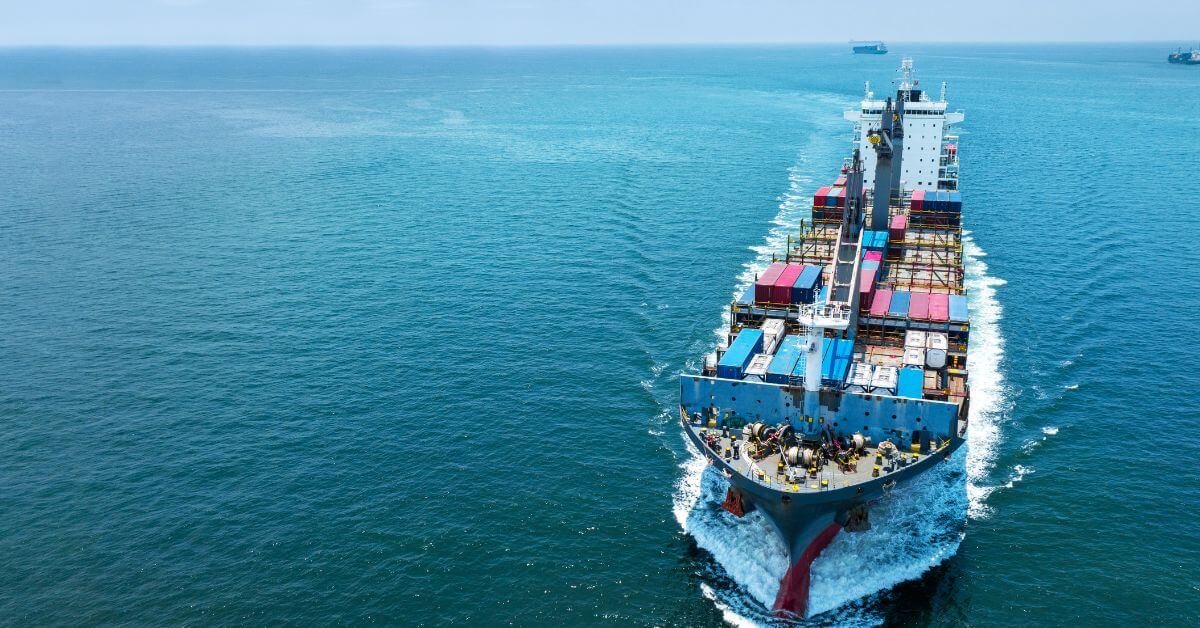
A coalition formed at the United Nations to chart a measurable course for safer global shipping signals a meaningful shift from aspiration to action. The Group of Friends on Safety and Security of Shipping and Seafarers, initiated by India and Liberia, acknowledges that the vessels carrying 90 percent of global trade operate in a domain where risks are shared and data is often fragmented. This is not a symbolic gesture; it is a calibrated attempt to align maritime security with the kind of empirical, collaborative frameworks that drive real-world outcomes. For our readers, whether in research, policy, or maritime operations, this initiative matters because it creates a platform where validated data can replace anecdote. We have seen the power of such an approach in other domains, as when eDNA maps Nile tilapia invasion across West Bengal freshwater habitats demonstrated how precise biological monitoring can track environmental change. Similarly, Measured emissions data places food transport in ocean transit perspective, showing that the ocean's role in global logistics is not just about volume but about measurable carbon impact. The new UN coalition can bring that same rigor to the safety of the people and assets moving through the world's most critical supply routes.
What makes this coalition different from previous diplomatic efforts is its explicit focus on measurable outcomes, not just declarations. The Group of Friends intends to produce peer-reviewed safety indicators and real-time reporting mechanisms that allow nations and shipping companies to calibrate their responses to threats like piracy, cyberattacks, and unregulated transshipment. This is ocean intelligence applied to human security. The inclusion of seafarers' welfare in the mandate is a practical acknowledgment that the human element remains the most vulnerable link in the chain. Too often, maritime security discussions center on cargo value or geopolitical posturing; here, the focus returns to the crews who keep the global economy afloat. For policymakers, this offers a template for how integrated data ecosystems can support decision-making under uncertainty, while for researchers, it opens a longitudinal dataset on maritime risk that has been sorely lacking.
The practical consequence for our audience is clear: the coalition's success will depend on whether it can move from diplomatic language to actionable, calibrated metrics. A specific takeaway is that stakeholders should watch for the release of the first baseline safety indicators, which the group has committed to publishing within eighteen months. If these indicators are transparent and independently validated, they will set a new standard for how we measure the ocean's role in global commerce. If they remain vague, the opportunity will be lost. The coalition has the ingredients, sovereign partners, a UN mandate, and a clear definition of the problem, but the proof lies in the data. As with Brahmaputra River Cruises Expand With Two New Ships by 2030, where expansion plans hinge on navigational safety and environmental monitoring, the viability of any maritime initiative ultimately rests on how well we understand and manage the risks. The Group of Friends has chosen the right starting line; the next step is to verify the course.