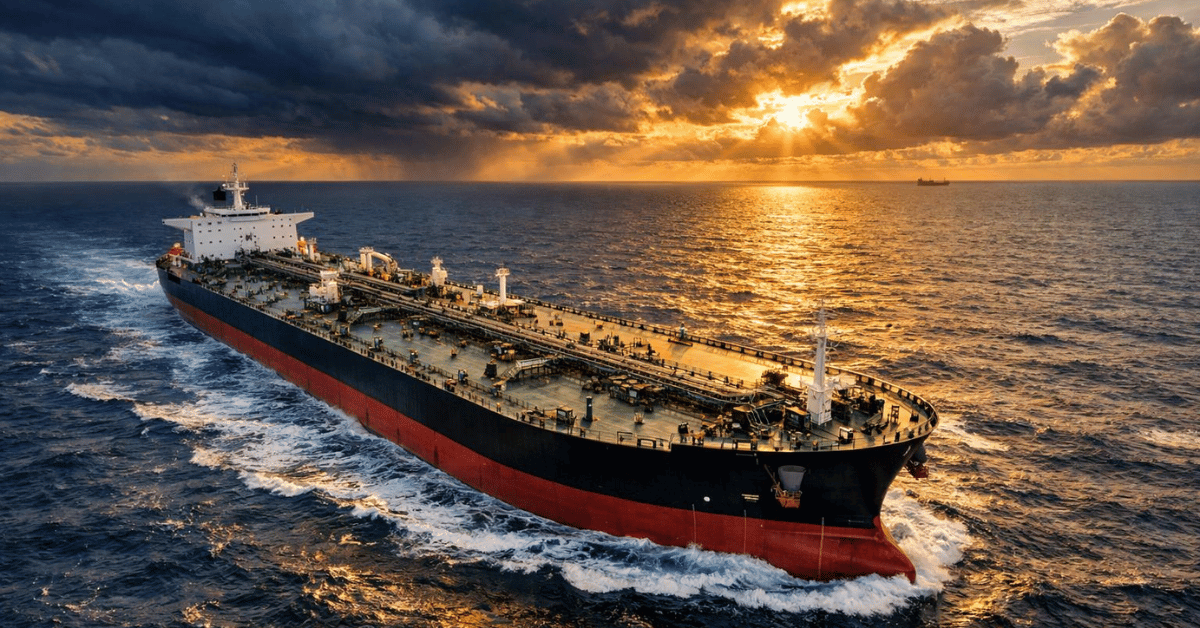
The argument that older ships are not worth improving has just been retired by the market itself, and the implications for maritime decarbonisation are immediate and measurable. With a 15-year-old VLCC now valued at roughly $140 million, more than a newbuilding ordered today, owners can no longer hide behind the economics of scrapping. This shift does not exist in isolation; it follows a broader recalibration of global capacity, as A Measured Shift in Maritime Capacity Signals Evolving Ocean Intelligence recently detailed, where China's shipyards secured over 80% of new orders. Meanwhile, real-world operational risks remain acute, as demonstrated by the Injured crew evacuated after fire erupts aboard tanker in Strait of Hormuz, underscoring that the vessels we choose to keep trading must also be safer and more efficient. The old calculus has been inverted: the asset is now too valuable to ignore, and the cost of inaction is no longer theoretical.
BAR Technologies CEO John Cooper put the numbers plainly. A typical 5x 37.5m WindWings installation on a VLCC running USA to Japan would save roughly 2,670 tonnes of fuel per year at 80% utilisation, worth $2.27 million annually at current VLSFO prices. Payback in four years on fuel savings alone, before carbon costs, is a conservative estimate when the ship itself is valued at $140 million. The technology is validated at sea: the bulk carrier Pyxis Ocean recorded up to a 32% cut in main engine energy use in favourable conditions, independently confirmed by DNV. Union Maritime has already taken delivery of three WindWings-equipped LR2 tankers, with two more due in 2027. These are not pilot projects, they are operational assets proving that retrofitting works now, not in a future regulatory scenario.
The regulatory argument tightens the case further. As the Carbon Intensity Indicator ratchets down, older vessels face commercial exclusion unless they improve. Wind propulsion directly improves CII ratings by reducing fuel consumption and emissions, making life extension viable rather than a gamble. Cooper's observation that "shipping has spent ten years telling itself that decarbonisation happens on the order book" is precise, and wrong. The order book is full until 2029, and the ships sailing today are the ones that must burn less fuel this decade. Retrofitting is no longer a hedge against future rules; it is a present-day operational necessity tied to a tangible asset value that owners have already accepted.
The specific consequence to watch is whether the insurance and charter markets begin pricing in retrofitted efficiency as a risk-reduction factor. If a $140 million tanker can save $2.27 million annually in fuel while improving its CII rating, the question shifts from "why retrofit?" to "why wouldn't you?". The answer, for owners who still hesitate, will be measured in lost revenue and regulatory penalties, not in hypothetical scrap values. The market has already spoken. The only remaining question is how many owners will listen before their next dry-docking.