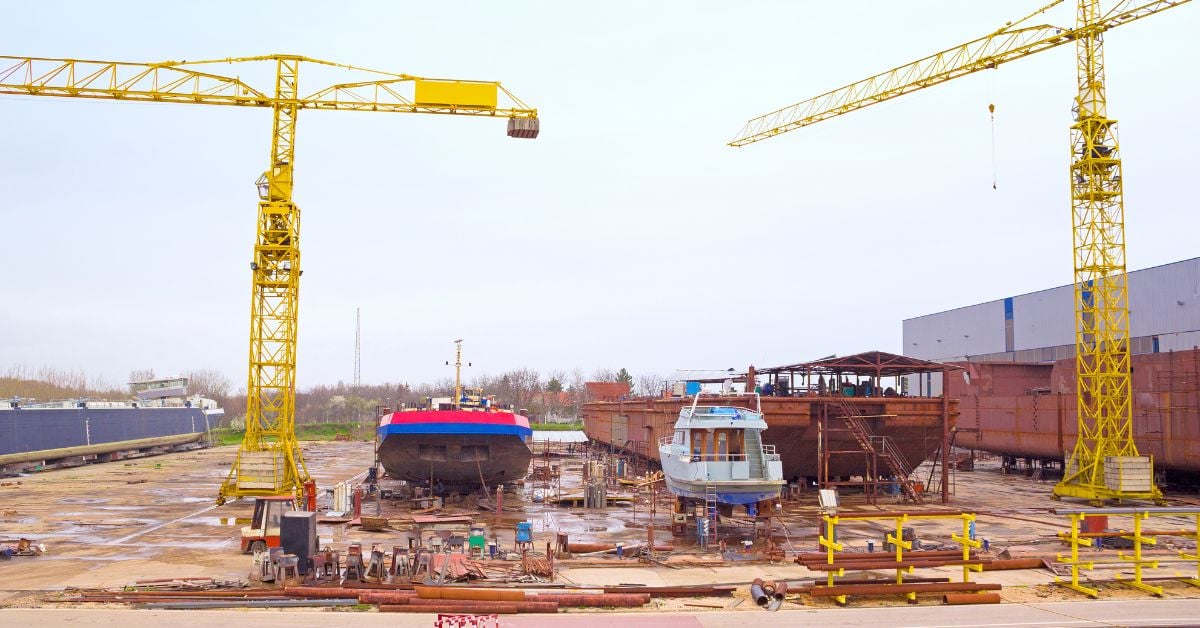
China's capture of 81.8% of new ship orders in the first three quarters of 2026 is not merely a commercial milestone; it is a measurable recalibration of global maritime capacity with direct implications for ocean intelligence. When a single nation controls that large a share of the vessels that will ply the world's shipping lanes for the next two decades, the data those ships carry, on fuel consumption, emissions, cargo flows, and even Dual-Fuel Fleet Surpasses 500 Vessels in Measurable Shift Toward Lower-Emission Shipping, becomes concentrated in a way that demands attention. This is not about geopolitics in the abstract; it is about who builds the platforms that will generate the next generation of empirical ocean data.
The numbers are stark. Total global orders reached 399.13 million deadweight tonnes, a 64.8% year-on-year increase, and Chinese yards completed 58.05 million DWT, over 63% of the global total. Container ships account for nearly 40% of the global order book, and very large crude carriers are being replaced at scale: 20% of the world's 930 VLCCs are over 20 years old, and most replacement orders are landing in Chinese shipyards. Meanwhile, China has secured 74.1% of orders for vessels powered by alternative fuels such as ammonia, hydrogen, and methanol. That 5.7% increase from the first half of the year signals a deliberate acceleration, not a passive trend. The cost advantages, lower construction costs, abundant domestic steel, integrated supply chains, are well documented. But the closing of the technological gap, particularly in building sophisticated LNG and dual-fuel vessels at scale, is what transforms market share into structural leverage.
For researchers and policymakers tracking climate indicators, this shift matters in practical terms. A fleet that is both younger and increasingly powered by alternative fuels generates a different emissions profile than the aging VLCC fleet it replaces. The replacement cycle itself creates a window for embedding sensors, monitoring systems, and real-time data transmission capabilities at the build stage rather than retrofitting them later. That is where ocean intelligence moves from aspiration to integration. When state-owned banks offer attractive payment packages to foreign shipping companies, they are not just financing hulls; they are financing a data ecosystem whose contours are still being defined. The Undersea cable security drives Manila to explore Taipei collaboration reminds us that the infrastructure for moving data across oceans is itself becoming a strategic asset. The ships are the mobile nodes.
The open question is whether the concentration of shipbuilding capacity in one country will accelerate or complicate the global push for validated, peer-reviewed ocean data. Standardization of emissions reporting and fuel consumption metrics becomes easier when a dominant builder controls the specifications; it also becomes more vulnerable to single-point dependencies. The takeaway is specific: watch the next wave of dual-fuel VLCC orders from European shipowners, who currently lead demand. If those orders continue flowing to Chinese yards, the integration of alternative-fuel propulsion with real-time monitoring will become the default, not the exception. That is the data set worth calibrating for.