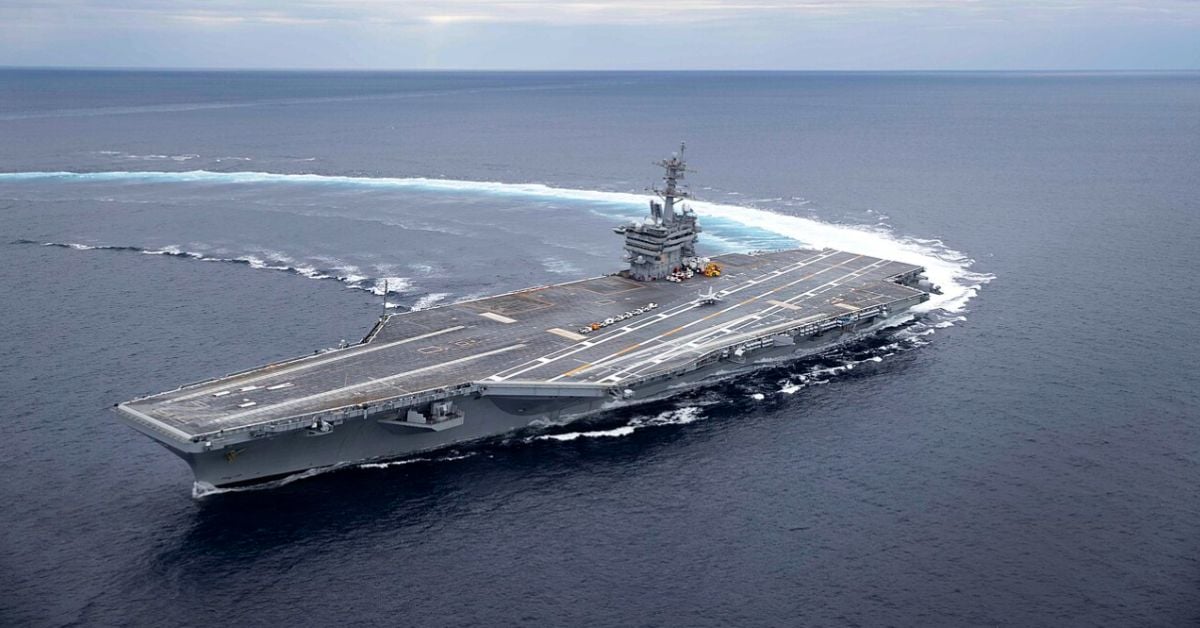
The return of the USS *Abraham Lincoln* after 320 days should not be celebrated as an achievement of endurance, it should be investigated as a systemic failure. This deployment, the longest by a Nimitz-class carrier in decades, reveals a military logistics and mental health apparatus that was not calibrated for the demands it faced. While the crew is finally home, the question for policymakers and defense analysts is not how they endured, but why they had to.
The *Abraham Lincoln* departed San Diego in November and joined operations in the Gulf after the Iran war began in February. By the time it reached Thailand for its first port call in over 260 days, sailors had gone without basic supplies, timely mail, or reliable communication with loved ones. Reports of deteriorating mental health, depression, and at least two attempted suicides are not aberrations in a long deployment, they are predictable outcomes of a deployment that violated every operational norm. Aircraft carriers typically stop every 30 to 45 days for resupply and maintenance. Skipping that rhythm for nearly nine months is not a tactical necessity; it is a decision with measurable human cost. Sen. Ruben Gallego has rightly called for an independent investigation into the supply failures and the absence of psychiatric support. That probe must examine whether the Navy's planning assumptions for this theater were empirically grounded or simply aspirational.
This story also connects to broader trends in naval readiness. In related coverage, we noted that the USS *John F. Kennedy* has reached 99% completeness ahead of its 2027 handover, signaling a long-term investment in carrier capacity. Meanwhile, the Aircraft Carrier John F. Kennedy Reaches 99% Completeness Ahead of 2027 Handover and the Carrier Bush Arrives in Thailand With 4,800 Personnel After Deployment highlight that port calls in Thailand are becoming a standard relief valve for extended operations. Yet the *Abraham Lincoln*'s experience suggests that relying on a single port visit after 260 days at sea is not a solution, it is a bandage on a broken supply chain. The contrast is stark: new carriers are being built, but the human and logistical infrastructure to sustain them at sea appears to be degrading.
The practical takeaway is this: the Pentagon must integrate real-time mental health monitoring and guaranteed resupply intervals into deployment planning, not treat them as optional enhancements. The *Abraham Lincoln* fell just six days short of the record held by the USS *Gerald R. Ford*, but breaking that record would have been a hollow milestone. The question to watch now is whether the inspector general's investigation produces binding reforms, or whether the next crew will simply be told to endure longer.