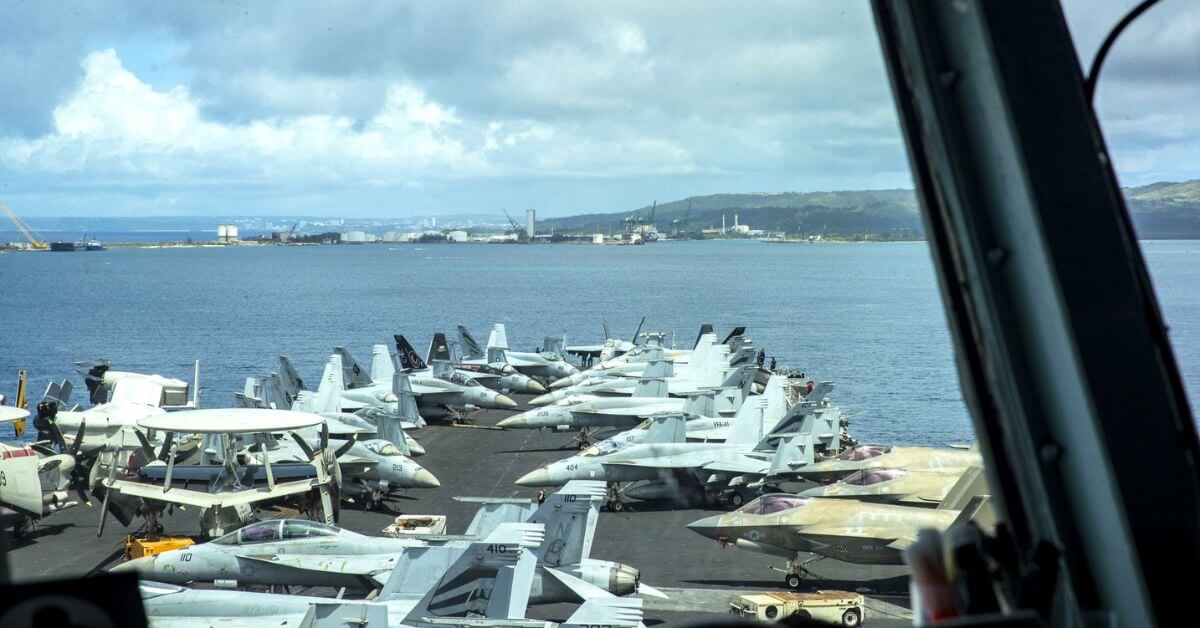
Ten months at sea is a long time by any standard, and it is precisely that duration that makes the arrival of the USS Abraham Lincoln and its strike group in Guam more than a routine logistics stop. The carrier's brief resupply visit is a quiet but telling indicator of how naval power sustains itself across vast distances. For those of us who track ocean systems, the movement of a carrier strike group is rarely just a military matter; it is a calibrated exercise in endurance, coordination, and the unglamorous work of keeping assets operational far from home ports. The fact that this stop is newsworthy at all speaks to the strain such deployments place on both crews and supply chains, a reality that often goes unnoticed in discussions of maritime strategy.
Our take is straightforward: this resupply is not an anomaly, but a reminder that the ocean remains a working environment, not just a geopolitical abstraction. For policymakers and researchers alike, the practical lesson is in the logistics. When a carrier group pauses in Guam for equipment and stores, it underscores the value of forward-deployed infrastructure and the integrated data ecosystem that makes such scheduling possible. Real-time tracking of vessel movements, predictive maintenance, and calibrated supply deliveries are not buzzwords; they are the difference between a seamless rotation and a cascading delay. We would tell a reader who asked about this story that the headline is not the carrier's presence, but the system that gets it there and keeps it moving. The ocean is vast, but naval operations are precise, and every stop is a data point in a larger pattern of global mobility.
What this means in practical terms for our audience is a chance to look beyond the ship itself. The ten-month deployment is a measurable indicator of crew fatigue, material wear, and the limits of even the most advanced vessels. We would watch how quickly the strike group returns to operational status after this pause, and whether subsequent patrols are adjusted based on lessons learned. The open question is not whether the carrier can resupply, but how many times a force can repeat this cycle before the strain shows in readiness metrics. That is a question with real consequences for force design and for the allies who rely on these patrols for stability.
The detail to watch is the turnaround time in Guam. If the Abraham Lincoln departs on schedule and resumes its mission without extended maintenance, that tells us the system is holding. If delays emerge, it signals a deeper issue in the supply chain or the ship's material condition. Either way, this is not a story about one ship; it is a case study in operational sustainability. For our readers, the takeaway is simple: every deployment is a test, and the ocean records the results.