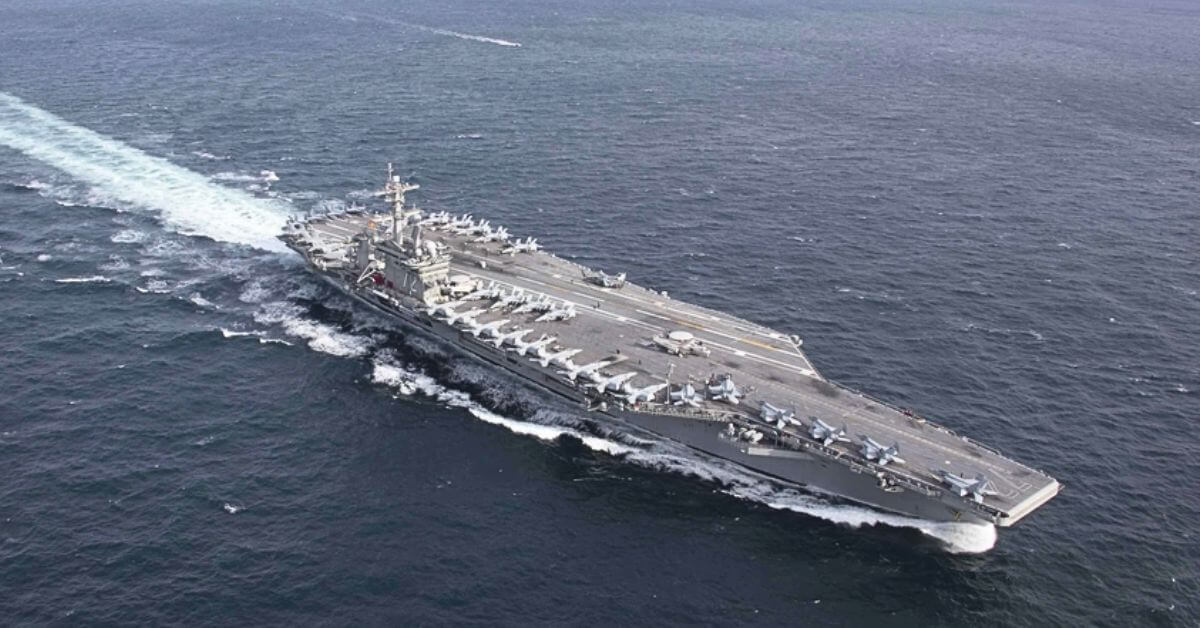
Eight sailors assigned to the USS Abraham Lincoln carrier strike group attempted suicide during the ship's long combat deployment against Iran. That is not a statistic to be processed; it is a signal to be read with the same rigor we apply to any other operational metric. When a strike group spends months at sea under the strain of sustained alert, the human factor is not a secondary concern. It is the primary system. The Navy's own data on longitudinal mental health trends has long indicated that deployment length and repeated exposure to high-tension environments correlate with elevated psychological risk. This incident does not exist in a vacuum, and we should not treat it as an isolated failure of individual resilience. The system that moves sailors through pre-deployment screening, mid-deployment support, and post-deployment reintegration is not calibrated for the cumulative weight of this operational tempo.
What this means for our readers, many of whom serve, have served, or are responsible for the welfare of those who do, is that the current approach to well-being is still too reactive. We can measure readiness in terms of munitions, fuel, and maintenance hours, but we have not yet integrated a real-time, peer-reviewed framework for psychological load that matches the precision we apply to combat systems. The eight sailors are not outliers; they are the visible peak of a distribution that likely includes dozens more who are struggling in silence, unwilling to risk being pulled from duty or stigmatized by a mental health visit. The call here is not for more sentimentality in leadership. It is for a more empirical integration of psychological indicators into the operational picture. If we can track a bearing change in the engineering room, we can track the emotional decompensation of a watchstander. The data is there; the willingness to treat it as equally valid as a radar contact is what lags.
We would tell a commanding officer who asked for our take on this: do not wait for the next mandatory stand-down or post-deployment survey to act. The gap between the event and the intervention is where the failure lives. Integrated support systems cannot be a checklist item; they must be a continuous feed, like climate indicators for the crew's internal weather. This means embedding mental health professionals not as outsiders in the medical bay, but as part of the ship's company rhythm, attending briefs, reading the mood of the mess decks, and building trust before a crisis, not after. It also means reconsidering the deployment cycle itself. If the mission requires a long presence off a contested coast, then the cost of that presence must be budgeted in human terms, not just in fuel and ordnance. The Navy's own operational planners know that a ship's combat system degrades without maintenance; the same logic applies to the crew.
The concrete point to watch is the Navy's internal review of this incident and whether it results in a measurable change to deployment length policy or a change in the ratio of mental health providers to sailors at sea. The takeaway we would offer is direct: resilience is not a personality trait, it is a support system that must be engineered with the same rigor as a combat system. If eight attempts do not trigger a recalibration of that engineering, then the next report will not be about eight, and we will all be left to explain why we treated the human factor as a secondary system.