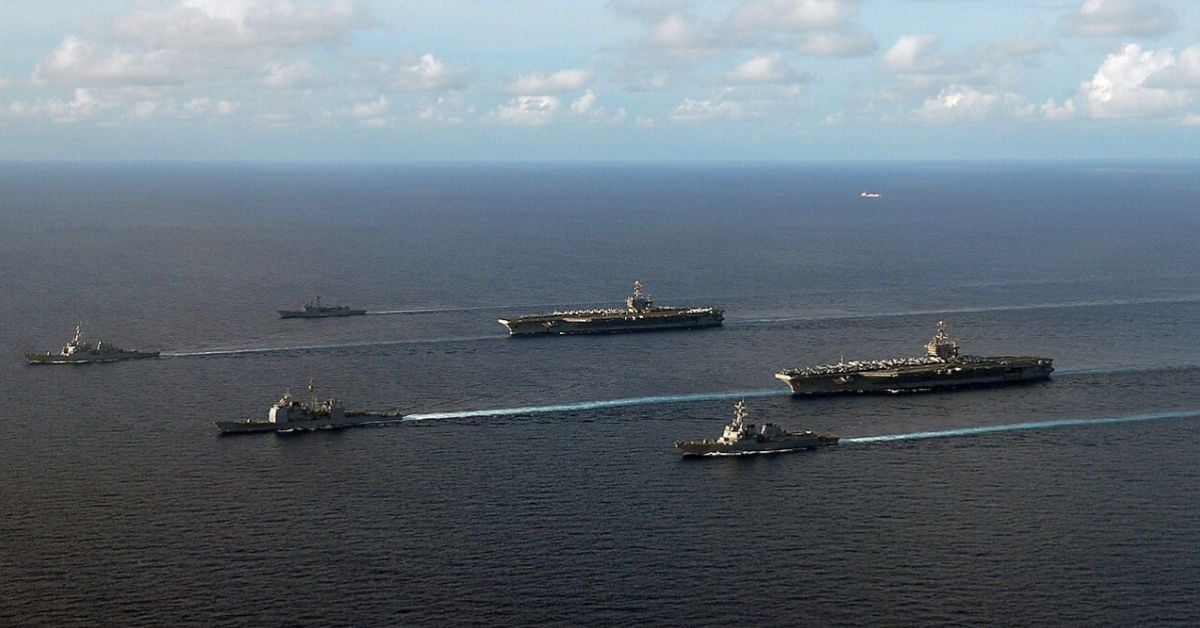
A 265-day deployment without a port call is not a routine rotation; it is a stress test of naval endurance, logistics, and combat readiness. The USS Abraham Lincoln's return to San Diego, marked by a Presidential Unit Citation for its 5,000 crew members, validates what sustained sea control looks like in a contested maritime domain. For those tracking ocean intelligence, the numbers matter: 3,693 sorties, 450 Tomahawk launches, 77 drones destroyed, and 64 Iranian naval vessels sunk. These are not abstract metrics. They are calibrated, measurable outputs from a carrier strike group operating at the edge of its operational envelope, and they redefine what a forward-deployed naval force can sustain.
The record matters beyond the tactical ledger. The previous benchmark, USS Dwight D. Eisenhower's 206 days in 2020, has been surpassed by nearly 60 days, and that extension was not a peacetime drill. It came during active combat, with the strike group sustaining the blockade of Iranian ports and executing Operation Epic Fury from February through August. This is the practical definition of integrated maritime power: a floating airfield, Destroyer Squadron 21, and Carrier Air Wing Nine functioning as one calibrated system. For policymakers, the takeaway is direct: the U.S. Navy can hold a chokepoint under fire far longer than previously demonstrated, which changes the calculus for any adversary assuming attrition will force a withdrawal. The concurrent verified data confirms 20 million barrels transit Hormuz despite Iranian claims shows that even under this strain, the strait remained open to commercial traffic, a fact that separates operational success from strategic chaos.
We should be clear about what this deployment did not do. It did not end the war, and it did not eliminate the threat to shipping. The weekly tanker strikes near Strait of Hormuz reach highest count in years recorded at least 12 attacks on oil and LNG carriers in the same period, and Iran continues to signal new restrictions on maritime movement, as noted in Strait of Hormuz tensions rise as Iran signals new maritime restrictions. The Lincoln's achievement is a demonstration of capacity, not a resolution of the underlying conflict. The blockade held, but the tanker strikes persisted, which suggests that sea control and sea denial are operating in parallel, not in a zero-sum exchange.
What should readers watch next? The crew is home, but the data from this deployment will drive future force structure decisions. If 265 days without a port call is now the expected baseline for carrier operations in high-threat zones, then maintenance cycles, crew rotation models, and munition stockpiles must be revalidated against that reality. The specific question is whether the Navy can replicate this tempo across multiple carrier strike groups simultaneously, or whether the Lincoln's record is an outlier enabled by extraordinary circumstances. That answer will determine how the U.S. positions its fleet for the next confrontation, not the last one.