Japan Plans Drone-Mounted Quantum Sensors To Track Chinese Submarines
Our take
Japan's reported development of drone-mounted quantum sensors to track Chinese submarines represents a significant, albeit early-stage, advancement in maritime surveillance technology. The concept, leveraging low-cost drones operating from warships, offers a potentially scalable and cost-effective alternative to traditional submarine detection methods. This initiative arrives amidst heightened geopolitical tensions in the Indo-Pacific region and follows recent developments such as the U.S. & Philippine Marines simulating attacks against Chinese warships using drones and BrahMos anti-ship missiles U.S. & Philippine Marines Simulate Attacks Against Chinese Warships Using Drones & BrahMos Anti-Ship Missiles. The ability to deploy a network of these sensors, even with limited range, could create a layered detection capability, complicating Chinese naval operations and providing Japan with enhanced situational awareness. Furthermore, Iran's recent claim of capturing a U.S. Navy submarine capable of autonomous missions highlights the increasing importance of unmanned underwater and aerial vehicles in naval warfare Iran Claims It Captured U.S. Navy Submarine Near Hormuz That Can Autonomously Conduct Missions For 10 Days.
The application of quantum sensing technology to this problem is particularly noteworthy. Quantum sensors, utilizing principles of quantum mechanics, offer the potential for significantly improved sensitivity in detecting subtle magnetic field anomalies associated with submarine movement. While the practical implementation and operational effectiveness of such a system remain to be seen, the underlying principle suggests a leap beyond existing acoustic or magnetic anomaly detection (MAD) techniques. The use of drones, especially low-cost, expendable ones, further enhances the concept's appeal. A dispersed network of these drones presents a more resilient system compared to a few high-value assets, making it harder to neutralize through targeted attacks. The integration of real-time data processing and analysis will be crucial for effectively utilizing the information gathered by these sensors, transforming raw data into actionable ocean intelligence. This also emphasizes the need for robust, calibrated data streams to ensure accuracy and minimize false positives—a critical element for maintaining operational integrity and avoiding miscalculations.
However, several challenges and caveats must be considered. The effectiveness of quantum sensors in a noisy maritime environment, particularly in the presence of naturally occurring magnetic variations and other interference, is a key uncertainty. The drones' vulnerability to countermeasures, such as electronic warfare or physical attacks, also needs careful assessment. Furthermore, the legal and political implications of operating such a surveillance system in international waters, particularly in close proximity to another nation's military assets, are substantial. Japan’s decision to pursue this technology reflects a broader trend towards leveraging innovative, asymmetric capabilities to enhance national security in a complex and contested maritime environment. The longer-term impact will depend on the technology’s maturation, deployment strategies, and the responses of other nations in the region. The ongoing monitoring of acoustic data in areas like the Baltic Sea, as evidenced by recent studies Correction: Twelve years of acoustic monitoring reveal rising spring–autumn harbor porpoise (Phocoena phocoena) detection rates in the Pomeranian Bay (Baltic Sea), a transition zone between populations of concern, underscores the importance of continuous data collection and analysis for understanding and adapting to evolving underwater environments.
Looking ahead, the convergence of quantum sensing, drone technology, and artificial intelligence promises to fundamentally reshape maritime surveillance capabilities. The question now is not *if* these technologies will become more prevalent, but *how quickly* and *how effectively* they will be integrated into operational systems. The development by Japan represents a significant step in this direction, and its success or failure will likely influence the strategic calculus of other nations, particularly those with maritime interests in the Indo-Pacific region. Will we see a rapid proliferation of similar systems, leading to a new era of underwater surveillance, or will the technological and operational challenges prove insurmountable, limiting the widespread adoption of this approach?
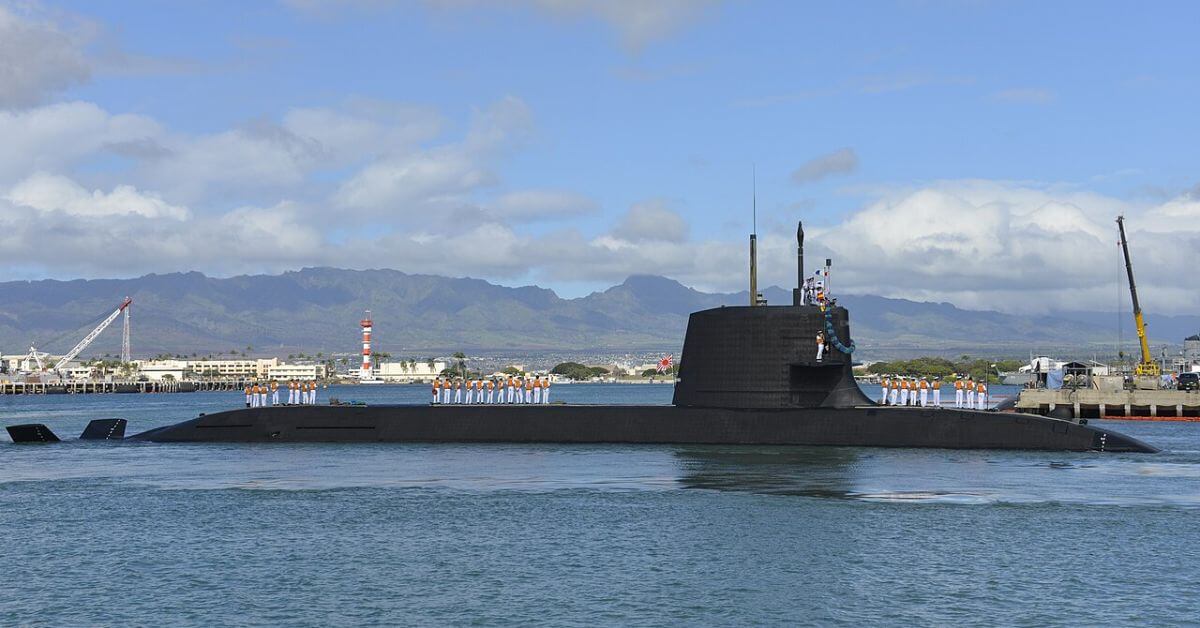
Japan plans to develop small quantum magnetic sensors that can be carried by drones to help find submarines at sea.
The project is part of Japan’s fiscal 2027 defence budget request. The Defence Ministry wants to complete development by fiscal 2031, according to the Nikkei newspaper.
The sensors would be fitted to low-cost drones flying close to the sea surface. The drones would operate from warships.
Quantum magnetic sensors use the properties of atoms to measure very small changes in magnetic fields. A submarine can change the magnetic field around it, which may allow the sensor to detect it.
The sensors could be used with existing systems such as sonar and sonobuoys. Drones could also carry out searches without putting aircrews at risk.
The technology has one major limitation. Magnetic sensors can only detect changes over a limited range.
Masashi Murano, a defence specialist with the Washington-based Hudson Institute, said they are not suitable for searching very large areas of ocean.
But he said they could be useful around chokepoints.
Chinese submarines heading towards the Pacific have to pass through several narrow waterways. Japan could place large numbers of low-cost drones around these routes and use them to watch for submarines.
Murano said crewed anti-submarine operations were “extraordinarily expensive per unit of ocean searched”. He said unmanned systems could reduce the cost of keeping watch over an area.
Japan already uses P-1 maritime patrol aircraft for anti-submarine operations. The drones would provide another way to monitor selected areas.
China has tested a similar system
China is also developing quantum magnetic sensors for submarine detection.
Chinese researchers reported last year that they had tested a drone-mounted quantum magnetic sensor system at sea.
Beijing has also added other anti-submarine systems to its military.
These include the Y-9Q maritime patrol aircraft and the shipborne Z-20F naval helicopter.
China has also developed a Wing Loong X drone variant that can drop sonobuoys. The devices can form temporary underwater listening networks.
China is also working on an ocean surveillance system. It includes satellites, buoys, underwater gliders and seabed listening arrays.
Some analysts have called parts of this system an “Underwater Great Wall”.
The Pentagon expects China could operate around 80 submarines by 2035 as its shipbuilding capacity increases.
US and allies are also developing unmanned systems
The United States and its allies are working on new unmanned systems for anti-submarine warfare.
General Atomics has tested its MQ-9B SeaGuardian with a larger sonobuoy payload.
The U.S. Navy has also asked industry for input on Silent Anvil, a compact air-launched torpedo.
The weapon could eventually allow both crewed and uncrewed aircraft to attack submarines.
Australia, Britain and the United States are developing payloads for autonomous underwater vehicles under AUKUS.
Japan has also joined the three countries in testing underwater acoustic communications for maritime autonomous systems.
References: interestingengineering, scmp
Read on the original site
Open the publisher's page for the full experience