Iran Claims It Captured U.S. Navy Submarine Near Hormuz That Can Autonomously Conduct Missions For 10 Days
Our take
The recent claim by Iran regarding the capture of a U.S. Navy submarine near the Strait of Hormuz, reportedly an autonomous underwater vehicle (UUV) identified as the Dive-D from Anduril Industries, introduces a significant and escalating element to the already tense geopolitical landscape of the region. This incident, if verified, underscores the increasing reliance on unmanned systems in naval operations and the potential for miscalculation and conflict arising from their deployment. The Strait of Hormuz, a critical chokepoint for global oil shipments, has long been a flashpoint, and the presence of an autonomous vehicle, potentially operating with limited human oversight, further complicates the dynamics. Related concerns regarding maritime safety are evident in reports such as [Indian PM Urges Iran To Safeguard Freedom Of Navigation, Commercial Shipping And Seafarers Safety], highlighting the broader anxieties surrounding regional stability and the protection of commercial interests. The vulnerability of critical infrastructure was also demonstrated by [Saudi Arabia Shuts Key Oil Pipeline Used To Bypass Strait Of Hormuz After Drone Attack], illustrating the escalating risk of disruptions to vital energy supplies.
The Dive-D, designed for extended autonomous operation—reportedly up to ten days—represents a shift in naval reconnaissance and surveillance capabilities. Its potential applications range from mine detection and seabed mapping to intelligence gathering, all without the risks associated with manned missions. However, the lack of direct human control over such systems raises profound questions about accountability and the potential for unintended consequences. Iran’s assertion that they have captured this vehicle suggests a deliberate effort to highlight their technological prowess and to project an image of strength and resolve in the face of perceived U.S. military presence. The incident is likely to be viewed through the lens of ongoing regional power struggles, particularly concerning Iran’s nuclear program and its influence in the Middle East. The attacks on ships carrying Indian crews, as reported in [3 Ships Carrying Indian Crew Attacked Near Gulf Amid West Asia Conflict], further underscore the precariousness of maritime operations in the region and the potential for escalation.
The broader implications extend beyond the immediate geopolitical tensions. The proliferation of autonomous underwater vehicles, and indeed, all forms of autonomous weapons systems, necessitates a renewed focus on international norms and regulations governing their deployment. While these systems offer potential advantages in terms of risk reduction for human personnel and enhanced operational efficiency, they also present novel challenges to traditional concepts of warfare and international law. The ability of a UUV to operate independently for extended periods, collect data, and potentially engage in defensive or offensive actions, raises concerns about the potential for accidental escalation and the difficulty of assigning responsibility in the event of an incident. The reliance on AI and machine learning in these systems introduces further complexities, as algorithms can be susceptible to biases and errors, leading to unpredictable outcomes.
Looking ahead, the incident serves as a stark reminder of the need for enhanced communication and transparency between nations operating in strategically sensitive areas. The potential for misinterpreting the actions of autonomous systems—particularly in a region characterized by mistrust and historical conflict—is significant. Further research and development in verifiable identification and communication protocols for UUVs are essential to mitigate the risk of accidental encounters and to establish clear lines of accountability. A critical question to watch is whether this incident will spur a broader international dialogue on the regulation of autonomous weapons systems, or if it will instead lead to an accelerated arms race in this increasingly vital domain of naval warfare.
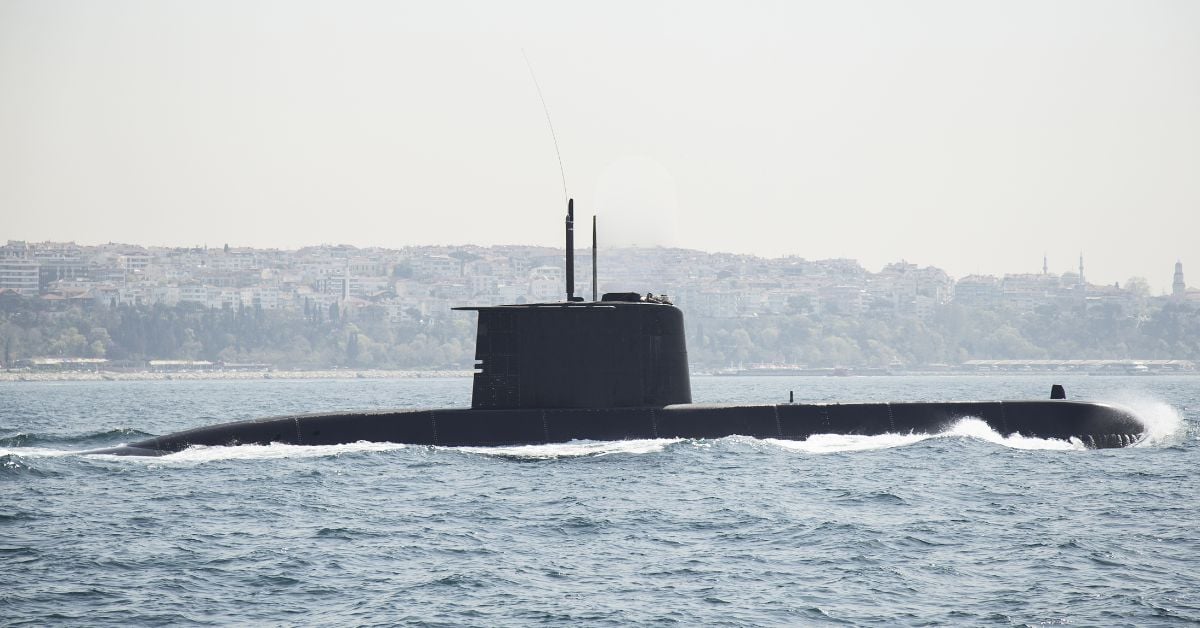
A U.S Navy’s unmanned submarine has been captured by Iran’s Islamic Revolutionary Guard Corps, near the Strait of Hormuz, according to Iranian sources, which have also released images of the same. The submarine can perform autonomous missions for 10 days at a depth of 6000 metres underwater.
The underwater drone is likely the Dive-D of Anduril, an American company that builds autonomous weapon systems, robotics and AI-powered defence systems. It can perform surveillance, intelligence, and reconnaissance operations along with mine warfare and other missions.
It has a high-tech interface and AI-driven mechanisms which enable integration and swift configuration of different payloads and sensors.
The submarine delivers high efficiency at a low price and enables integration of several types of weapons. It can be configured for both naval and commercial operations, which makes it quite flexible.
The incident has not been confirmed by the U.S.; however, it is important because of the growing importance and participation of unmanned aircraft and underwater drones in naval operations.
Autonomous underwater vehicles are different from traditional submarines as they can be deployed on longer missions without risking the lives of the crew members. They are low-cost, highly effective and precise.
The Anduril submarine, which Iran claims to have captured, is 5.8 m long and weighs 3 tonnes. It can be configured with different kinds of sensors, equipment and weapons depending on the mission or the target and works equally well within all integrations, making it a preferred choice of the U.S. Navy.
These unmanned, remotely operated submarines can be sent into dangerous waters for gathering information or even conducting underwater surveys and mine search operations without risking the lives of sailors.
The U.S. and many other countries are investing heavily in drone technology along with AI-powered hypersonic weapons.
Read on the original site
Open the publisher's page for the full experience