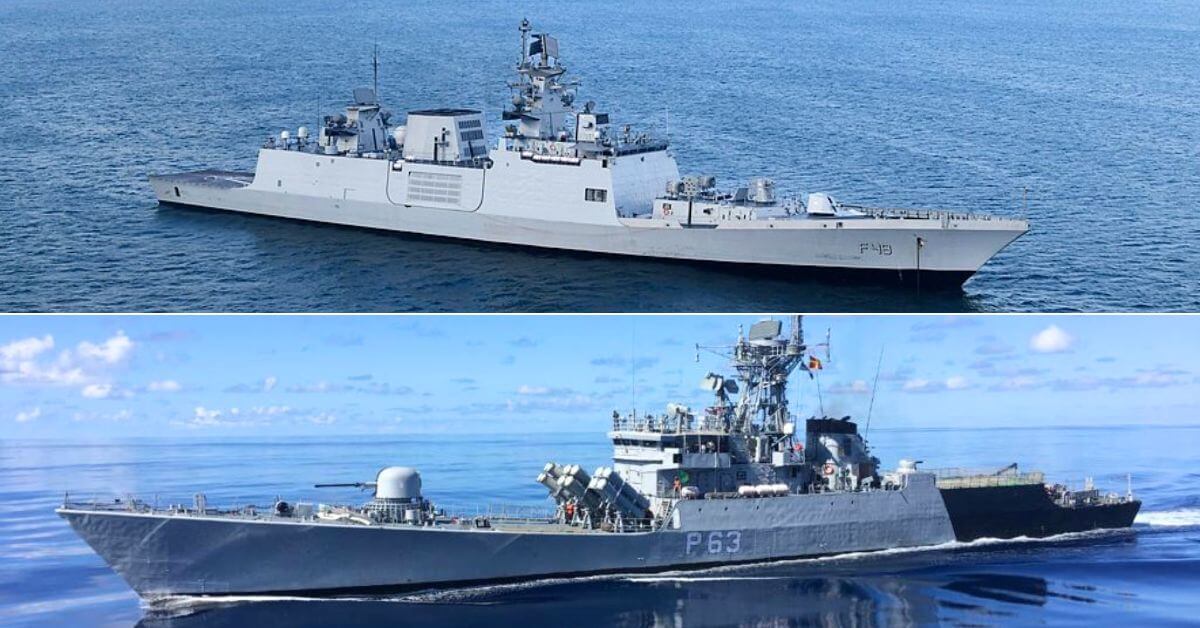
The arrival of the INS Sahyadri and INS Kulish at Subic Bay for a multilateral maritime exercise with US, Japanese, and Australian forces is more than a routine port call. It is a tangible expression of how naval power is being reorganized around shared data and interoperability, not just hulls and guns. The Indian Navy's broader ambition to field around 230 ships by 2040-2045, as we reported in India Projects Expanded Naval Fleet to Navigate Evolving Maritime Landscape, signals a deliberate shift toward a sustained, credible presence in contested waters. This exercise is the operational counterpart to that strategic build-up.
What matters here is not the spectacle of four navies steaming together, but the integration of sensor feeds, communication protocols, and decision-making cycles. The US Navy's recent push to accelerate autonomous systems integration, detailed in Navy Accelerates Autonomous Systems Integration for Enhanced Maritime Operations, points to a future where success depends on how quickly a distributed network can turn raw data into actionable ocean intelligence. Exercises like this one are the proving grounds for that capability. If these systems cannot share calibrated, real-time information across allied platforms, the strategic value of the hardware is diminished. The practical takeaway for our readers is straightforward: watch how these drills evolve from scripted scenarios into more complex, unscripted data-sharing exercises. That is where the real integration, or its absence, will show.
For a reader asking what this means in concrete terms, consider the pressure it places on the Philippine and other regional partners to invest in compatible command-and-control infrastructure. The diplomatic signal is clear, but the technical work is less glamorous. The Strait of Hormuz episode, where 80 nations called for reopening a vital shipping lane, as covered in Eighty Nations Urge Reopening of Vital Strait of Hormuz Shipping Lane, reminds us that maritime security is ultimately about keeping sea lanes open and climate indicators monitored. The same logic applies here. The real question is whether these exercises will generate the longitudinal data needed to improve predictive maintenance, navigation safety, and environmental monitoring in the region.
Our take is measured but pointed. This is not about alarmism or flag-waving. It is about recognizing that integrated maritime data collection is becoming a core competency, not a side benefit. The specific detail to watch is whether India and the US can move beyond interoperability at the platform level to true data interoperability at the tactical edge. If they do, this exercise will be remembered as a step toward a more resilient ocean intelligence ecosystem. If not, it will be another photo opportunity. The evidence so far suggests the former, but the proof will be in the encrypted data streams, not the bows of the ships.