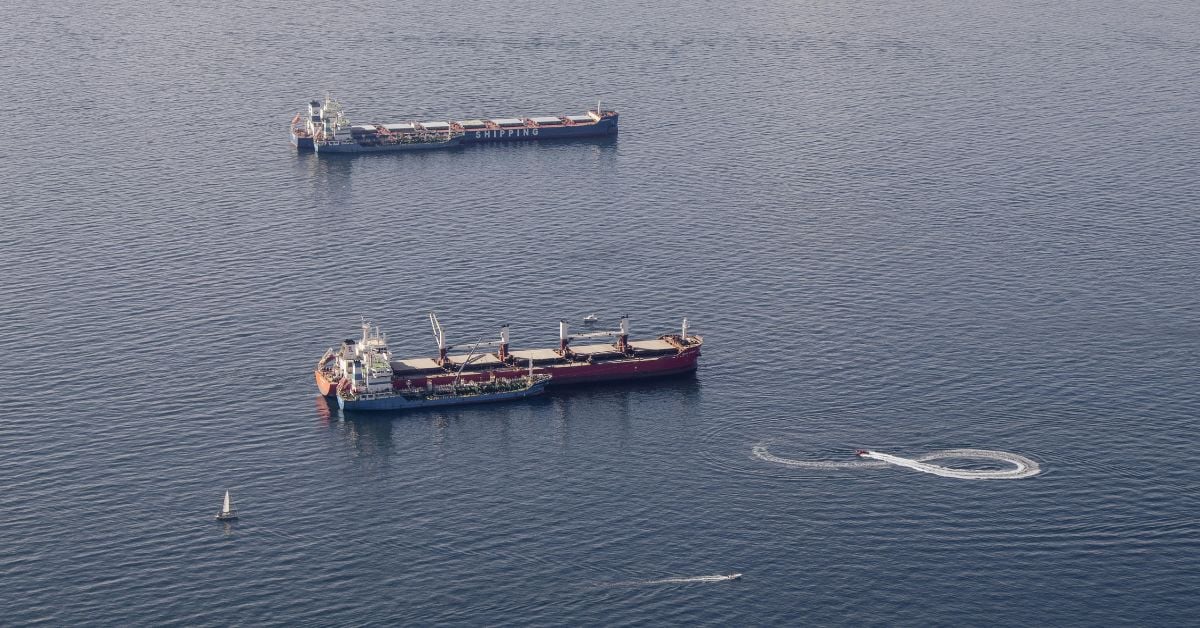
India's three-point maritime ceasefire proposal for the Black Sea is the most practical diplomatic initiative to reach the region since the war began, precisely because it targets the infrastructure of global trade rather than the politics of territory. By focusing on halting attacks on commercial vessels, energy infrastructure, and ports, New Delhi has identified the single pressure point that affects every nation with a stake in the Black Sea, including India itself. This is not another grain corridor deal. It is an integrated proposal that treats shipping, energy security, and food supply as a single system, and that systemic thinking is what makes it credible.
The numbers explain the urgency. India meets 30 percent of its energy requirements from Russia, with shipments routed through the Black Sea, and recent drone strikes have already sunk a freighter and left crews missing, as we reported in Drone strikes in Black Sea sink freighter, crew remains missing. Five Indian seafarers have been killed in attacks on commercial vessels in the region, and the Black Sea incident raises urgent questions on maritime safety and climate risk that no single nation can answer alone. Meanwhile, the United States Congress has approved the Sanctioning Russia and Iran Act, which threatens to impose tariffs on Indian products over purchases of Russian crude, a law that could strain relations between New Delhi and Washington even as India's freight costs from Novorossiysk skyrocket. The proposal is thus not abstract diplomacy; it is a calibrated response to measurable damage already done to India's economy and its people.
What distinguishes India's plan from previous efforts by Turkiye and Egypt is its scope. Those earlier proposals aimed only at ensuring uninterrupted grain exports. India's version explicitly includes energy infrastructure, ports, refineries, storage terminals, and calls for an end to all attacks on shipping operations, not just those carrying grain. Ukrainian Foreign Minister Andrii Sybiha called it the most comprehensive proposal he has received, and Russian President Vladimir Putin acknowledged that Prime Minister Modi had put forward "excellent ideas." Both sides have reason to engage. For Ukraine, protecting energy infrastructure and ports is a direct security interest. For Russia, a maritime truce would restore the flow of crude and LNG that the global market, and India, depends on. For the United States, a de-escalation in the Black Sea would reduce the pressure to enforce SRIA tariffs that could alienate a key Indo-Pacific partner.
The practical question is whether this measured truce can hold when the underlying war does not pause. India has maintained a neutral stance throughout the conflict, but the escalation has made neutrality expensive. The specific detail to watch is whether the proposal can secure a verifiable halt to attacks on ships at anchor near Novorossiysk, which have become routine targets. If India's diplomatic weight can achieve that single, empirical outcome, fewer seafarers killed, lower freight costs, stable energy supply, the proposal will have accomplished more than any grand peace plan has in three years. That is the only metric that matters.