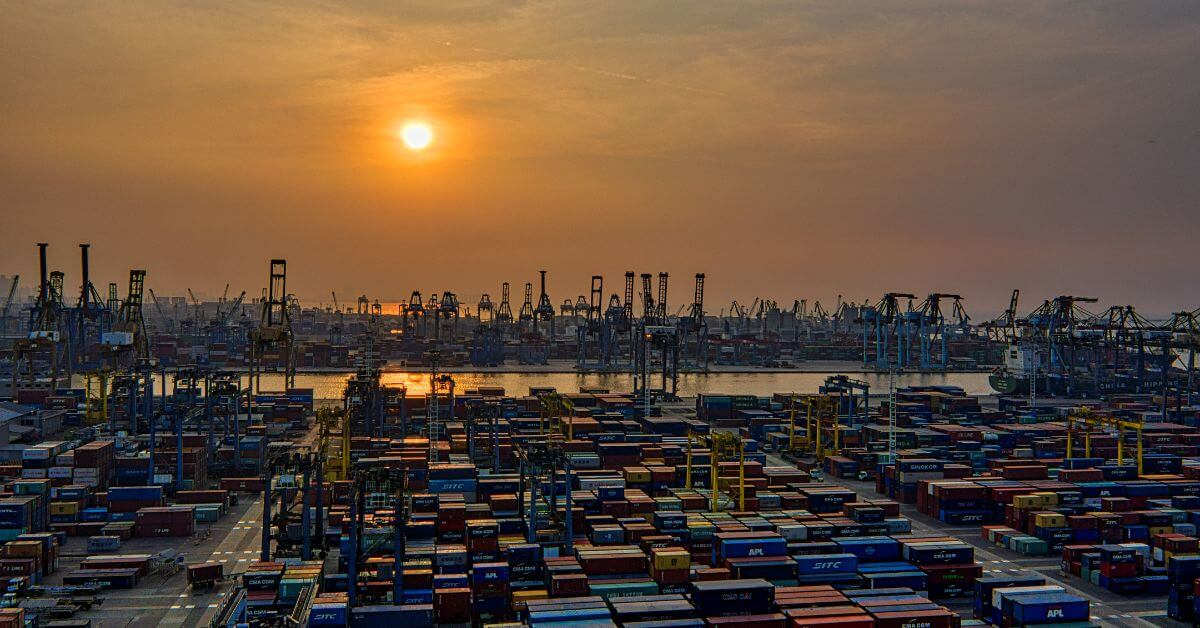
The reported plans by Iran's IRGC Unit 4000 to target key East Asian shipping routes, including China's Ningbo-Zhoushan and Shanghai ports and Indonesia's Tanjung Priok, demand a measured reading of the maritime domain. This is not a distant geopolitical tremor; it is a direct pressure test on the integrated data ecosystem that underpins global trade. For our readers, the takeaway is not alarm, but calibration. The threat is real, yet the response must be empirical, not emotional.
This development does not exist in isolation. The Gulf of Oman STS Transfers Max Out Amid Rising Saudi Oil Exports already signals a system operating at its physical limits, where ship-to-ship transfers have become a bottleneck for energy flows. If the IRGC expands its operational canvas from the Strait of Hormuz to the South China Sea and Java Sea, we are watching a strategic convergence: the choke points of the Middle East and the industrial lifelines of Asia becoming a single, interconnected risk surface. The Phased Negotiations Aim to Ease Restrictions on Strait of Hormuz suggest that diplomatic off-ramps exist, but they are fragile and subject to spoilers. Meanwhile, India Projects Expanded Naval Fleet to Navigate Evolving Maritime Landscape reflects a broader recognition that state actors are preparing for a more contested environment, not a hypothetical one.
Our honest take is this: the IRGC's apparent willingness to target ports like Ningbo-Zhoushan, the world's busiest container hub, moves the conversation from piracy and regional skirmishes to asymmetric statecraft aimed at commercial infrastructure. For shipping lines, insurers, and port authorities, this is not a reason for panic but a prompt for integrated risk modeling. The practical question is whether the industry can shift from reactive rerouting to predictive, real-time threat assessment. We would tell a reader who asks that the specific target list matters less than the doctrine it reveals: the ability to inflict economic pain without a conventional naval confrontation. That is a strategic problem that cannot be solved by escort convoys alone.
The concrete point to watch is whether these reports accelerate intelligence-sharing protocols among commercial stakeholders, or whether they remain siloed. The data exists, but its value depends on integration. If the industry treats this as a transient headline, it will be caught off guard. If it treats it as a calibrated signal, it can harden its defenses. The next port call is not a routine stop; it is a data point in a live experiment. We would advise treating it as such.