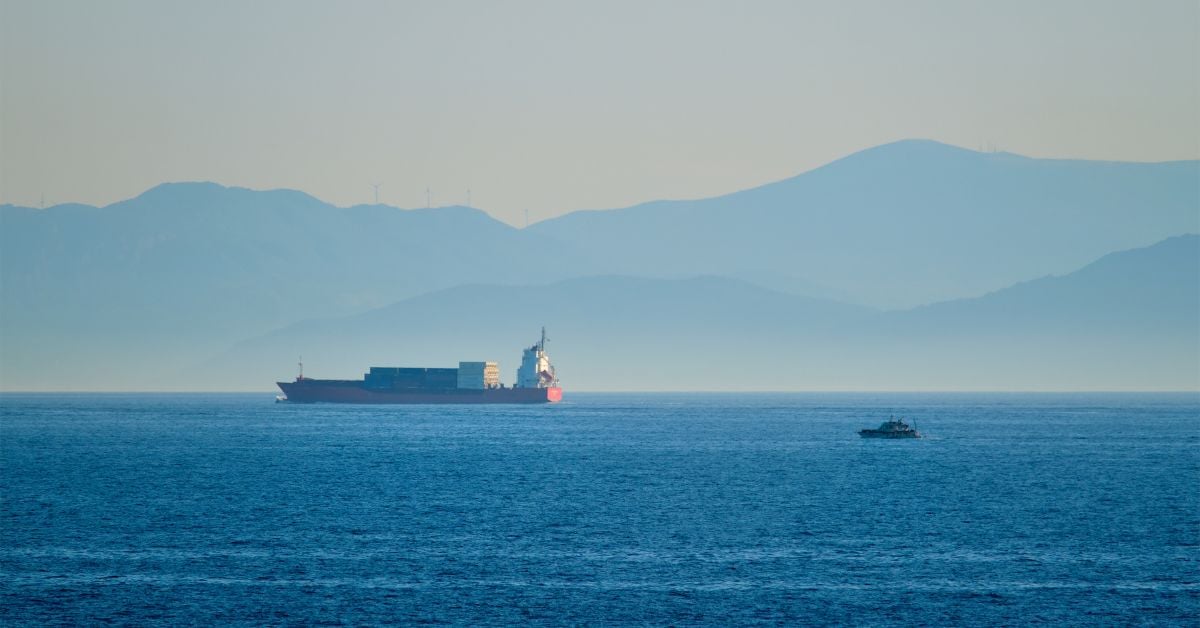
The Strait of Hormuz should be reopened, but not on terms that reward the conditions that closed it. Iran's seven-day proposal is a test of whether diplomatic leverage can produce measurable outcomes, or merely delay a return to hostilities. For global energy markets, shipping operators, and anyone tracking ocean intelligence, the practical question is what gets traded at the negotiating table: security of passage, or nuclear capacity.
The proposal from Foreign Minister Abbas Araghchi is clear: lift the blockade on Iranian ports, remove oil-export sanctions, and end regional hostilities, and Iran will reopen the strait within six days. Washington insists that Iran's nuclear programme be on the agenda from the start. That disagreement is not procedural, it is structural. One side wants the strait's reopening as a precondition for broader talks; the other treats it as the reward for those talks. The consequence for the 20 percent of global oil and LNG trade that once passed through that waterway is a prolonged state of uncertainty. Our recent analysis of rethinking sanctions on shadow tankers to steady global freight rates examined how informal shipping networks have already adapted to these pressures. A reopened Hormuz would recalibrate those routes, but only if the terms of reopening are empirically stable, not temporarily negotiated.
The military dimension cannot be separated from the diplomatic one. Iran's newly appointed Defence Minister Mehrdad Akhlaghi warned that any renewed US military action would cause "enormous damage" to the region. This is not abstract posturing, it is a calibrated signal from a government that just lost its former Supreme Leader and senior commanders in a February strike. The threat environment is real, and it is not limited to the Persian Gulf. The French Defense Vessel Neutralizes Airborne Threat in Bab el-Mandeb Strait shows how rapidly maritime threats are expanding beyond a single chokepoint. Any reopening of Hormuz must account for the integrated security of the entire Arabian Sea corridor, not just the narrows.
The specific detail to watch is whether Washington accepts a phased negotiation that addresses the strait first and nuclear enrichment later. If it does, Iran wins a sanctions reprieve without capping enrichment capacity. If it does not, the proposal collapses, and the strait stays closed. For our readers, whether they track energy logistics, maritime security, or climate indicators linked to shipping emissions, the takeaway is direct: the next 72 hours of diplomatic review will determine whether the world's most critical energy artery returns to operation, or whether the integrated data ecosystem of global trade must continue routing around a permanent closure.