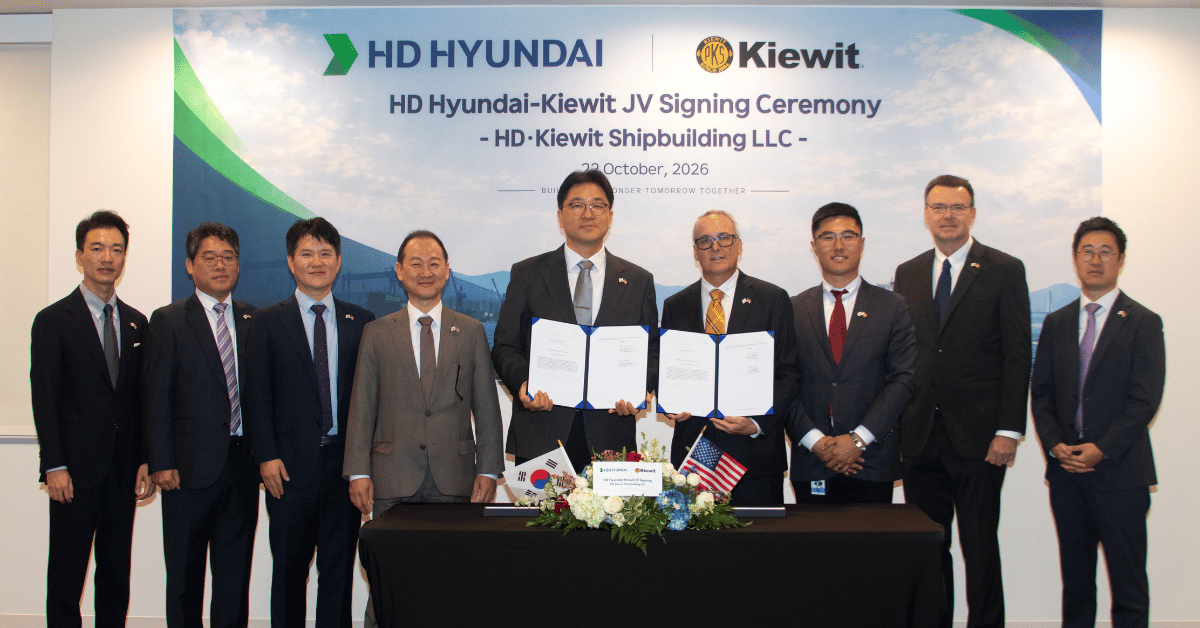
Building a shipyard is an act of industrial will, and the proposed HD Kiewit Shipbuilding joint venture is a rare, concrete signal that the United States is serious about rebuilding its maritime industrial base. By pairing HD Hyundai's advanced digital manufacturing with Kiewit's heavy fabrication experience, this project moves beyond rhetoric toward measurable capacity. The plan to embed digital twins, robotic welding, and automated production from day one is not just a technical upgrade, it is a necessary leap. As we recently observed in the Collision in Bremerhaven Grounds Cruise Plans and Highlights Maritime Risk, the cost of aging infrastructure and manual processes in maritime operations is measured in millions of euros and lost schedules. A purpose-built facility with integrated digital controls is precisely the calibrated response the industry needs.
For our readers, whether researchers tracking supply chain resilience, policymakers assessing naval readiness, or students of ocean intelligence, this venture offers a rare empirical case study in applied technology transfer. The "Future of Shipyard" (FOS) model from HD Hyundai is not a concept; it is a validated production system already in use. Bringing it to a Gulf site with deep-water access and a target of 3,000 jobs means the skills pipeline and the supply chain must develop in parallel. The joint venture's stated intention to support technical training and strengthen domestic marine component logistics is the practical detail to watch. Without a concurrent investment in workforce development, the digital tools will underperform. This is where the project intersects with broader strategic questions. The Arctic Corridor Advances as Churchill Port Cuts Europe Transit by 3 Days reminds us that new industrial capacity is only as valuable as the logistics network it feeds. A modern shipyard in the Gulf could become a node in a reimagined North American maritime grid, but only if the component supply chains are built with the same rigor as the welding robots.
The ambition here is calibrated. HD Kiewit is not promising to build the entire future Navy overnight. It is targeting naval auxiliary vessels, commercial ships, and block/module fabrication for other U.S. shipbuilders. That is a realistic, measurable entry point. The open question is whether the U.S. regulatory and procurement environment can match the speed of the private-sector planning. Construction is targeted for 2027, with full operations by 2029. That timeline is aggressive for any major industrial project, especially one that must integrate Korean shipbuilding expertise with American labor and permitting frameworks. The success of this venture will depend on whether the partnership can maintain its integrated data ecosystem across two distinct corporate cultures and a complex regulatory landscape. The single most specific detail to track is the welding robot integration rate at full operational scale, because if the digital twin and the robotic arm are truly synchronized from the start, this shipyard will produce vessels at a pace and precision that the current U.S. base cannot match. That is the measurable benchmark.