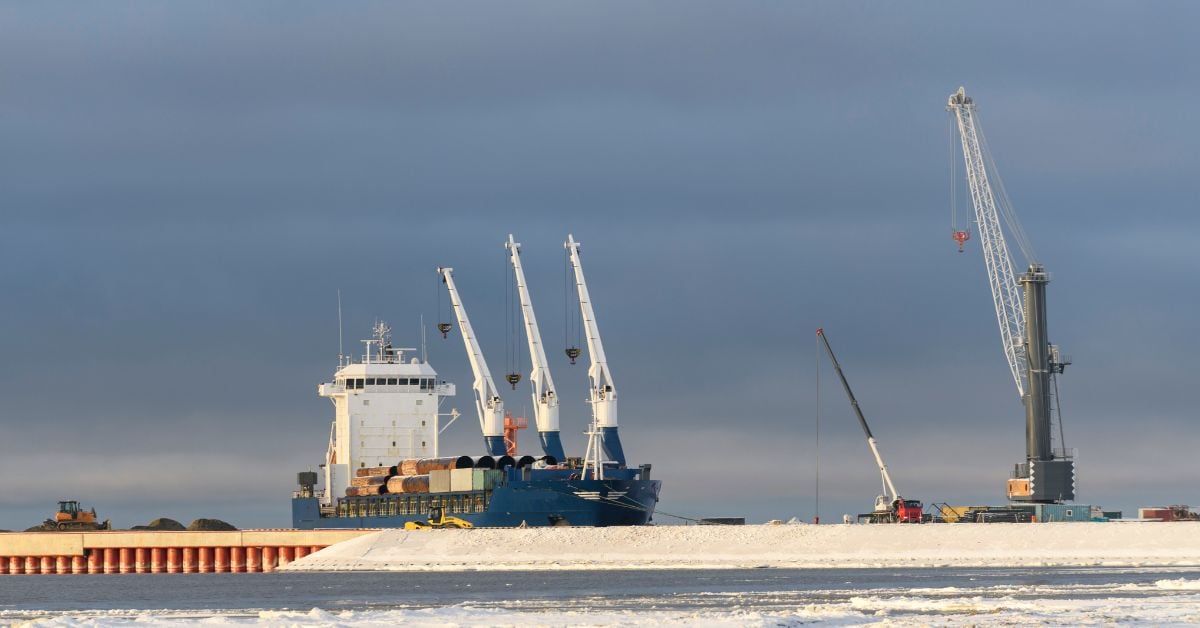
The Arctic is not a shortcut, it is a strategic corridor, and the agreement between DP World and Arctic Gateway to develop Canada's Port of Churchill signals a measurable recalibration of global trade routes. By cutting three days off transit to Europe, this corridor bypasses congested southern ports and geopolitical bottlenecks, offering a tangible alternative for exporters in central Canada. This is not a speculative vision; it is a calibrated move backed by infrastructure already in place: four deep-sea berths capable of handling Panamax vessels, a grain terminal with 140,000 tonnes of storage, and a minerals facility holding 30,000 tonnes. The port handled its first grain shipment since 2020 in September 2026-30,000 tonnes of Saskatchewan wheat bound for Europe, proving the route is operational, not theoretical.
This development echoes a broader trend we have observed in global shipping logistics. Abu Dhabi's Khalifa Port recently climbed five spots to 34th globally after a 21.6% TEU surge, as reported in our coverage of Khalifa Port's 21.6% TEU surge lifts it five spots in global rankings. Both stories point to the same underlying reality: ports that integrate into larger, diversified networks gain resilience and volume. For Churchill, integration with DP World's global network, already handling over a million TEUs at Port Rupert and expanding at Montreal, provides the same kind of network effect. Meanwhile, the shipping industry's shift toward lower-emission vessels, with over 500 dual-fuel container ships now in operation according to the World Shipping Council, aligns with the Port of Churchill's capacity to support year-round operations using ice-strengthened ships, as detailed in Dual-Fuel Fleet Surpasses 500 Vessels in Measurable Shift Toward Lower-Emission Shipping. The corridor is not just faster; it is being built for the fleet that is coming.
Our take is straightforward: this corridor matters most for what it reveals about supply chain diversification under climate pressure. The Hudson Bay Railway connection to CentrePort's inland logistics facility creates an integrated data ecosystem linking manufacturing hubs in Manitoba directly to European markets. More than 1,000 companies have established a presence in the region, and over 3.5 million square feet of industrial space has been constructed in the last eight years. These are not abstract investments, they are empirical indicators that private capital sees long-term value in Arctic logistics. The federal government's framing of "resilient trade corridors" is not political rhetoric; it is a response to measurable vulnerabilities in existing routes.
The specific consequence to watch is whether the Port of Churchill can attract sufficient private-sector investment to maintain year-round operations at scale. The operator is in active negotiations to drive up that investment, and the infrastructure for potash, grain, and minerals is already validated. But the open question is whether the corridor can handle the volume needed to shift meaningful trade away from southern routes, and whether ice-strengthened fleets will scale fast enough to match. The next grain shipment, and the one after that, will tell us more than any memorandum of understanding.