COSCO Denies U.S. Allegations That Its Ships Used Concealed Equipment To Spy For Beijing
Our take
The recent denial by COSCO, China’s state-owned shipping giant, regarding U.S. allegations of espionage activities involving its vessels warrants careful consideration within the broader context of maritime security and geopolitical tensions. The U.S. government's claims, suggesting the use of concealed equipment on COSCO ships to gather military intelligence, represent a significant escalation in scrutiny of Chinese maritime operations. This situation echoes similar concerns raised regarding Russian vessels, as demonstrated by the recent demand for the “Russia Demands ‘Immediate Release’ Of Vessel Seized By Norway Over Naftogaz’s $4.2 Billion Claim”, highlighting the increasing complexity of maritime law and international disputes involving state-owned enterprises. The potential for dual-use technology—equipment with both civilian and military applications—on commercial vessels further complicates the assessment of these allegations, requiring rigorous empirical validation. The scale of global shipping operations makes comprehensive oversight exceptionally challenging, underlining the need for enhanced real-time monitoring capabilities and collaborative data sharing.
The allegations against COSCO are not isolated incidents but rather symptomatic of a growing trend of increased surveillance and strategic competition in the maritime domain. The Strait of Hormuz, for example, continues to be a focal point of tension, as evidenced by the recent escort of 40 Oil Tankers Loaded With 18 Million Barrels Of Oil For Asia Cross Hormuz Under U.S Naval Escort, demonstrating the vital role of naval presence in safeguarding critical trade routes. The efficiency of port operations is also increasingly intertwined with national security considerations, as seen in the shift towards automation, with smaller ports demonstrating innovative approaches that don't require the massive investments of hubs like Rotterdam; a strategy detailed in Small Ports Don’t Need Rotterdam’s Budget To Automate – Here’s What They’re Doing Instead. These developments underscore the need for a calibrated response that balances security concerns with the imperative of maintaining global trade flows. The integrated data ecosystem required to monitor these complex operations necessitates international collaboration and the development of validated methodologies for assessing risk.
The COSCO situation also highlights the inherent challenges in verifying claims of espionage, particularly when state-owned entities are involved. Denials from COSCO are expected, and the burden of proof rests firmly on the U.S. government to provide concrete, measurable evidence to support its allegations. The lack of transparency surrounding the equipment and operations of many commercial vessels further complicates the process. This case necessitates a renewed focus on establishing clear international norms and protocols for the inspection and monitoring of maritime traffic, ensuring that such measures are implemented in a manner that respects national sovereignty and protects legitimate commercial interests. A longitudinal study of maritime surveillance technologies and their deployment would offer valuable insights into the evolving landscape of ocean intelligence and the potential for misuse. Peer-reviewed research is crucial to understanding the technical feasibility of the alleged activities and developing effective countermeasures.
Ultimately, the COSCO allegations serve as a stark reminder of the increasing convergence of economic and strategic interests in the maritime domain. The potential for state-owned shipping companies to be leveraged for intelligence gathering poses a significant threat to national security and demands a proactive and coordinated response from the international community. Moving forward, it will be crucial to monitor the U.S. government’s actions and COSCO’s response, as well as the broader implications for global trade and maritime security. The question remains: will this incident lead to a fundamental reassessment of the role of state-owned enterprises in international shipping, and what mechanisms can be developed to ensure the integrity and security of the global maritime ecosystem?
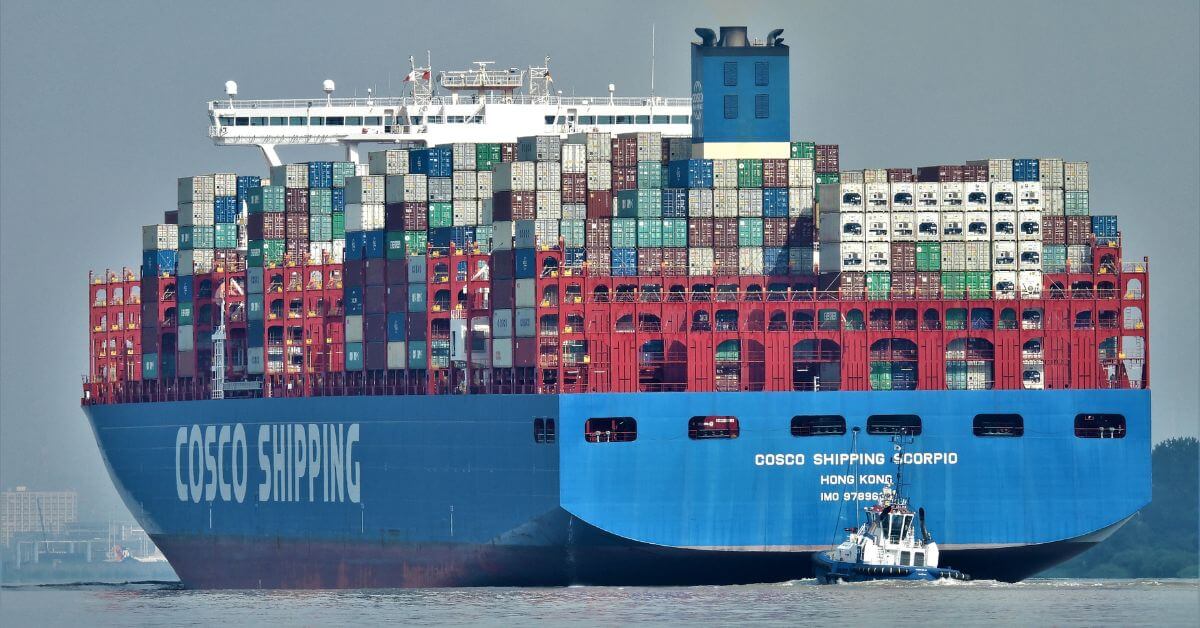
China’s state-owned shipping company COSCO has denied claims that its vessels were used to collect military intelligence for Beijing, calling the allegations “totally unfounded” and false.
Two senior Trump administration officials said COSCO used hidden equipment on its vessels to spy on military communications near the coastlines of countries including the United States.
The officials said COSCO has had a decades-long intelligence-gathering partnership with Beijing. They said this allows China to collect communication signals from ships and aircraft operating across Asia, Europe, and North America.
The officials spoke on condition of anonymity. They did not name any COSCO vessels or say what equipment was allegedly used.
COSCO said the equipment on its ships is used only for normal commercial operations.
It said its communication, navigation, safety and operational equipment is used for legitimate purposes such as navigation safety, ship-to-shore communications and emergency response.
COSCO also said none of the equipment on its vessels was used to intercept military communications or collect intelligence. The company said it reserved the right to take legal action to protect its reputation.
It is not the first time COSCO has faced security allegations in the United States.
In the late 1990s, members of the U.S. Congress raised concerns over COSCO’s proposed lease of a terminal at the former Long Beach Naval Station. The Clinton administration said the project did not pose a security threat.
More than two decades later, U.S. authorities required OOIL to sell the Long Beach Container Terminal after COSCO acquired the Hong Kong shipping group.
The $1.78 billion sale was completed in 2019 under a national security agreement. COSCO also faced U.S. sanctions in 2019.
Washington sanctioned two COSCO tanker units over Iranian oil trades. The measures caused a sharp rise in very large crude carrier rates before they were partly lifted months later.
Recently, the Pentagon added COSCO to its list of companies it considers linked to China’s military.
The U.S. Trade Representative also targeted Chinese shipping and shipbuilding with port-fee measures last year. Those measures could return this autumn.
China’s embassy in Washington has previously said Beijing would never ask any company or individual to “collect or provide data, information or intelligence located abroad” against local laws.
The allegations come as Chinese President Xi Jinping is expected to visit Washington for talks with U.S. President Donald Trump on September 24.
References: Reuters, ibtimes
Read on the original site
Open the publisher's page for the full experience