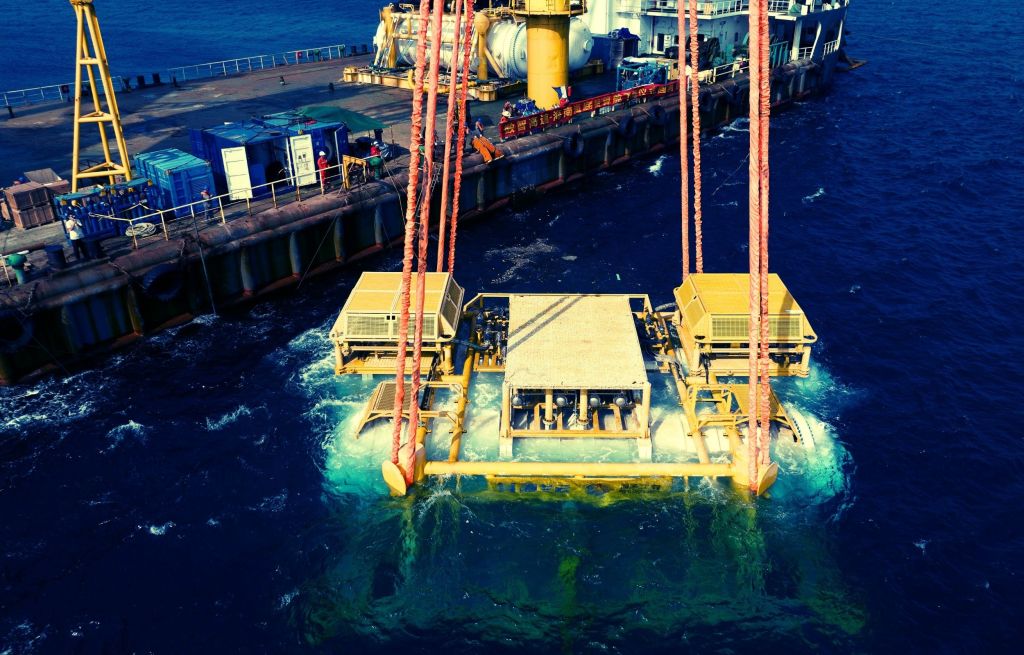
China submerged an AI data center on the ocean floor while the United States remains deadlocked over where to put its own facilities. Our take is straightforward: this is not a competition to be won by being first, but a test of whether we can be smart, safe, and scientifically rigorous. The deployment raises questions that demand empirical answers, not headlines.
The decision to place computing infrastructure underwater is a logical extension of what we have long advocated: integrated data ecosystems that capture real-time ocean intelligence. Our own work tracking AI models and integrated data track shoreline debris at scale shows how machine learning can transform messy environmental data into actionable insights. A data center on the seafloor could, in theory, process sensor readings with minimal latency, feeding calibrated models of currents, temperature, and carbon flux. But theory and deployment are separated by a gulf of practical unknowns. The ECCO‑Darwin model delivers first multi‑decadal global ocean CO₂ flux estimates reminds us that robust ocean science depends on decades of validated, peer-reviewed measurements, not on novel infrastructure alone.
The practical question for researchers and policymakers is not whether China's move is impressive, but what it actually measures. Is this facility equipped with the kind of longitudinal sensors that can detect subtle shifts in climate indicators? Or is it primarily a demonstration of engineering capability? The difference matters. A data center that simply runs commercial AI workloads underwater offers little to ocean science. One that feeds its computational power into an integrated ocean observation network could accelerate our understanding of phenomena like the current slowdown documented in A Century of Ocean Intelligence Reveals a Measurable Current Slowdown. That study relied on a century of painstakingly assembled data, not on a single novel deployment. Innovation must serve measurement, not the other way around.
The specific detail to watch is how China shares the data this facility generates. If the output remains proprietary, the project becomes a geopolitical trophy rather than a contribution to global ocean stewardship. If the data flows into open, peer-reviewed channels, it could help close gaps in our understanding of deep-ocean dynamics. The ocean does not recognize national boundaries, and neither should the intelligence we extract from it. The real test of this submerged data center will be measured not in computing speed, but in the transparency and reproducibility of the science it enables.