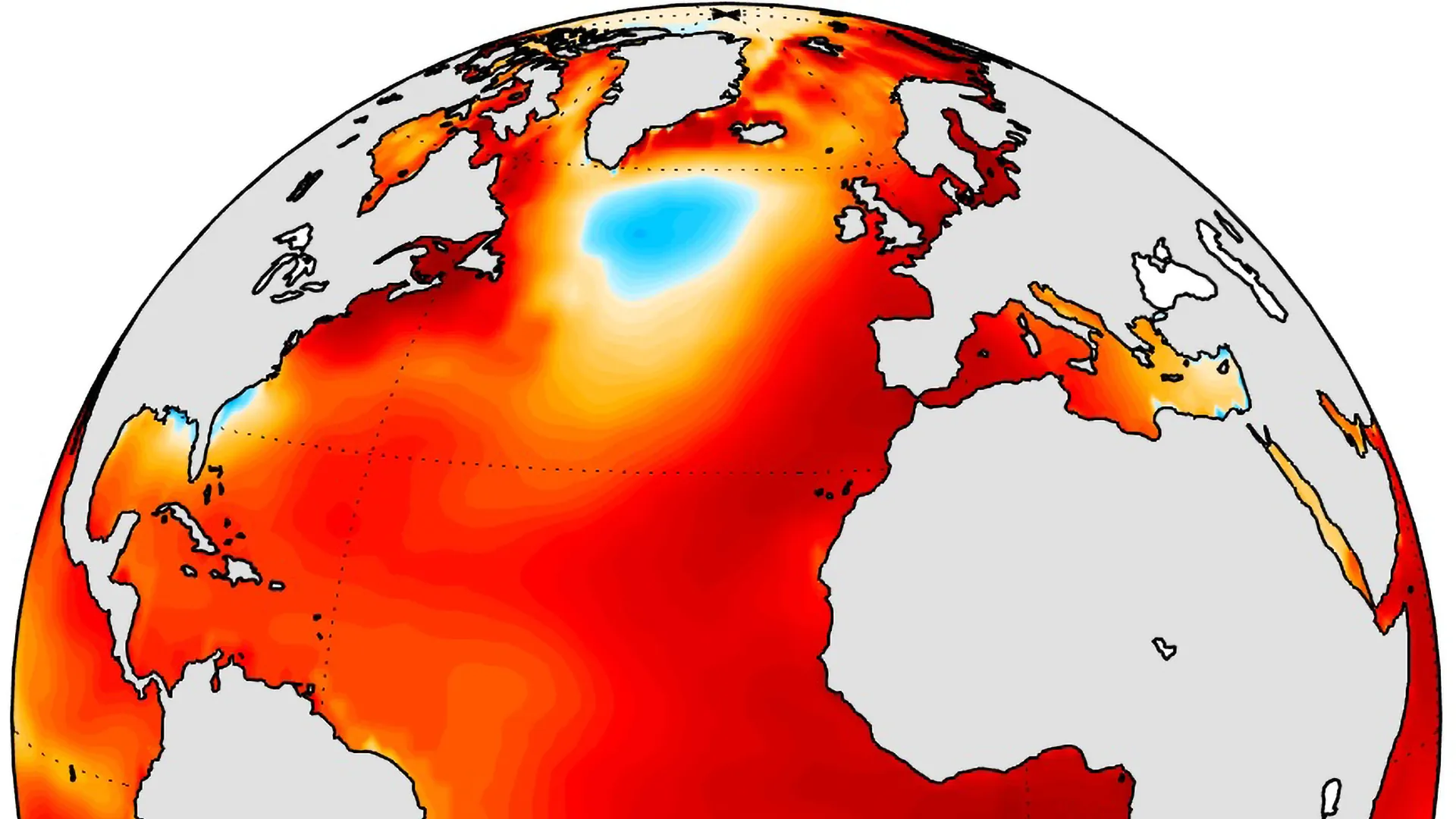
A century of ocean observations now carries a clear, measurable signal: the Atlantic Meridional Overturning Circulation is slowing down. This is not a model projection or a speculative forecast; it is an empirical finding drawn from long-term, peer-reviewed data. For our readers, researchers, policymakers, and ocean stewards alike, the practical implication is unmistakable: we now have a validated climate indicator that demands integrated, real-time monitoring at a scale we have not yet achieved.
The study draws on over one hundred years of shipboard measurements, satellite altimetry, and subsurface float data to construct a continuous record of current strength. What emerges is a slowdown that aligns with what climate models have long predicted, but with a crucial difference: this is measured, not simulated. The finding underscores why sustained ocean intelligence is not a luxury but a necessity. As we noted in our coverage of the ECCO‑Darwin model delivers first multi‑decadal global ocean CO₂ flux estimates, the ability to integrate observational data with biogeochemical models is what turns raw measurements into actionable knowledge. A slowdown in the AMOC affects heat distribution, carbon uptake, and sea-level patterns across the entire North Atlantic basin. Without a calibrated, longitudinal record, we would be navigating blind.
This is precisely the kind of problem that an integrated data ecosystem is built to solve. The AMOC is not a single current but a complex system of surface and deep flows that spans latitudes and depths. Tracking its changes requires stitching together data from moorings, drifters, satellites, and research cruises, each with its own calibration and coverage gaps. Our recent report on AI models and integrated data track shoreline debris at scale demonstrated how machine learning can harmonize disparate data sources to reveal patterns invisible to any single instrument. The same logic applies here: the AMOC signal was only detectable because researchers aggregated a century of heterogeneous records into a coherent time series. The next step is to make that integration operational and real-time.
The financial and institutional momentum is building. The $9.5M Series A to Scale Integrated Ocean Data Ecosystem announced earlier this year reflects a growing recognition that ocean data infrastructure requires dedicated investment. Yet the AMOC slowdown presents a specific challenge that goes beyond funding: the rate of change we are observing may already be outpacing our ability to deploy new sensors. The study's authors note that the most reliable measurements come from a single array of moorings at 26.5°N, installed only in 2004. Two decades of high-quality data is a start, but it is not enough to capture multi-decadal variability or to distinguish a long-term trend from natural cycles. The open question, and the one our readers should watch, is whether we can scale our observational capacity fast enough to keep pace with the ocean's response to a warming climate. The answer will determine not just our understanding of the AMOC, but our ability to anticipate the consequences of its continued weakening.