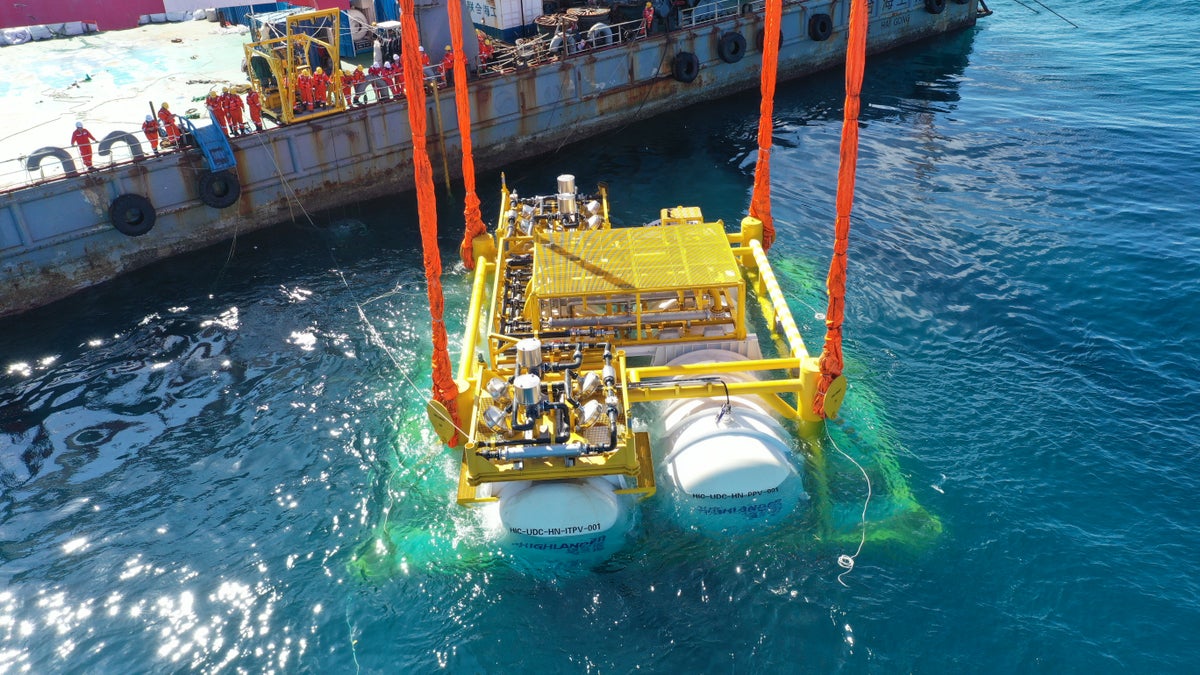
Submerging a data center in the South China Sea is not a stunt; it is a calibrated experiment in practical physics. China has validated that placing servers 35 meters underwater can cut energy use for cooling by a measurable margin, and that is a genuinely important data point for global ocean intelligence. Our view is straightforward: this development deserves close attention not because it is flashy, but because it demonstrates that the infrastructure needed to process ocean data can itself become part of the ocean environment. That integration is exactly the kind of empirical, forward-thinking approach that moves us beyond theoretical models.
The practical implications for our readers are clear. Researchers and policymakers who rely on real-time climate indicators have long been constrained by the energy cost of running coastal data centers. If submerged servers prove durable and cost-effective, they could allow for denser, more continuous monitoring networks without the carbon penalty of terrestrial cooling systems. This matters especially in light of recent findings that seismic records measure a strengthening pulse beneath warming oceans, where wave energy is rising in direct response to global temperature increases. To track that signal, we need persistent, high-resolution computing capacity near the source, not hundreds of kilometers inland. The Chinese deployment is a prototype, but it points toward a future where computing and observation are physically co-located.
At the same time, we must hold this achievement in context. The ocean is not a benign environment for electronics. Corrosion, pressure, biofouling, and maintenance logistics are not trivial problems; they are the reason most data centers stay on dry land. The value of this project is that it provides longitudinal, peer-reviewed data on those very challenges. What works for one server rack in a controlled underwater housing may not scale to a full facility, and we should treat early results as preliminary rather than definitive. That is the scientific method at work. It is also worth remembering that the global capacity to validate such innovations depends on sustained investment in ocean observation networks. As proposed US monitoring cuts risk global loss of calibrated ocean intelligence, the ability to test and deploy new infrastructure like submerged servers becomes a matter of shared international concern, not national competition.
The specific takeaway is this: China's underwater data center is a live test of whether we can shrink the energy footprint of ocean computing without sacrificing performance. The results will influence how the next generation of integrated data ecosystems is built, whether on the seafloor, at the surface, or in orbit. Watch for the failure rates over the next 18 months. If they stay low, the conversation shifts from "can we do this" to "how fast can we scale." That is the point where a validated prototype becomes a practical tool for global ocean stewardship.