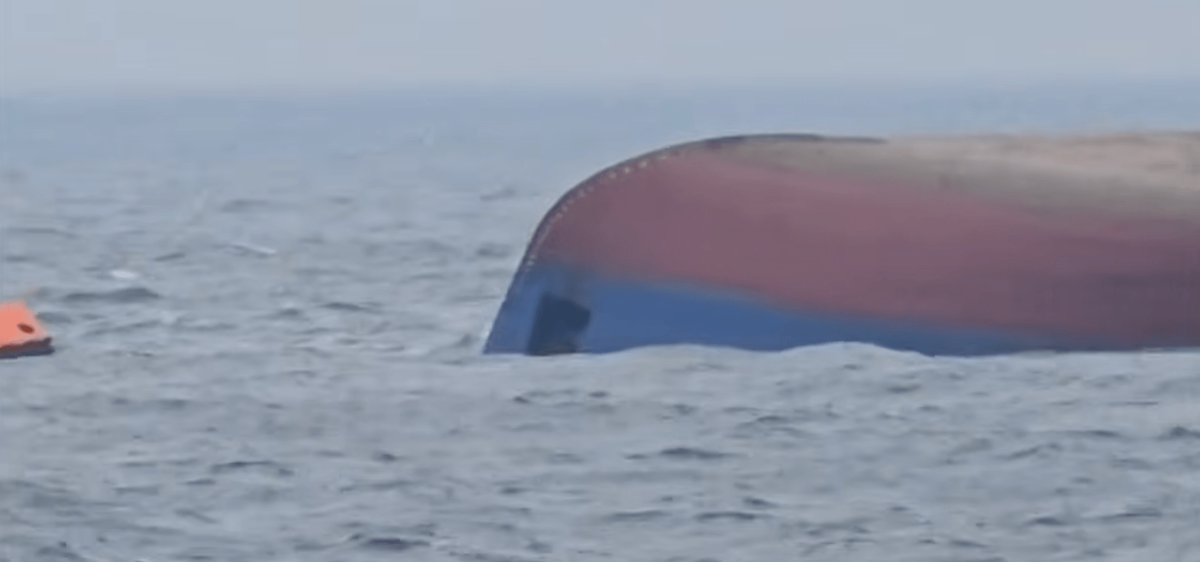
The sinking of the Comoros-flagged cargo ship *Khoryv* in the Black Sea, which claimed the life of one seafarer and left three missing, is not an isolated tragedy but a direct escalation in the weaponization of commercial maritime routes. This attack, occurring just 13 nautical miles from the Romanian port of Constanța, forces us to confront a grim reality: no stretch of international water in this conflict zone is safe. The Romanian president's accusation against Russia, combined with a reported surge in attacks on merchant vessels near Romania and Bulgaria, signals a deliberate strategy to disrupt trade and terrorize those who keep it moving. For our readers, researchers, policymakers, and maritime professionals, this incident demands we re-examine the fragility of the integrated data ecosystems we rely on for real-time situational awareness.
The human cost is immediate and heartbreaking: one Ukrainian seafarer dead, four Ukrainians hospitalized, and three Azerbaijani crew members still unaccounted for in rough seas. The *Khoryv*, a 1983 ore-oil carrier carrying ferrous metals from Turkey, was performing a routine commercial voyage when a drone strike capsized it. This is not a collateral accident; it is a targeted attack on a civilian vessel. As we recently reported, NATO is deploying integrated sensors and aerial surveillance to reinforce Black Sea maritime security. Yet the *Khoryv* was hit beyond Romanian territorial waters, raising urgent questions about the limitations of current monitoring and response capabilities. How do we calibrate our surveillance to protect vessels that are just minutes outside a nation's jurisdiction?
This incident also casts a long shadow over the fragile geopolitical bargains that govern regional trade. While we have noted the resumption of Russian fuel shipments to the US under a sanctioned diplomatic deal, the *Khoryv* attack undermines any pretense of predictable commerce in the Black Sea. A vessel flying a Comoros flag, crewed by Ukrainians and Azerbaijanis, and carrying Turkish cargo to Romania was destroyed. The attack does not discriminate by flag, cargo, or destination, it treats every commercial hull as a legitimate target. This is a direct assault on the principle that merchant ships are neutral actors, a norm that has underpinned global trade for centuries.
The practical takeaway for our audience is stark: maritime risk assessments for the Black Sea must be recalibrated immediately. The old models of piracy, weather hazards, or even naval mines no longer apply. We are now in an era where a commercial vessel can be sunk by a drone in a matter of minutes, with state-level actors denying involvement. The rescue of nine of the thirteen crew members is a testament to the bravery of the Romanian Coast Guard and nearby commercial vessels, but the search for the missing three continues in conditions of poor visibility. The next question is not if another *Khoryv* will be hit, but whether the international community will establish a clear, enforceable corridor for safe passage, or accept that the Black Sea has become a zone where seafarers are expendable.