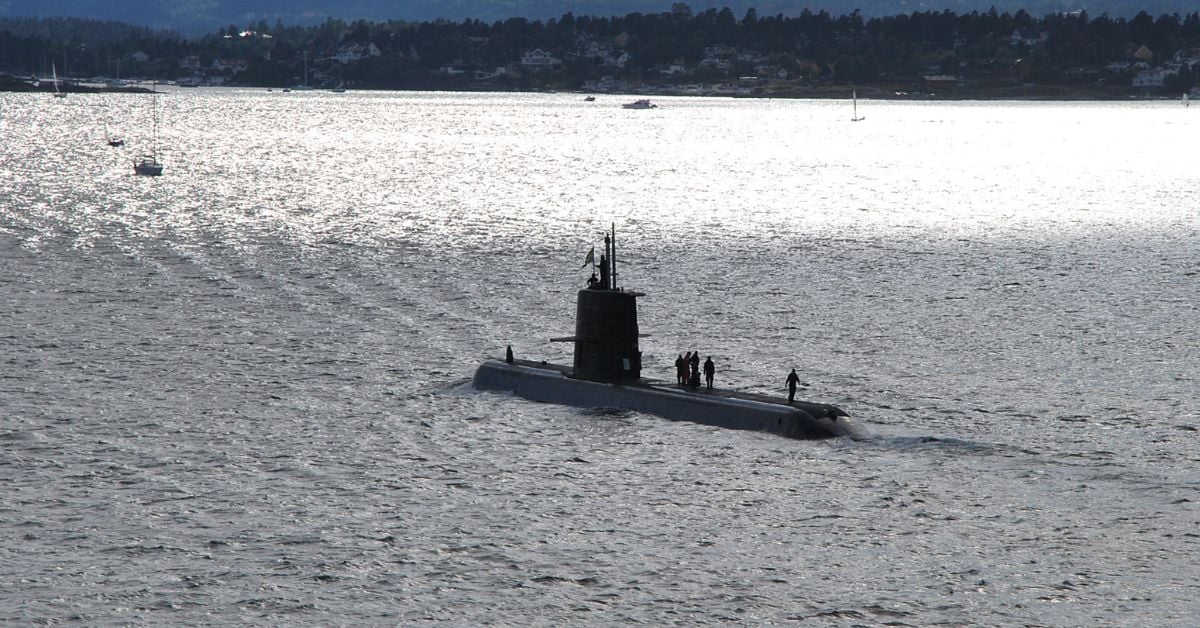
Strategic alliances are validated by their results, not by the administrative friction they generate. Australia's Defense Minister Richard Marles is right to dismiss the Congressional Budget Office's warning that the AUKUS submarine deal could strain U.S. production capacity. The report is a predictable cost-assessment, not a strategic indictment. What matters is that AUKUS is already reshaping the Pacific deterrence calculus, and that the trilateral partners are treating it as a fixed commitment, not a negotiable option.
The CBO's concern about shipyard bottlenecks is not unfounded, but it misses the larger point. The United States is concurrently advancing a Nuclear capital ships advance as Navy weighs hypersonic battle fleet and managing the return of a Nuclear escort completes historic transit as USS Ted Stevens returns alongside ex-Enterprise. These are not separate challenges; they are components of an integrated naval posture. AUKUS does not subtract from U.S. readiness, it adds a shared production pipeline and a second Pacific ally with nuclear-powered capability. The real risk would be treating allied investment as optional overhead rather than as a force multiplier. Marles's confidence stems from a measurable reality: the combined financial commitment, over $43 billion from the three nations, signals an industrial base that is being expanded, not merely reallocated.
This same logic applies to the parallel debate over AI data centers. Marles's rebuttal to President Trump's tariff threats and to ASIO's foreign-intervention warnings is grounded in strategic redundancy. Concentrating critical AI infrastructure in a single geographic node creates a vulnerability that adversaries can model and target. A distributed network, with Australian data centers operating under calibrated security protocols, reduces that risk while strengthening allied intelligence-sharing capacity. The deal Australia signed this week to identify weak supply chains and protect AI technology from theft is a practical, empirical step. It treats data infrastructure as a strategic asset, not a commercial commodity.
What does this mean for readers who track global shipbuilding and defense integration? Watch the SSN-AUKUS class timeline. The first Virginia-class transfers are scheduled for the early 2030s, with the trilateral SSN-AUKUS class following in the early 2040s. If those delivery dates hold, the CBO's concern will have been proven administrative noise. If they slip, the question will not be whether AUKUS weakened the U.S. Navy, but whether the industrial base can scale fast enough to meet a three-nation demand curve. That is the measurable indicator, not a budget projection, but a production schedule.