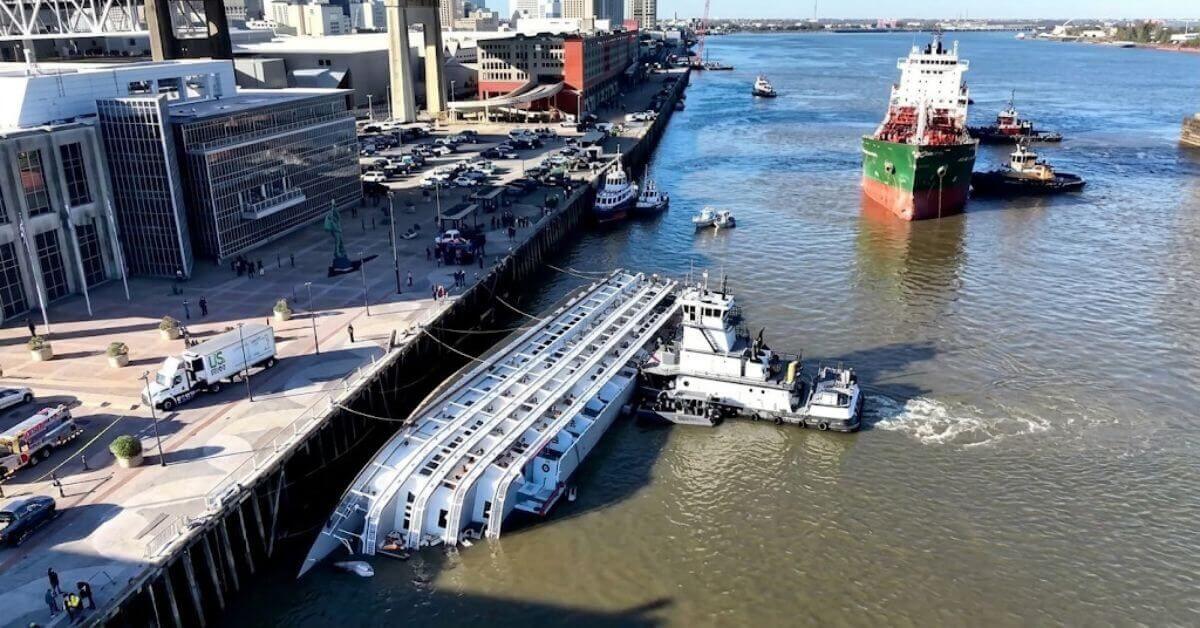
The attempt by Nave Shipping and Thome Ship Management to cap liability at $24.5 million for the *Atlantic Asphalt* collision is a textbook demonstration of how maritime law can insulate operators from the full consequences of mechanical failure. A vessel with a documented history of steering and power losses, including a complete electrical and propulsion failure in 2024, should not be able to argue that a sudden loss of steering was an unforeseeable event. The court's decision to keep the tanker under arrest is the correct first step, but the real test lies ahead: whether the limitation of liability will survive scrutiny of the vessel's maintenance record.
This case echoes a pattern we have seen before in maritime incidents where systemic mechanical issues are treated as isolated events. The *Atlantic Asphalt* lost bridge-to-engine communication in 2024, lost autopilot near Baltimore, and suffered a complete power blackout in Canadian waters just months before the New Orleans crash. These are not anomalies; they are data points in a maintenance log that the plaintiffs' lawyers are now fighting to preserve. As we noted in our coverage of the Suspected shadow fleet tanker released after France secures €1M penalty, the legal system often moves faster to secure a financial bond than to examine the operational decisions that led to the incident. In that case, a penalty was extracted; here, the stakes are higher because human injuries are involved.
The limitation of liability framework exists to encourage investment in shipping, but it should not become a shield for operators who fail to address known vulnerabilities. Judge Vitter has paused the 13 lawsuits and consolidated them into federal court, but the key question remains: will the court accept a valuation based on pre-crash market price, or will it consider the vessel's repair history and the crew's training as factors that affect seaworthiness? The Coast Guard records showing repeated navigation system failures should be central to that determination. The Healy propulsion failure underscores the fragility of polar research capacity taught us that even well-maintained vessels can suffer cascading failures when a single system breaks down; the difference is that the *Healy*'s crew managed the crisis without colliding with a docked passenger vessel. That contrast matters.
For our readers, whether you are a maritime lawyer tracking liability caps, a port authority official reviewing vessel vetting procedures, or a researcher studying incident patterns, the detail to watch is the NTSB's initial report. It is expected within weeks and will determine whether the steering failure was a design flaw, a maintenance gap, or an operational error. If the report cites the same type of steering or power system that failed on previous voyages, the limitation of liability argument becomes much harder to sustain. Until then, the *Atlantic Asphalt* remains under arrest, and its owners face a growing body of evidence that suggests this was not a sudden accident, but a predictable outcome of deferred maintenance.