UNCLOS
World Data Ocean keeps UNCLOS in one place: 12 stories so far. The section currently leads with “Securing the Global South's industrial future demands safety for civilian vessels at sea”, “Strengthening ship routeing to safeguard Latin American waters”, and “Seabed mining beyond UNCLOS raises unresolved pollution obligations”. Attacks on civilian vessels strike at the heart of the Global South's right to industrialize. Navigating Latin America's busiest shipping corridors demands more than vigilance, it demands validated systems. A Global Hub for Ocean Intelligence 4 World Data Ocean is a centralized digital platform where researchers, scientists, and ocean enthusiasts converge to… The list below is every UNCLOS story on World Data Ocean, newest first.

Securing the Global South's industrial future demands safety for civilian vessels at sea
Attacks on civilian vessels strike at the heart of the Global South's right to industrialize. Indian External Affairs Minister Jaishankar made that case plainly, asserting that securing seafarers and merchant ships is not a peripheral concern but a precondition for economic sovereignty. This is a measured, empirical challenge to the status quo. Our coverage of India's $5.6B corvette order shows how naval modernization directly supports this ocean intelligence imperative. Safety at sea is a measurable climate indicator of global equity.
Strengthening ship routeing to safeguard Latin American waters
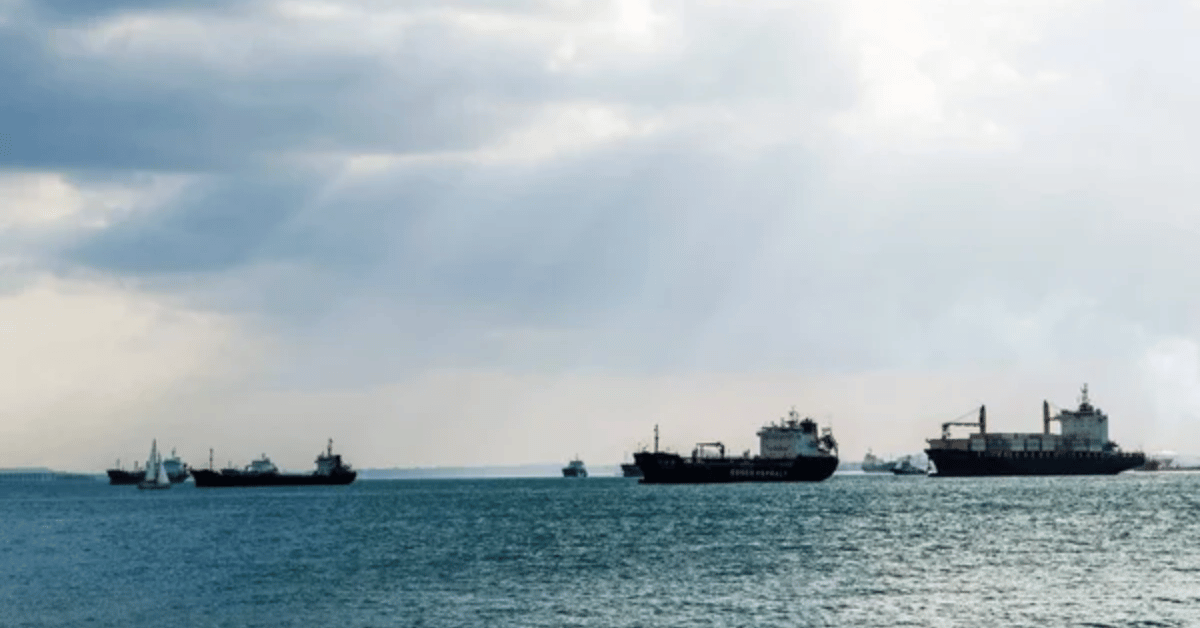
Navigating Latin America's busiest shipping corridors demands more than vigilance, it demands validated systems. A regional IMO workshop in Peru is now strengthening ships' routeing and reporting to prevent collisions and protect marine environments. This is empirical ocean intelligence in action: calibrated measures that reduce risk while safeguarding ecosystems. For a parallel look at measurable maritime risk, see our coverage of integrating vessel cyber defense with insurance. Understanding drives protection, from the Pacific to the global fleet.

Seabed mining beyond UNCLOS raises unresolved pollution obligations
A unilateral licence draws a boundary; a sediment plume does not observe it. The United States' move to license nodule recovery in the Clarion-Clipperton Zone outside the International Seabed Authority raises a question sharper than title: which pollution duties bind a nonparty? Customary law answers. Prevention, due diligence, and prior assessment survive exit, while the referent institution's rules thin but never empty. Exit concentrates responsibility. For readers tracing these jurisdictional currents, our coverage of coastal rights and ocean data integrity offers useful depth.
Navigating Autonomy at Sea: Balancing Coastal Rights with Ocean Data Integrity
The 2026 non-mandatory MASS Code marks a shift from hypothetical to operational for remotely operated ships with no persons on board. This raises a critical question: can environmental protection functions, pollution prevention, reporting, emergency response, be maintained at an equivalent level when the master's duties are redistributed across shipboard systems, a Remote Operations Centre, and external support? Coastal States must navigate pre-incident regulation and post-incident enforcement without impairing innocent passage under UNCLOS.
The ICJ anchors ocean law into the climate governance framework
The ICJ has anchored ocean law directly into the climate governance framework, treating the law of the sea as part of the most relevant applicable law in its advisory opinion on climate change. This strengthens international climate law coherence and may spur substantive action. Yet the opinion's insufficient justification for selecting UNCLOS, contested systemic integration, and evolutionary interpretation risk blurring state responsibility. SIDS and judicial bodies must now reconsider the future integration of these regimes.
Climate-Driven Fish Migration Demands New Rules for Sharing Shared Stocks
Climate-driven shifts in fish distribution are not a future scenario; they are a present legal fault line. The old bargain, allocation based on historical catch records and stable stock ranges, is cracking under accelerating ecological change. The existing framework, anchored in UNCLOS and the UNFSA, holds the normative tools, cooperation, precaution, and equity, to respond. The challenge is institutional, not legal. Consensus-based rigidity within RFMOs is the binding constraint. A Climate-Adaptive Fisheries Allocation Framework offers a pragmatic, legally grounded path forward.
World Ocean Assessment Highlights Governance Gaps Amidst Ocean Degradation
The Third World Ocean Assessment delivers a clear, measurable verdict: the ocean is in severe decline, yet the institutions meant to govern it remain fragmented. This is not a failure of science but of architecture. The focus on structural, normative, and procedural gaps across UNCLOS, the BBNJ Agreement, and RFMOs is precise and overdue. We see the core argument as compelling: knowledge is not the bottleneck, coordination is.
Deep-Sea Mining Governance: Charting a Course for the Clarion-Clipperton Zone
The Clarion-Clipperton Zone's environmental management plan is embedded in International Seabed Authority decision-making, yet it shapes approval more than operations. That distinction matters. A plan that guides whether mining is permitted, but not how it proceeds, leaves a critical gap in contractor accountability. The analysis points to three transmission interfaces where regional goals must meet contractor obligations, ecological evidence must meet spatial allocation, and monitoring must meet authorized action. These are not abstract ideals. They are the practical conditions for any REMP to work.
Verifying Blue Carbon: Evidence for Legal Protection and Climate Action
The 2024 and 2025 advisory opinions do more than interpret the law; they redefine its operational core. Our analysis shows that monitoring, reporting, and verification is now the binding substance of UNCLOS duties, not a policy option. This creates an uncomfortable inversion: the States best equipped to afford proof are the ones who benefit most from protection. This is a profound challenge to common but differentiated responsibilities, one that demands we reconsider what legal protection truly requires.

Naval Tensions Rise: Incident Near Sabina Shoal During Joint Exercises
The sight of Chinese warships shadowing Australian, Philippine, and U.S. vessels near Sabina Shoal during joint exercises is a measured reminder of how tense the region has become. These maneuvers are not accidents; they are calibrated signals of presence and intent. The West Philippine Sea demands precise observation, not alarm. For readers tracking the broader picture, our coverage of China's new nuclear carrier offers useful context on how such naval ambitions are being extended. For now, the message is clear: vigilance remains the operative word.

Securing Vital Sea Lanes: Commitment to Straits of Malacca and Singapore.
The Straits of Malacca and Singapore carry a third of global maritime trade, and their security is not negotiable. Indonesia, Malaysia, and Singapore have now made that priority explicit, committing to keep these vital sea lanes open for all nations. This is a calibrated, practical move that reinforces stability where it matters most. For readers tracking how regional infrastructure evolves, our related piece on integrated subsea cables enhancing Indian Ocean connectivity offers useful context.
Integrating Climate AI for Informed Ocean Impact Assessments
Climate change is redrawing the map of ocean governance, and environmental impact assessments are being pushed toward sharper, more structured standards. From UNCLOS to the BBNJ Agreement, the regulatory bar is rising. Climate AI can meet that moment, not as an add-on, but as a core engine for forecasting, monitoring, and scenario modelling. A standards-driven framework turns complex climate data into reviewable evidence. That is the path to decisions that hold up under pressure.