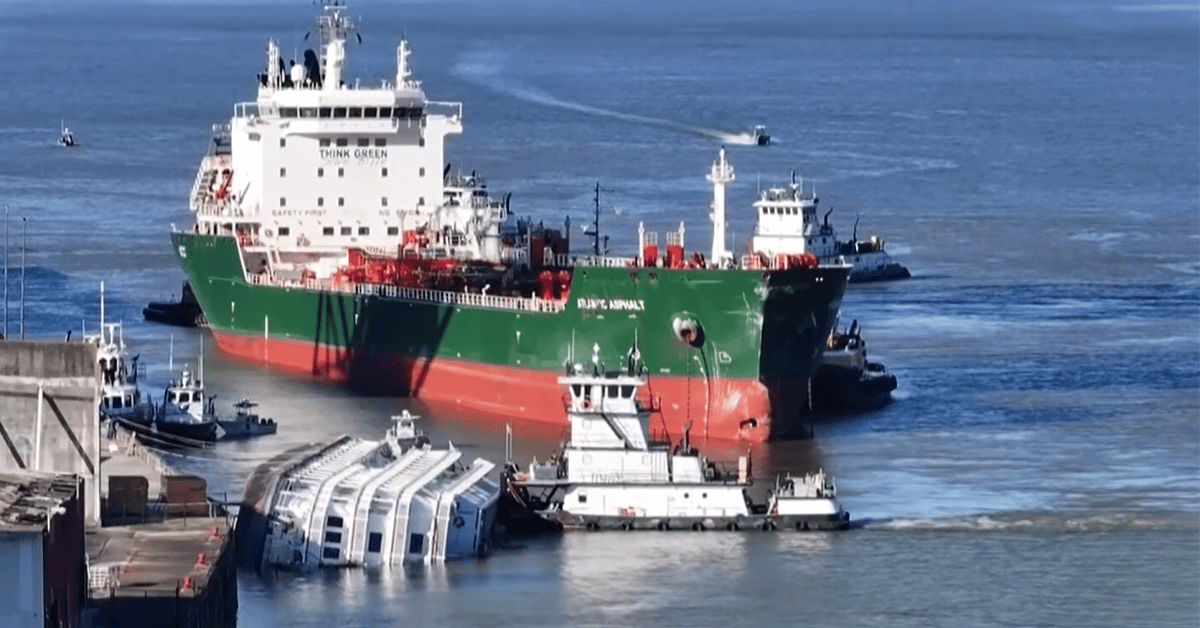
The collision of the tanker *Atlantic Asphalt* with the docked *American Heritage* on the Mississippi River is not a random accident; it is a system failure that demands accountability before the next one occurs. The steering casualty that locked the tanker's rudder to starboard two minutes before impact is a mechanical event, but the chain of decisions that led a 600-foot vessel to veer into a stationary cruise ship is a human and operational one. We need to stop treating these incidents as isolated tragedies and start reading them as climate-era stress tests that our maritime infrastructure is failing.
The lawsuit filed by four crew members of the *American Heritage* against the tanker's owner, Nave Shipping SA, and manager, Thome Ship Management Pte Ltd, is the predictable consequence of a preventable event. The plaintiffs allege negligence and describe "significant and life-changing injuries," including post-traumatic stress disorder. Their claims under the Jones Act, combined with the Port of New Orleans' separate federal action seeking more than $1 million in damages, create a legal landscape that forces a reckoning. This is not merely about compensation; it is about establishing whether the operators had calibrated their systems to handle a steering failure in a constrained river environment. The preliminary NTSB finding, that the rudder was stuck to starboard for two full minutes before the collision, suggests a gap between the design of the vessel's controls and the reality of its operation.
Our related coverage of Captain Stewart stayed on the bridge as ship capsized, last to leave despite injury and Steering Failure Preceded Tanker Collision with River Cruise Ship in New Orleans shows that individual heroism does not replace systemic preparedness. Captain Stewart's decision to remain on the bridge as the *American Heritage* capsized is the kind of leadership that saves lives, but it should not have been necessary. The data from the tanker's voyage data recorder is now part of a public record that will be analyzed, peer-reviewed, and integrated into future safety protocols, if regulators demand it. The question is whether the industry will treat this as a one-off steering casualty or as a measurable indicator of a broader risk pattern.
The practical takeaway for our readers, from researchers to policymakers, is that the timeline matters. The NTSB's preliminary report is expected next month, and its findings on the cause of the steering failure will either validate existing maintenance standards or expose a gap in the integrated data ecosystem that governs vessel safety. The federal warrant to seize and hold the *Atlantic Asphalt* ensures the vessel is available for inspection, but the real evidence lies in the operational logs, the crew's training records, and the maintenance history of the steering gear. We should watch for whether the report identifies a single mechanical failure or a systemic lack of redundancy in emergency steering procedures. That distinction will determine whether this collision becomes a footnote or a turning point for riverine safety regulation.