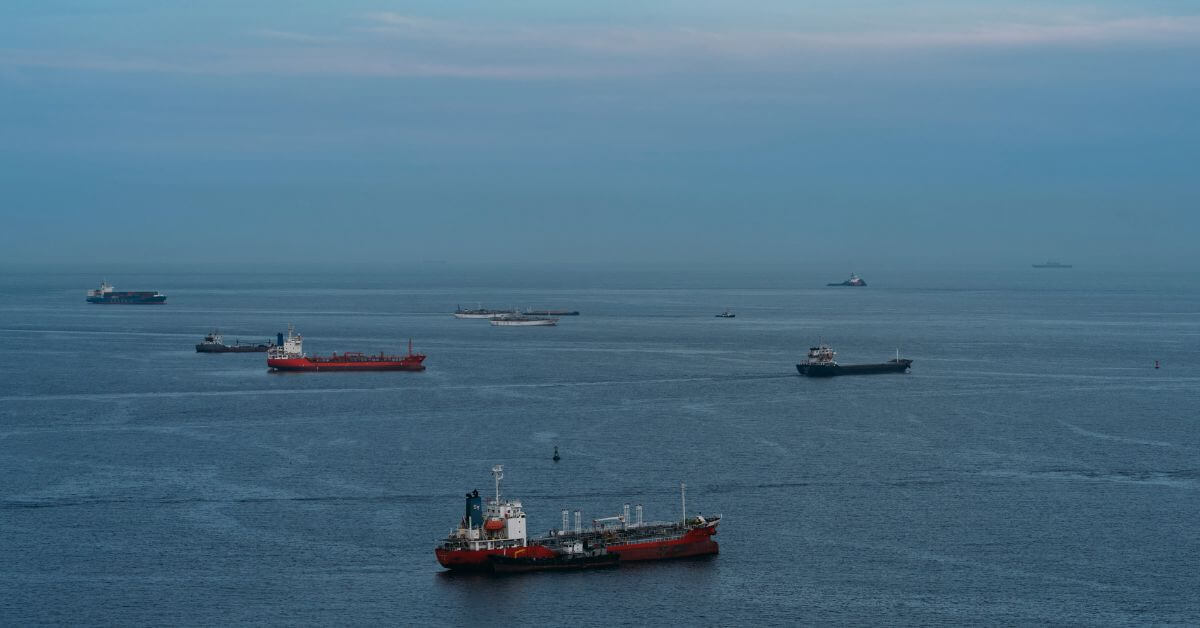
The conviction of the DF Peak's owner in Réunion is a calibrated, measurable step in enforcing maritime law, but it is not a deterrent. France secured a €1 million penalty, matched to the vessel's value, and the tanker has been cleared to leave. That outcome sends a mixed signal to the shadow fleet operators moving sanctioned crude across global waters. For readers tracking the integrated data ecosystem of maritime risk, this case illustrates both the power of legal leverage and its practical limits.
The DF Peak, a crude oil tanker built in 2007 and linked to Russia's Sovcomflot, was boarded by the French Navy in international waters south of Réunion in October. It was flying a false Benin flag after having been deregistered. The owner pleaded guilty to failing to justify the vessel's nationality under the French Transport Code. While the penalty matches the ship's value, the vessel itself is now free to transit under French watch until it leaves waters under French sovereignty. Compare this to the grounded bulk carrier Miro G, which has 100 tonnes of diesel aboard and is testing coastal response systems on a French beach, a different kind of maritime liability, but one where the vessel remains physically pinned. The DF Peak, by contrast, will sail again. The owner has already taken steps to secure a new flag, and the ship remains on the EU sanctions list of around 700 vessels. Yet the ability to pay a fine and resume movement raises the question: does a financial penalty outweigh the cost of losing a ship for weeks, or is it simply a line item in the logistics of evasion?
This case also sits alongside broader patterns of maritime coercion and response. Iran recently offered to reopen the Strait of Hormuz within two days if the US ends its blockade, framing port access as a bargaining chip. In the Indian Ocean, France has now intercepted five suspected shadow fleet tankers this year alone. The difference is one of jurisdiction and legal architecture: the DF Peak was held under UNCLOS Article 110, which allows flag verification, but Russia's embassy called the interception "piracy and robbery." That rhetorical framing matters. It signals that state-owned shipping entities may treat legal penalties as operational costs rather than prohibitions. For our readers, researchers, policymakers, and maritime analysts, the practical takeaway is clear: the shadow fleet adapts faster than legal frameworks can close loopholes. The DF Peak's release, even after a conviction, demonstrates that a single port state's enforcement, however robust, cannot substitute for coordinated, real-time flag-state verification and port-access denial across multiple jurisdictions.
What to watch next is whether the DF Peak secures a new flag from a registry that conducts empirical due diligence, or whether it reappears under another opaque registration within weeks. The vessel's 21 crew members remained on board under military supervision during detention. Their welfare, and the ship's next port call, will be the first concrete indicators of whether this penalty changes behavior or simply becomes a cost of transit.