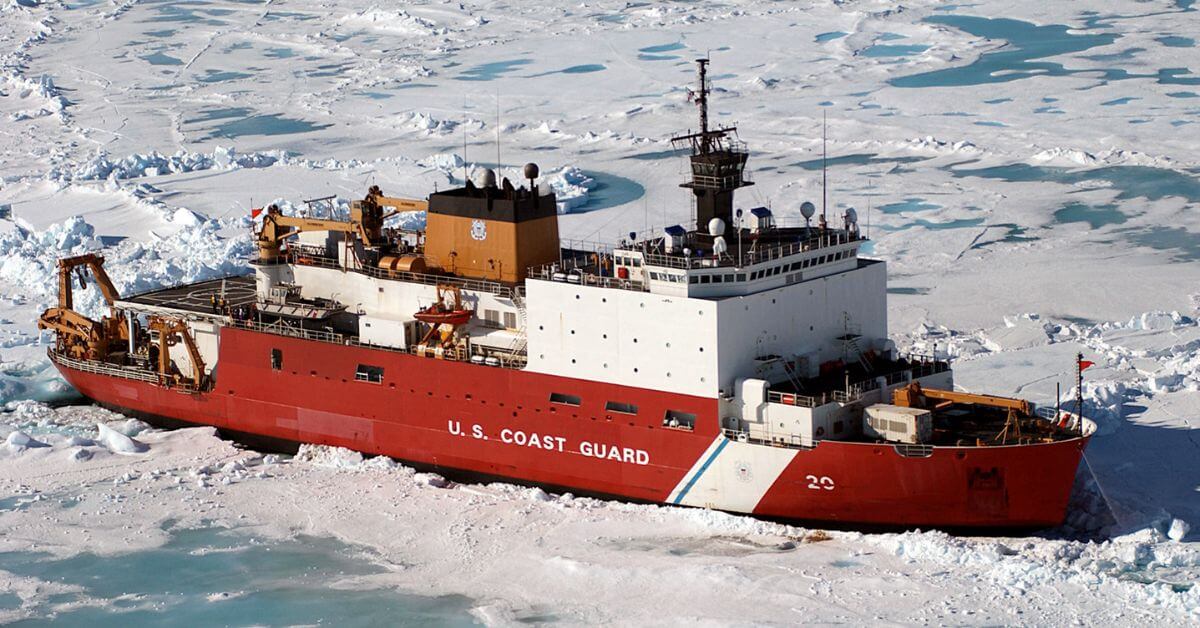
A single engine failure on a polar icebreaker should never become a national vulnerability, yet that is exactly where the United States finds itself. The USCGC *Healy*'s catastrophic overspeed failure and generator room fire in July, which forced the cutter to be towed back to Seattle, is not an isolated maintenance mishap, it is a stress test that the entire U.S. polar research fleet has failed. The Coast Guard now has to ask a contractor which parts of a Sulzer 12ZAV40S diesel engine can even be salvaged, while the nation's only other heavy icebreaker, *Polar Star*, ages alongside it. This is what a capacity gap looks like when measured in empirical, real-time terms: one ship down, one ship old, and the first replacement not expected until March 2033.
The practical consequences are immediate and measurable. *Healy* had already suffered a propulsion motor fire in 2020 and another fire in 2024 that cut short its Arctic patrol. Meanwhile, the newer *Storis* completed a 133-day Arctic deployment in *Healy*'s absence, a commendable effort, but one that cannot be sustained across a multi-year gap. Consider this alongside the 120 million cyber intrusions blocked at US port in single month at the Port of Los Angeles: maritime infrastructure is under threat from every direction, and the nation's ability to maintain a validated, integrated data ecosystem for polar research depends on hulls that can actually transit ice. We cannot calibrate climate indicators or collect peer-reviewed ocean intelligence from a ship that is tied to a pier awaiting an engine inspection. The Global Shipbuilding Strategy Must Include Foreign Investment for Frigate Fleet debate, as framed by William Toti's Senate testimony, underscores a parallel truth: the industrial base that builds and maintains these vessels is itself a strategic asset, and it is not keeping pace with demand.
What makes this failure particularly telling is not the fire itself but the maintenance history that preceded it. The number 1 and number 3 diesel generators had each run for over 40,000 hours without any documented overhaul of their governors and boosters. That is not a condition that emerges overnight; it is a longitudinal indicator of deferred investment. The Coast Guard's procurement notice calls for high-resolution photographs and wear measurements, necessary steps, but ones that describe a forensic investigation rather than a routine repair. The optional $100,000 item for inspecting, repairing, and requalifying the camshaft suggests the service is still uncertain whether the engine can return to service at all. For researchers who depend on *Healy* for empirical data collection in the Arctic, the open question is not when the ship sails again, but whether the United States can maintain continuous polar research presence for the next eight years without a single functional heavy icebreaker. That question has no calibrated answer yet, but the clock is running.